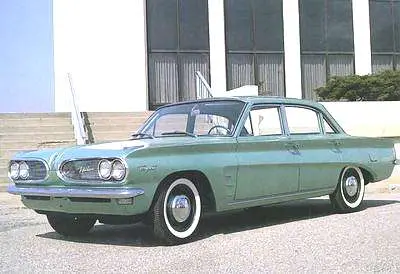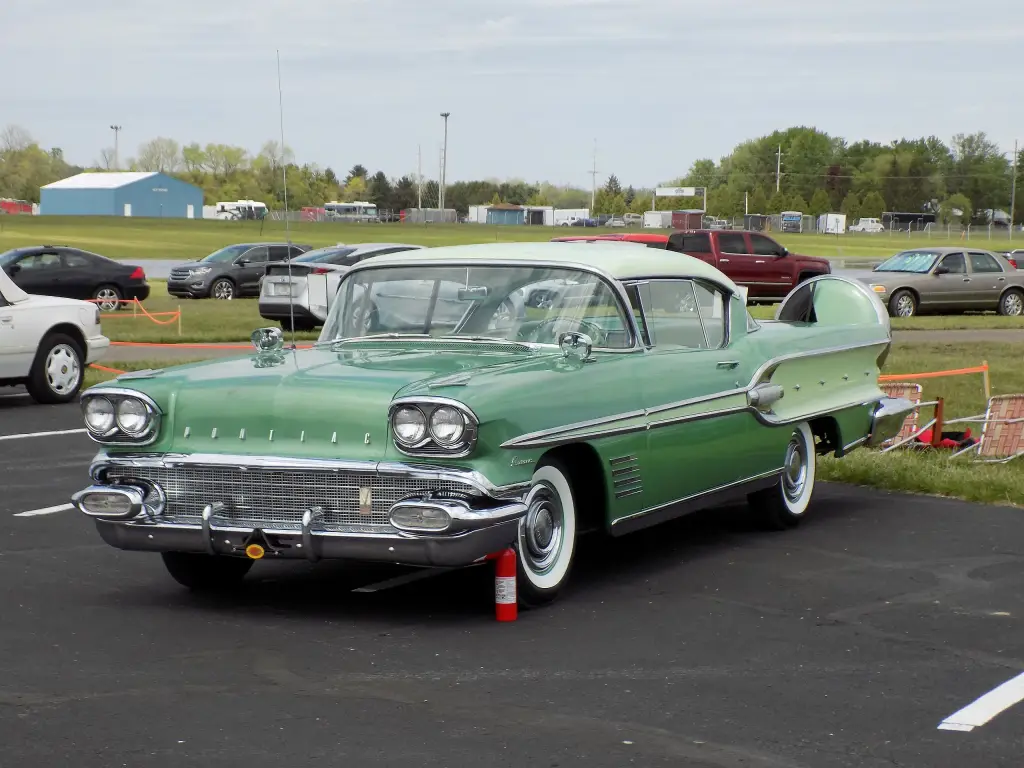
The Pontiac Parisienne was a full-size rear-wheel-drive Pontiac sold in Canada from 1958 to 1986 and in the United States from 1983. For most of its life it was mechanically almost identical to the Chevrolet Impala or Caprice, wearing Pontiac-style body panels on a shorter Chevrolet frame.
Pontiac Parisienne at a glance
| Maker | Pontiac, General Motors of Canada |
|---|---|
| Years | 1958–1986 in Canada; 1983–1986 in the US |
| Platform | GM B-body, Chevrolet X-frame to 1964 |
| Wheelbase | 119 in, Chevrolet dimension |
| Engines | Chevrolet sixes of 230 and 250 cu in; V8s from 283 to 454 cu in |
| Transmissions | three- and four-speed manual; Powerglide; Turbo Hydra-Matic |
| First year | 1958, a halo model in the Laurentian line |
| Separate model | 1959 |
| Notable option, 1958 | Chevrolet Ramjet fuel injection, sold as Power Chief |
| Body styles | two- and four-door hardtops, sedans, convertibles, Safari wagon |
Based on one source: the English Wikipedia article on the Parisienne.
History of the Pontiac Parisienne
A Canadian compromise
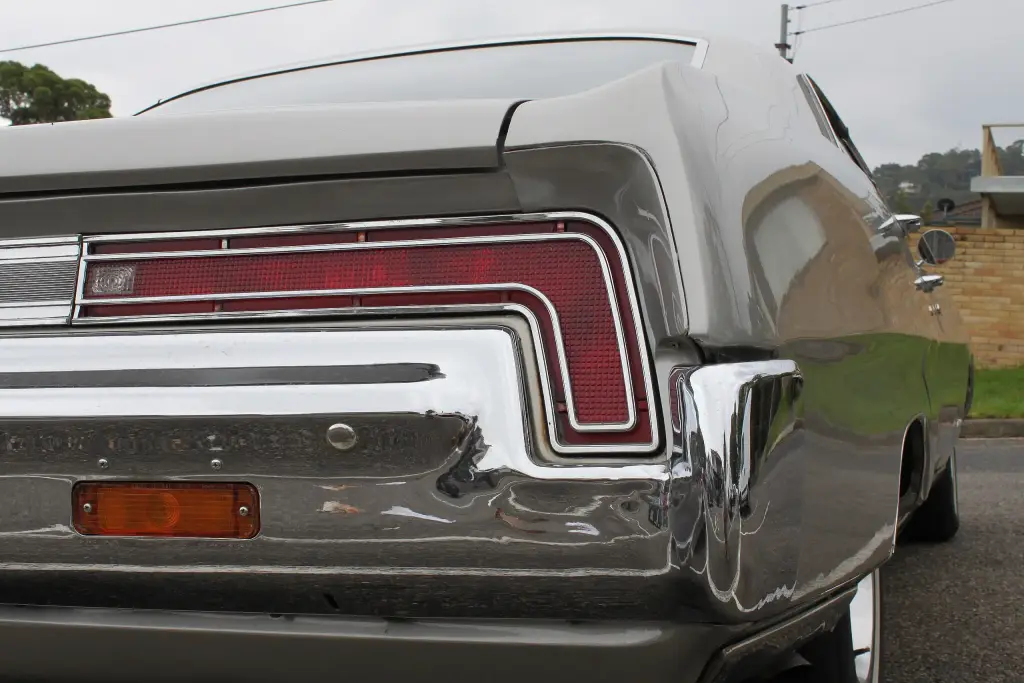
The Parisienne entered the Canadian range for 1958 as a sub-series of the Laurentian, and became a separate model in 1959. It was the Canadian nameplate for the top-of-the-line model in Pontiac showrooms, set apart by richer upholstery, courtesy lights in the cabin and boot, bright interior mouldings, distinct exterior chrome and the availability of two- and four-door hardtops and convertibles. Underneath, Canadian full-size Pontiacs were closely related to Chevrolets: they used the Chevrolet chassis and drivetrain with Pontiac-styled body panels, which had to fit the shorter 119-inch Chevrolet X-frame rather than the full perimeter frame of US Pontiacs. The engines and transmissions were Chevrolet units, from the 230 and 250 sixes to V8s of 283, 307, 327, 350, 396, 400, 409, 427 and 454 cu in, with three- and four-speed manuals, the two-speed Powerglide and later the three-speed Turbo Hydra-Matic.
The first car and the model ladder
The 1958 Parisienne was a super-deluxe halo model in the Laurentian line, much like the Chevrolet Bel Air Impala of that year. Chevrolet’s Ramjet fuel injection, introduced in the US in 1957, was a Parisienne option marketed as “Power Chief”, and the Chevrolet Turboglide automatic was available. Built in Oshawa, Ontario, the Pontiac range mirrored the full-size Chevrolets: the Strato Chief matched the Biscayne, the Laurentian the Bel Air and the Parisienne the Impala, though with more costly upholstery. From 1964 the Custom Sport, later rebadged 2+2, matched the Chevrolet Super Sport, and from 1966 the Grande Parisienne paralleled the Caprice, using US Grand Prix styling through 1967. Right-hand-drive cars were assembled locally in Australia and South Africa until 1969.
Why it worked, and the end
The mix of Pontiac styling, Chevrolet mechanicals and a price only slightly above Chevrolet was a marketing success for GM of Canada: full-size Pontiacs took third place behind Chevrolet and Ford in Canadian sales, typically more than 70,000 a year. Heavier American Pontiacs with large V8s and higher prices had little appeal in a smaller, less affluent market with higher taxes and petrol prices, and keeping unique parts for low-volume cars across the border was unprofitable. When GM downsized in 1977 the Canadian line continued, and the Parisienne reached the United States only for 1983–1986. The Safari wagon carried the name until 1989.
Design and features
- Chevrolet underneath: chassis, engines and transmissions from Chevrolet.
- Pontiac outside: Pontiac-style panels shortened to fit the 119-inch frame.
- Top Canadian trim: the best upholstery and chrome in the Pontiac showroom.
- Ramjet option: Chevrolet fuel injection sold as Power Chief in 1958.
- Long life: 28 years in Canada, with the Safari wagon running to 1989.
Pontiac Parisienne versions
- 1958 halo model: a sub-series of the Laurentian.
- Parisienne hardtops and convertible: the main body styles.
- Custom Sport / 2+2: the Canadian answer to the Chevrolet Super Sport.
- Grande Parisienne (from 1966): the Caprice rival.
- Safari wagon: the estate, sold until 1989.
The Parisienne was the Canadian counterpart of the Bonneville and shared its class with the Catalina. More Pontiacs are in the Pontiac collection.
Sources
- Pontiac Parisienne, English Wikipedia: Canadian engineering, trim, model range