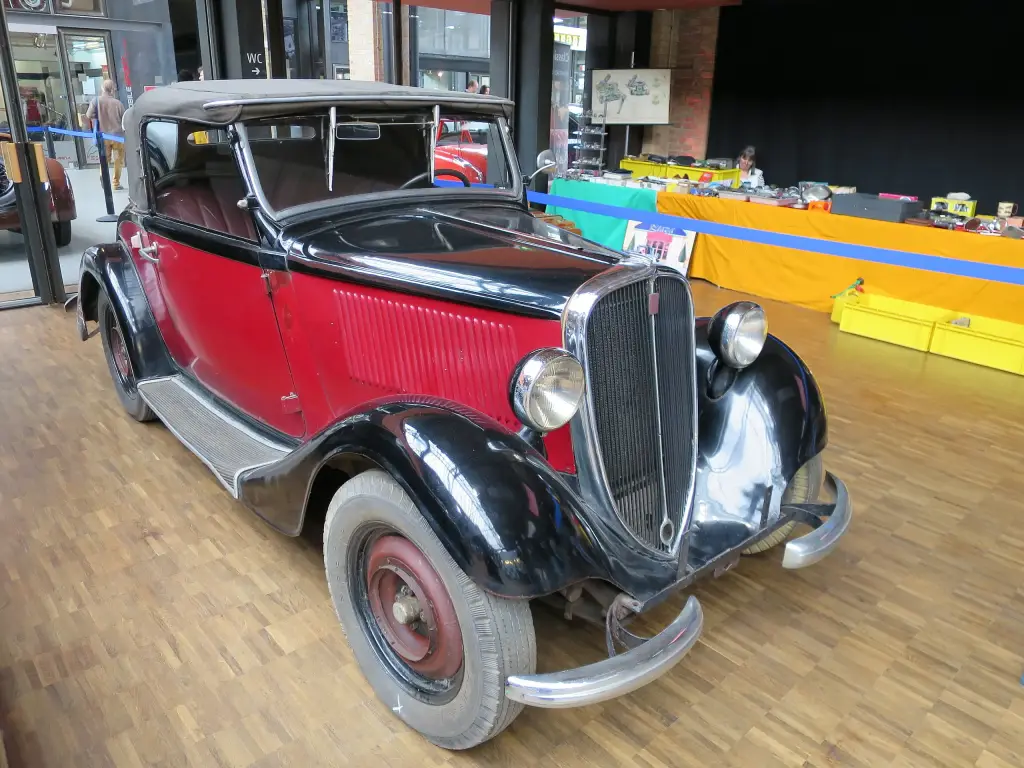
The Polski Fiat 508 is the Fiat 508 Balilla, the compact car Fiat designed and built from 1932 to 1937. It was assembled in several countries under licence, among them Poland, where Państwowe Zakłady Inżynierii in Warsaw turned out the car from 1931 under the licence agreement signed that year.
Polski Fiat 508 at a glance
| Maker | Fiat, Turin |
|---|---|
| Polish assembly | Państwowe Zakłady Inżynierii, Warsaw |
| Production | 1932–1937 |
| Unveiled | 12 April 1932, Milan trade fair |
| Engine | 995 cc four-cylinder side-valve |
| Power | 20 hp (15 kW) at 3,500 rpm, 24 hp from late 1933 |
| Gearbox | three-speed, four speeds from 1934 |
| Top speed | about 80 km/h (50 mph), 85 km/h from late 1933 |
| Bodies | two- or four-door Berlina saloon, two-seat Spider |
| Price in Italy | 10,800 lire |
| Built | about 113,000 |
The Polish material used here is the section on Fiat in Poland in the Polish article on the company; it confirms the 508 licence but gives no separate Polish specification.
History of the Polski Fiat 508
A small car for a wide market
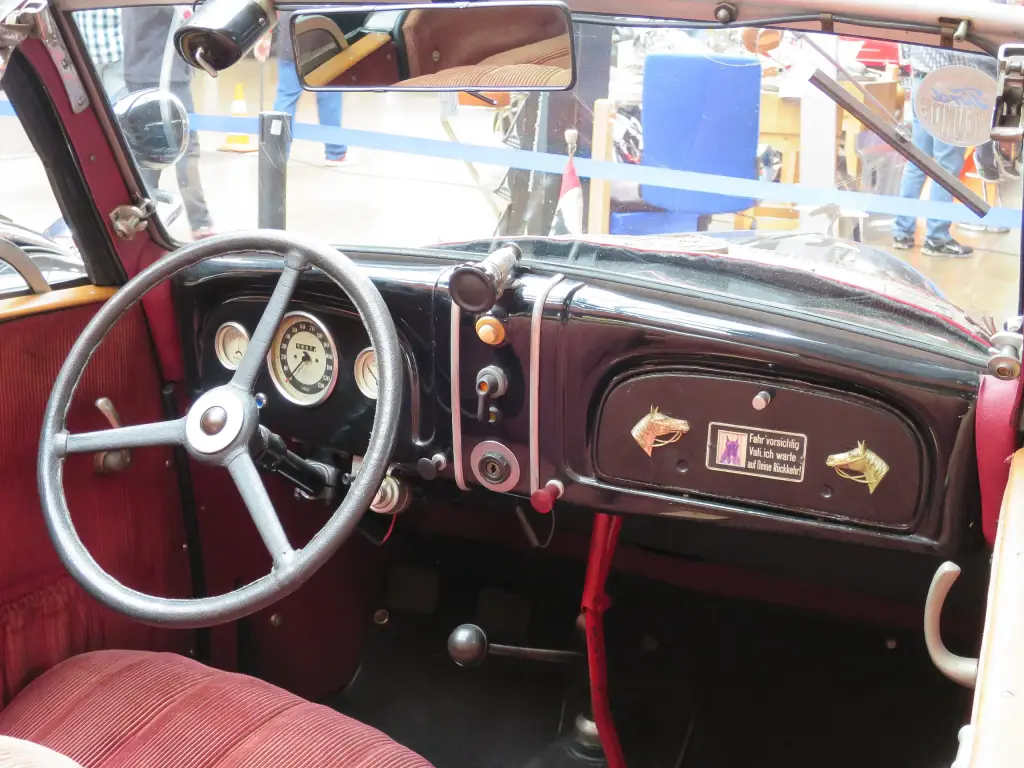
The 508 was developed by some of the leading Italian engineers of the day, among them Nebbia, Fessia and Tranquillo Zerbi, with the aim of putting some of the qualities of a large car into a modestly priced one. It was unveiled on 12 April 1932 at a motor show on the Fiera Milano site. The car seated four, had a three-speed gearbox, and could reach about 80 km/h. It cost 10,800 lire, and about 113,000 were built.
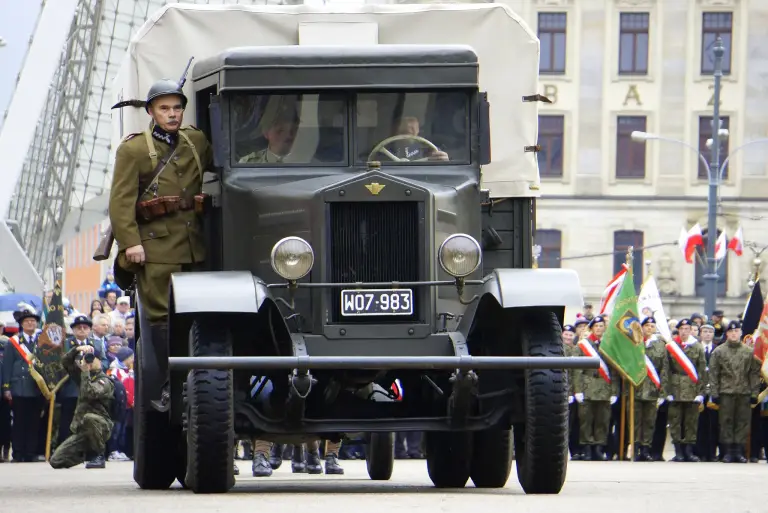
Besides Italy, the 508 was assembled in Czechoslovakia by Walter Motors, in Poland at the Państwowe Zakłady Inżynierii passenger vehicle factory, in Germany by NSU-Fiat and in France by SAFAF, which was renamed Simca-Fiat in 1934. The Polish licence agreement of 1931 covered the 508 and the 621 truck, both assembled at PZInż in Warsaw.
The name
The car was christened Balilla, a name many connect with Italian Fascism. Fiat insisted afterwards that it referred to the Genoese boy hero of 1746, Giovanni Battista Perasso, nicknamed Balilla, who threw a stone at an Austrian officer and set off a revolt against the Austrian occupation. The name was older than the movement and had been used before for a class of Italian navy submarines, for a pony tractor and for the Fiat-Ansaldo A1 biplane of the First World War.
508A and 508B
The first 508 had a front-mounted 995 cc four-cylinder side-valve engine of 20 hp at 3,500 rpm, driving the rear wheels through a three-speed gearbox without synchromesh on any ratio, with drum brakes on all four wheels. At the end of 1933 power went up to 24 hp, top speed to 85 km/h and the gearbox to four speeds. For 1934 the car received a slightly more aerodynamic Berlina body, available with two or four doors; this version was called the 508B, and the original of 1932 became the 508A.
The first 508A Berlina was a two-door with four seats. Its front seats slid forward and their backrests tilted to let people into the back. The door windows were wound down with a crank handle, the windscreen was hinged at the top and could be opened, and two wipers were driven by their own electric motor set inside above the screen. The interior had rubber mats and cloth-covered seats, and among the extras were a dash-mounted mirror, a roof light and an external luggage platform at the back. The Lusso version had better cloth and extra brightwork around the lights, grille, wheels and door handles.
With the 508B, early in 1934, came the more aerodynamic body, a four-speed gearbox and a four-door Berlina alongside the two-door, which was dropped in Italy in June. The four-door was then facelifted with a modified grille and a slightly raked windscreen, pointing to the 508C that arrived in 1937. Standard and Lusso versions of the four-door were both sold. The Spider was a two-seat cabriolet with leather seats, a folding windscreen and a fabric hood that stowed in its own bag; it too was offered in standard and Lusso form, and it received the 1934 mechanical upgrades.
Design and features
- Side-valve engine: 995 cc and 20 hp, raised to 24 hp at the end of 1933.
- Cheap transport: 10,800 lire in Italy for a four-seat car.
- Built in four countries outside Italy: Czechoslovakia, Poland, Germany and France.
- Two bodies: the Berlina saloon and the two-seat Spider cabriolet.
- Lusso trim: better cloth and extra chrome for buyers who wanted it.
Polski Fiat 508 versions
- 508A (1932–1934): the original car with a three-speed gearbox and 20 hp.
- 508B (1934–1937): more aerodynamic body, four-speed gearbox and 24 hp.
- Berlina: the saloon, in two- and four-door form.
- Spider: a two-seat cabriolet with a folding screen and fabric hood.
- Lusso: the de luxe version of either body.
The car that followed the 508 in Poland was the Polski Fiat 518 Mazur, and the truck assembled beside it was the Polski Fiat 621. More cars are in the Polski Fiat collection.
Video: Fiat 508, test drive, series 2, episode 22
Video on YouTube.
Sources
- Fiat 508, English Wikipedia: launch, name, engines, 508A and 508B, bodies, assembly in Poland and elsewhere
- FIAT, Polish Wikipedia: 1931 licence agreement and assembly of the 508 and 621 at PZInż