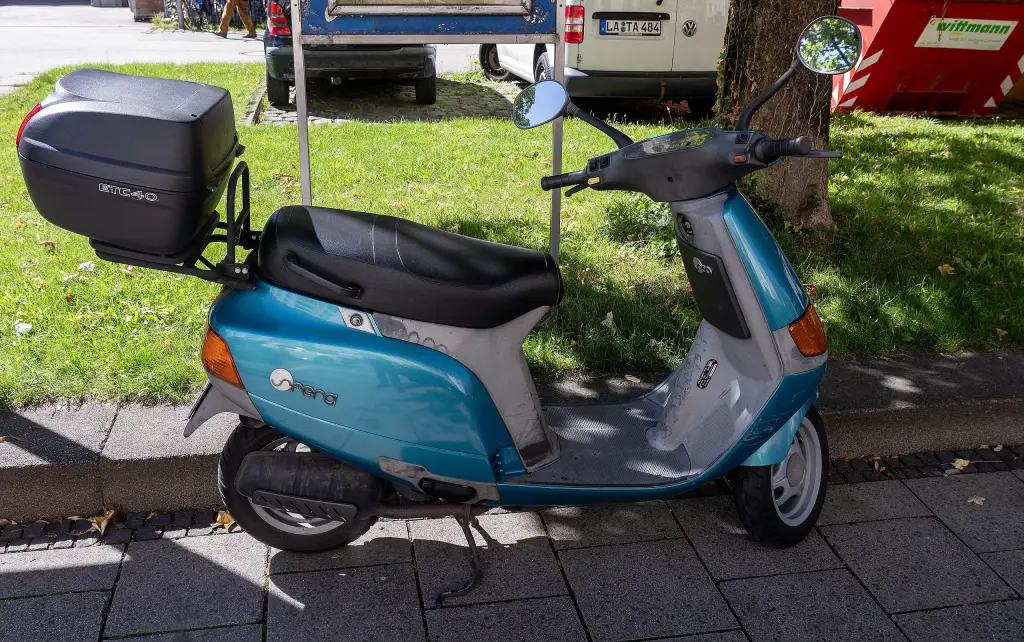
The Piaggio Sfera is a scooter produced by the Italian manufacturer Piaggio from 1990 to 1998. The word “sfera” means sphere or globe, and the scooter was the first Piaggio made with a plastic body.
Piaggio Sfera at a glance
| Production | 1990–1998 |
|---|---|
| Presented | Monte Carlo show, December 1990 |
| Designer | Luciano Marabese |
| Body | the first Piaggio scooter with a plastic body |
| Project cost | over 50 billion Italian lire |
| First series engines | 50 cc two-stroke of 3.2 hp and, from 1992, 80 cc of 9.6 hp |
| First series brakes | double drum |
| Second series | from 1995, with a 125 cc four-stroke |
| Award | Compasso d’Oro, 1991 |
| Descendants | Piaggio Quartz and Gilera Typhoon |
The article is based on a single source, the English Wikipedia page on the Sfera.
History of the Piaggio Sfera
The Sfera was the result of a project costing over 50 billion Italian lire, and its launch at the Monte Carlo show in December 1990 was a small revolution, because it was the first Piaggio scooter made with a plastic body. Designed by Luciano Marabese and produced in the Piaggio factory in Pontedera, it soon gathered acclaim above all for its simplicity: the design was innovative with clean lines, while the reliable mechanics were based on a 50 cc two-stroke engine of 49.4 cm3 and 3.2 hp with air cooling and double drum brakes. In 1991 it won the Compasso d’Oro award.
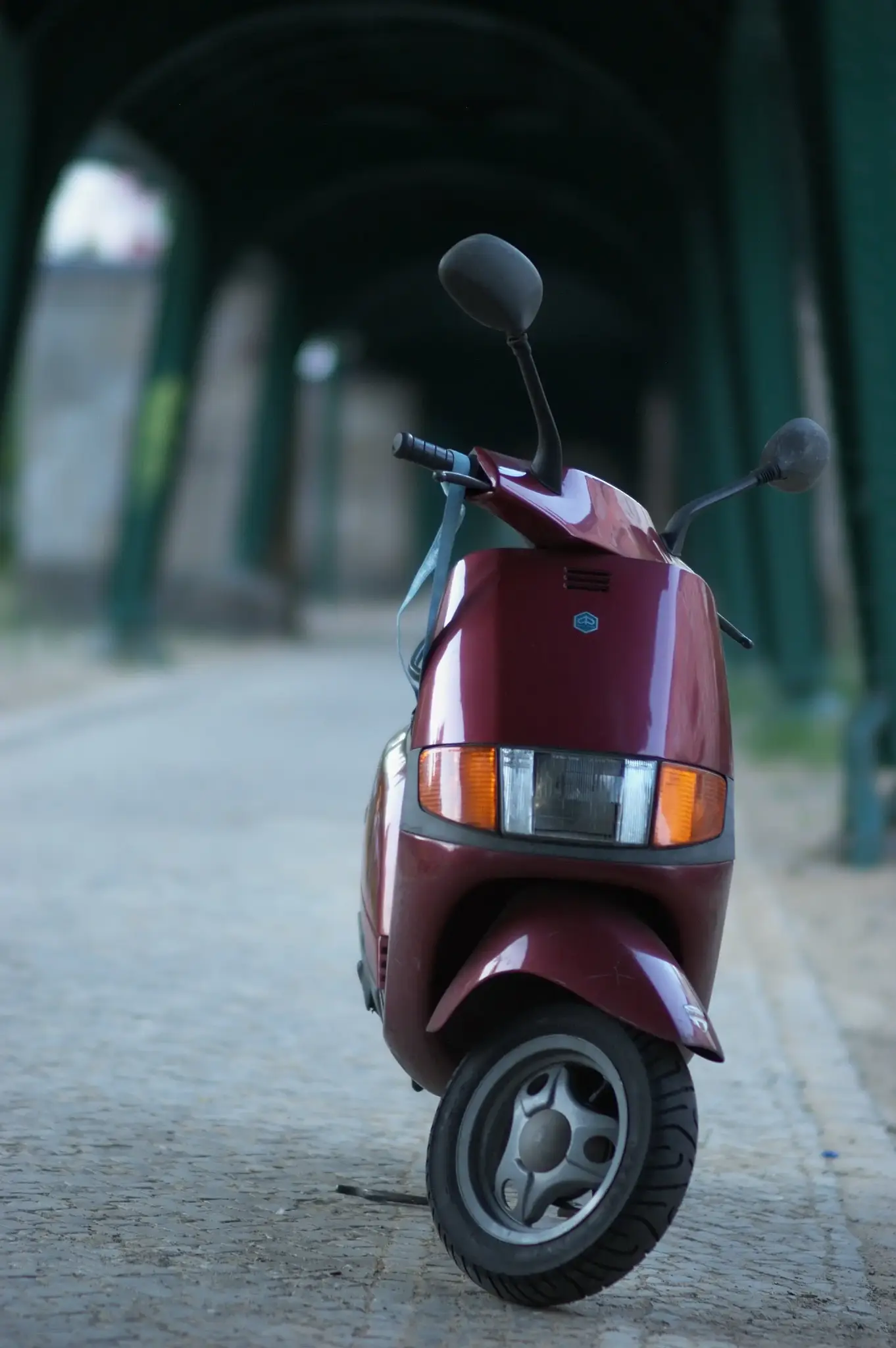
The first series (1990–1995)
In 1992 the range was expanded with the Sfera 80, which mounted a 74.72 cm3 engine delivering 9.6 hp, a different rear suspension, wider tyres and a two-seater saddle with side handles and footrests for the passenger. The Sfera 50 was offered in three versions: Maquillage, Cubik, with a two-seater saddle like the Sfera 80 but without side handles, and Antistarter, the same as the Maquillage but with a standard electronic anti-theft device. In 1994 the Sfera had a light restyling with a new two-seater saddle, bumper strips on the sides, a new logo, new colours and a luggage rack, and the range was reduced to the 50 Maquillage only.
The second series (1995–1998)
A completely new version was introduced in 1995. Alongside the 50, the 125 made its debut with a four-stroke engine from the Piaggio Four Stroke family; it differed from the 50 in the top box in the standard colour and in the wider saddle and footpegs. It remained unchanged until 1998, when the Sfera went out of production without being replaced. The later Piaggio Fly is considered its natural heir.
Derived models and the Bimodale
Two other scooters were developed on the Sfera base: the Piaggio Quartz, essentially an equivalent version with a liquid-cooled engine, and the Gilera Typhoon. In April 1991 the hybrid Sfera Bimodale prototype was presented with a 50 cc combustion engine flanked by a 0.5 kW Vickers electric motor, the two chosen with a knob on the handlebar and never working together; it reached 25 km/h on two 40 A lead-gel batteries recharged in about six hours. The Bimodale stayed a prototype, though the technology returned on the Piaggio Zip&Zip, which went into production in 1994.
Design and features
- Plastic body: the first Piaggio scooter built this way, and a style landmark of 1990.
- Simplicity: clean lines and reliable two-stroke mechanics.
- Award-winning design: the Compasso d’Oro in 1991.
- Wide range: 50, 80 and later 125 cc, with special versions and an anti-theft model.
Piaggio Sfera versions
- Sfera 50 (1990): 49.4 cm3, 3.2 hp, double drum brakes.
- Sfera 50 Maquillage, Cubik and Antistarter: three trim levels of the first series.
- Sfera 80 (1992): 74.72 cm3, 9.6 hp, wider tyres and a two-seater saddle.
- Sfera 125 (1995): the first Piaggio four-stroke of this family.
- Sfera Bimodale (1991): a hybrid prototype that never entered production.
The Sfera was replaced in the range by the Fly, and its platform also produced the Typhoon. More scooters are in the Piaggio collection.
Video: Meine neue Piaggio Sfera NSL 50 – 1993
Video by Koettn on YouTube.
Sources
- Piaggio Sfera, English Wikipedia: design, series, versions, prototype, descendants