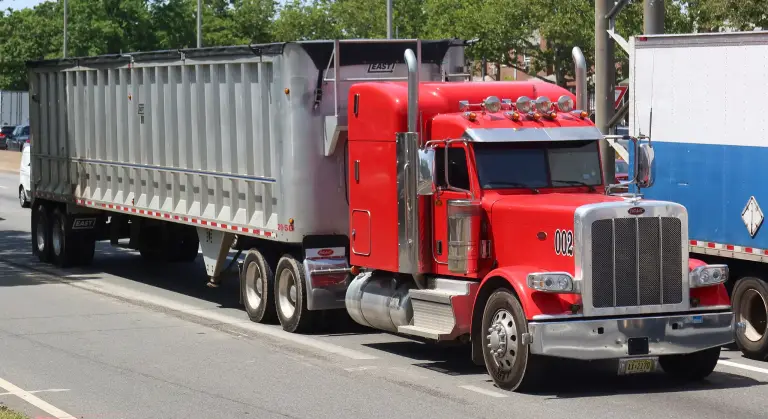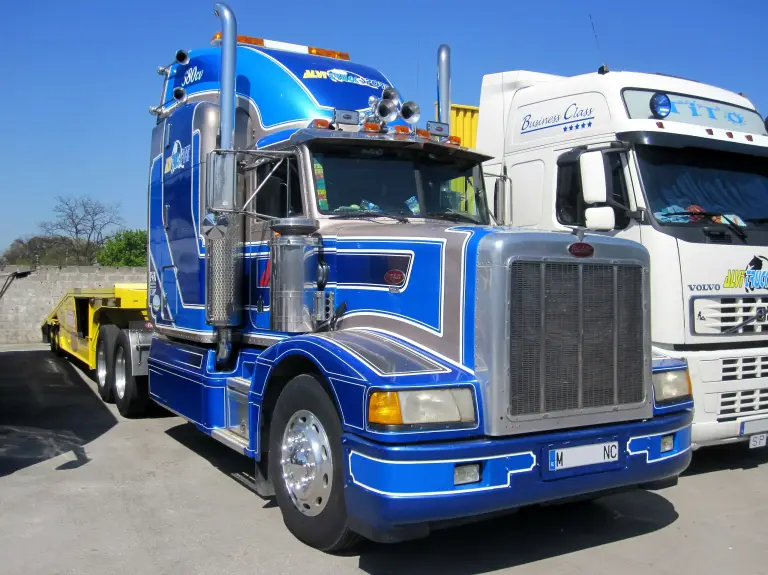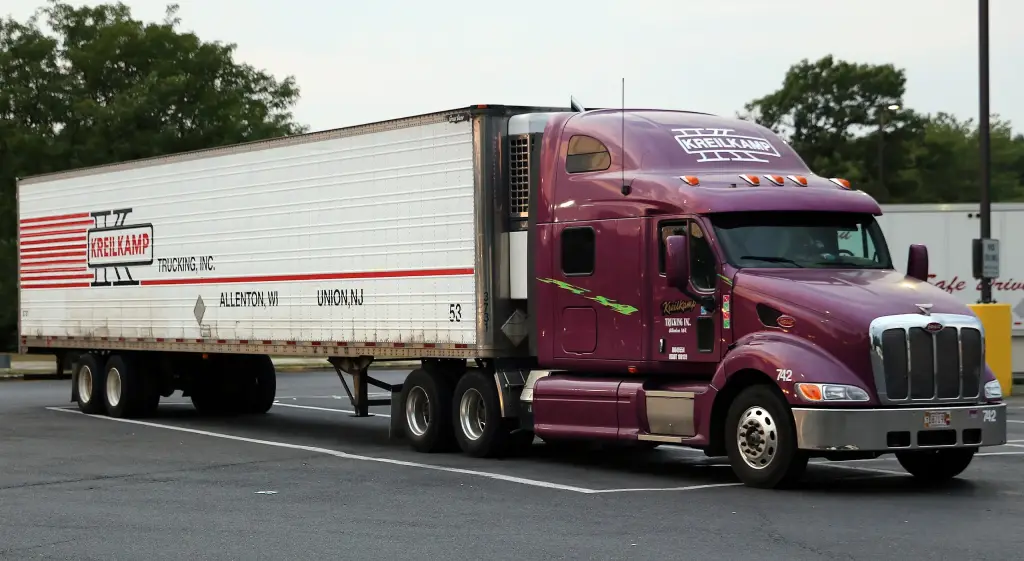
The Peterbilt 387 of 1999 was the first Peterbilt aerodynamic conventional with a wide-body cab. It shared its cab structure with the Kenworth T2000, used its own chassis and hood, and replaced the 377 at the top of the aerodynamic range until the 587 took over in 2010.
Peterbilt 387 at a glance
| Maker | Peterbilt Motors Company (PACCAR) |
|---|---|
| Production | 1999–2010 |
| Class | on-highway, Class 8 |
| Layout | conventional cab, wide body |
| Replaced | 377, indirectly |
| Cab | shared structure with the Kenworth T2000 |
| Chassis | Peterbilt frame with its own hood, roof fairing and interior |
| Cab forms | day cab, mid-roof sleeper, raised-roof sleeper |
| Replaced by | 587 in 2010 |
| Note | unrelated to the 1976–1987 truck of the same number |
History of the Peterbilt 387
The 387 arrived in 1999 as the indirect successor to the 377. It was the first Peterbilt aerodynamic conventional with a wide-body cab, sharing its cab structure with the Kenworth T2000, the first all-new cab design from PACCAR since 1972, while using its own Peterbilt frame, hood, roof fairing and interior. That combination gave the truck the space of a wide cab with a distinct Peterbilt front.
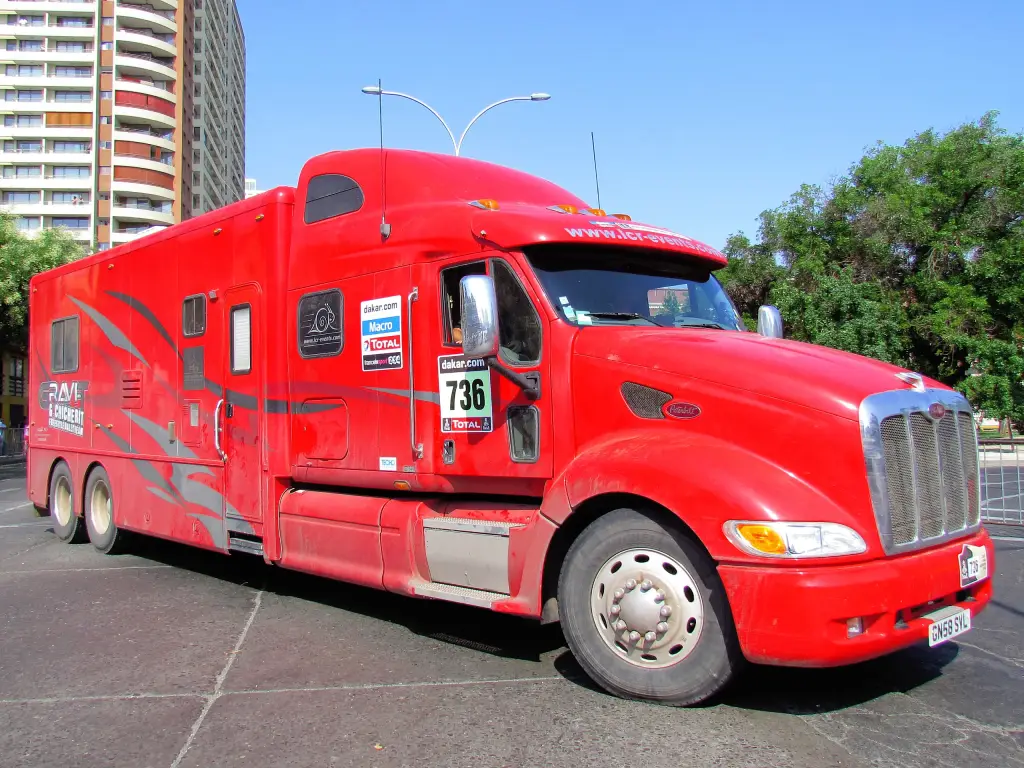
Buyers could order the 387 as a day cab, a mid-roof sleeper or a raised-roof sleeper, which covered everything from regional haulage to long-distance team operation. With the 385 handling shorter trucks and the 386 still to come, the 387 was the most aerodynamic Peterbilt of its generation and the one aimed at fleets watching fuel consumption.
The model was replaced in 2010 by the 587, the first Peterbilt with a model number beginning with 5, which shared its cab structure with the Kenworth T700 and brought a sharper-edged hood. The 387 is not related to the heavy-duty truck of the same number built between 1976 and 1987, a model whose number was reused only once in Peterbilt history.
Design and features
- Wide-body cab: the first aerodynamic Peterbilt conventional with the wider cab.
- Kenworth T2000 structure: a shared cab with Peterbilt’s own frame, hood and interior.
- Three cab forms: day cab, mid-roof sleeper and raised-roof sleeper.
- Aerodynamic priority: shaped for fuel economy on long-haul work.
- Number reuse: the only Peterbilt model number to be used twice.
Peterbilt 387 versions
- 387 day cab: for regional work.
- 387 mid-roof sleeper: the middle of the range.
- 387 raised-roof sleeper: for long-distance and team operation.
- 587 (from 2010): the successor with a Kenworth T700 cab.
The model it replaced is the Peterbilt 377, and the traditional-cab alternative is the 386. The long-hood flagship of the same years is the 389, and all models are under Peterbilt.
Video: 2006 Peterbilt 387 Semi Tractor
Video by RepocastCompany on YouTube.
Sources
- Peterbilt, English Wikipedia: 1999 launch, T2000 cab, 587 replacement, number reuse
- List of Peterbilt vehicles, English Wikipedia: production years, cab forms, relationship to the 377