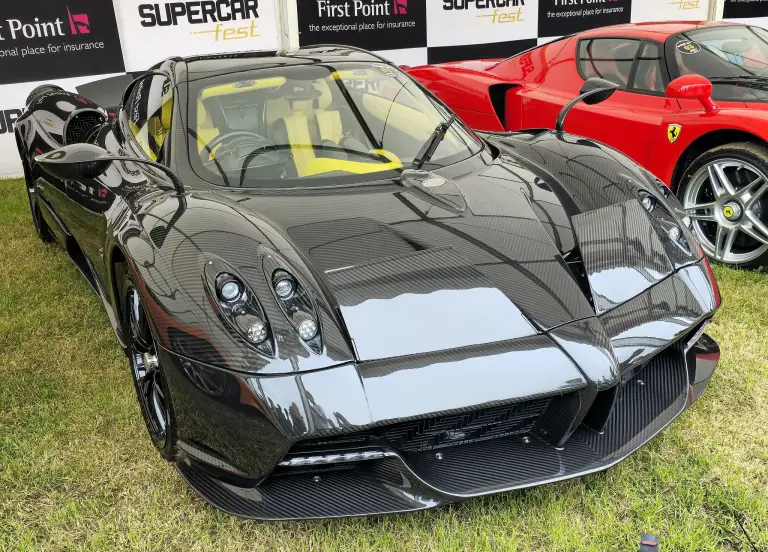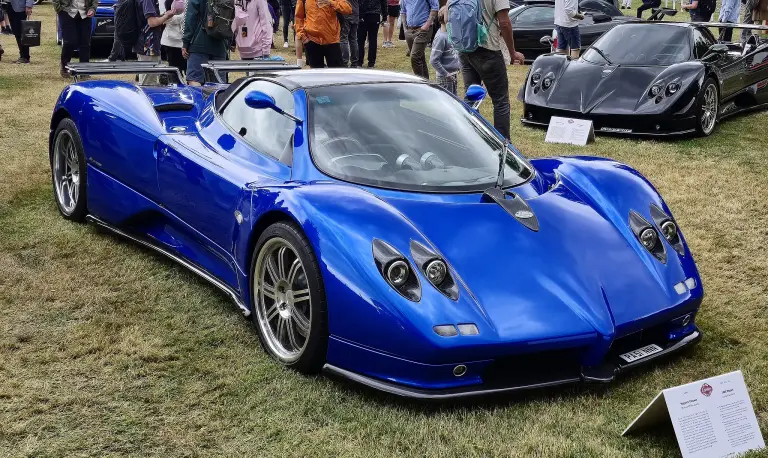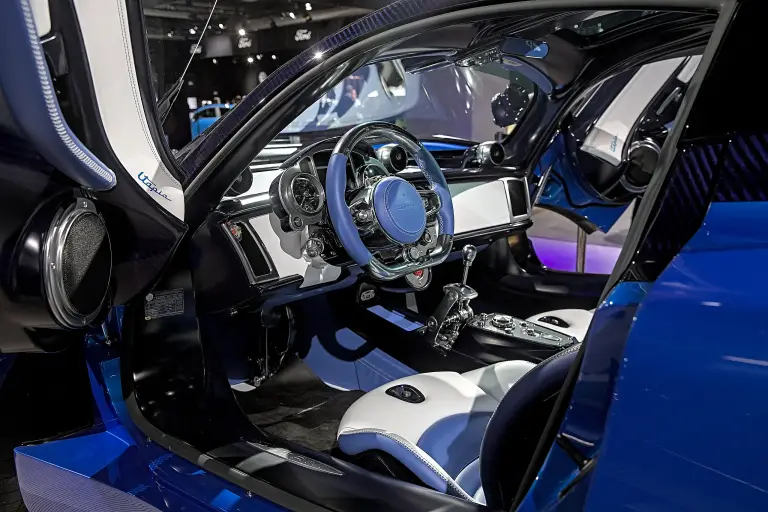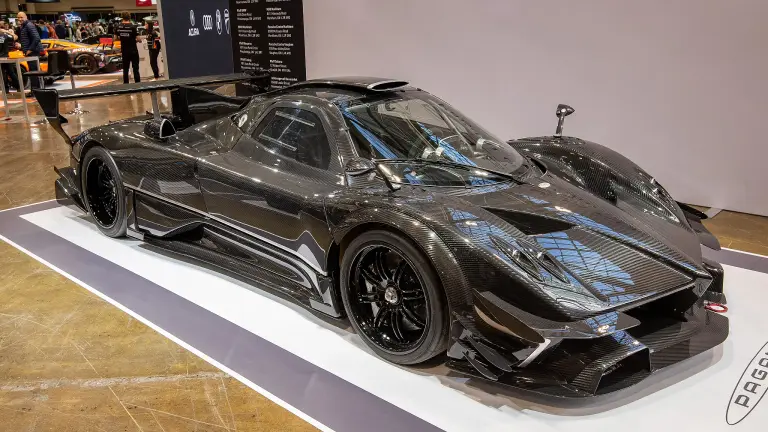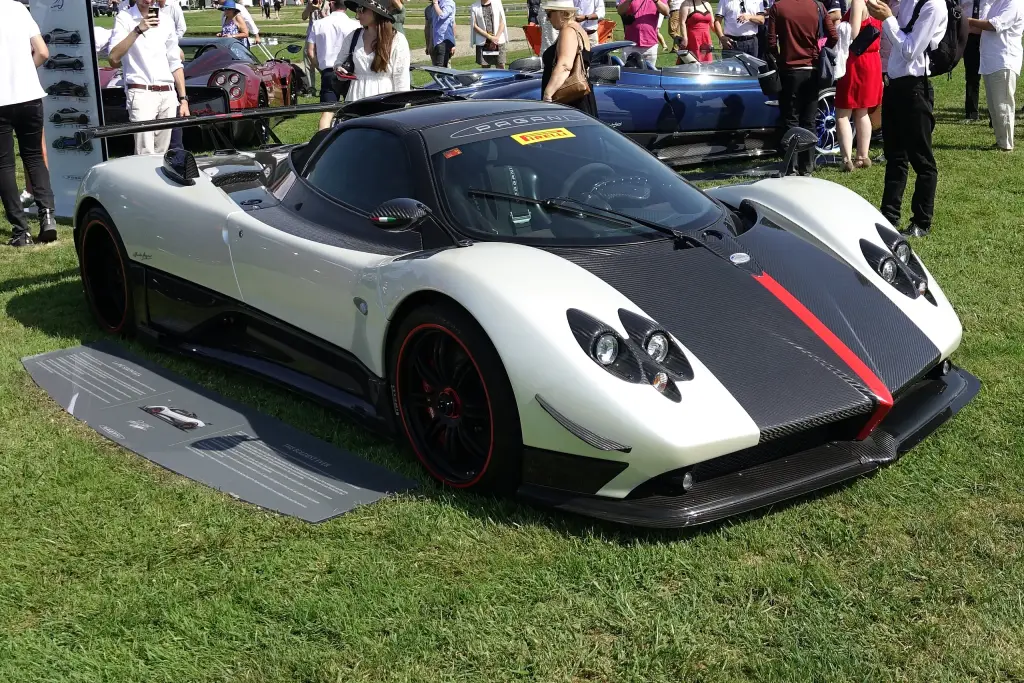
The Pagani Zonda Cinque (Italian for five) was meant to be the last iteration of the Zonda: a road-legal version of the Zonda R. Only five were built, hence the name, with deliveries planned for June 2009. It was developed at the request of the Pagani dealer in Hong Kong.
Pagani Zonda Cinque at a glance
| Maker | Pagani, Italy |
|---|---|
| Based on | Zonda F and Zonda R |
| Built | 5 coupés, then 5 roadsters |
| Deliveries | planned for June 2009 |
| Engine | 7.3 L V12 from Mercedes-AMG, 678 PS |
| Torque | 780 N·m |
| Gearbox | 6-speed automated manual, shifts in under 100 ms |
| 0–100 km/h | 3.4 seconds |
| Top speed | over 350 km/h |
| Weight | 1,210 kg, 20 kg less than the Zonda F |
| Cornering | 1.45 g |
| Price (Italian Wikipedia) | about one million euros each |
The two sources differ on downforce: English Wikipedia gives 750 kg at 355 km/h, Italian Wikipedia 775 kg, so no figure is stated here. Other numbers agree or come from one source only.
History of the Pagani Zonda Cinque
A last Zonda for Hong Kong
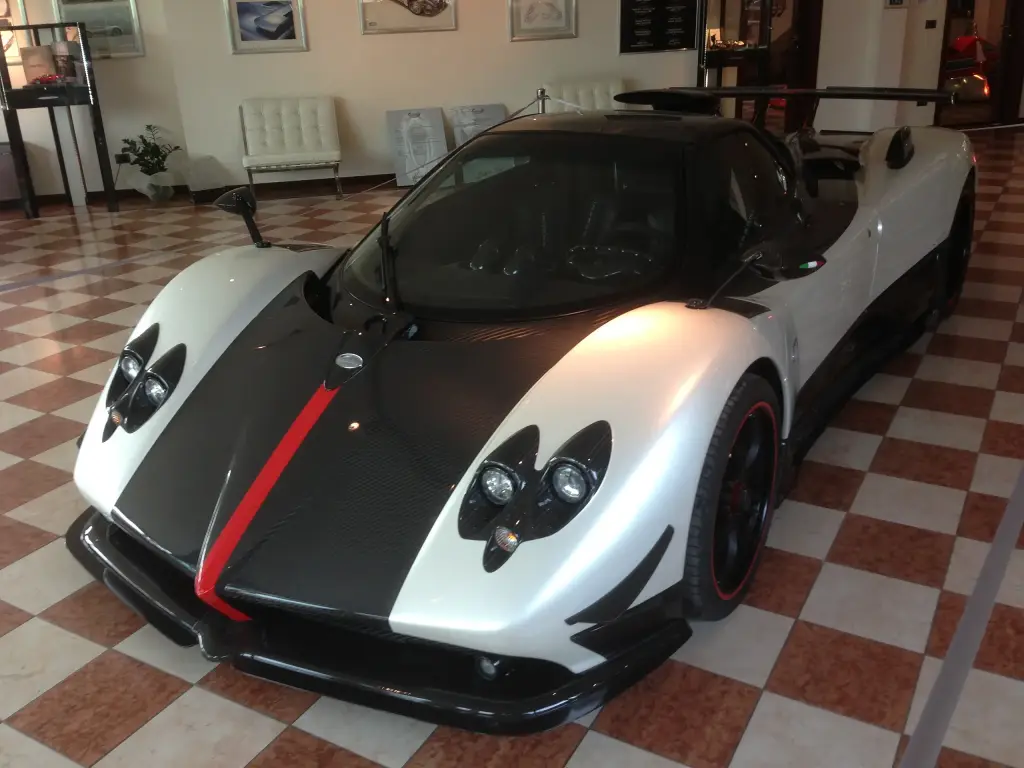
The Cinque was developed at the request of the Pagani dealer in Hong Kong and built on the basis of the Zonda F, at about one million euros each according to Italian Wikipedia. It was meant to be the last iteration of the Zonda and is a road-legal version of the track-only Zonda R. After the five coupés, five more were built as the Zonda Cinque Roadster, announced in 2009, with the same specification as the coupé.
Gearbox and engine
The big change was a new 6-speed automated manual gearbox with steering-wheel controls, the first on a Pagani, with shifts in under 100 milliseconds and three modes, Comfort, Sport and Race. Italian Wikipedia says it is a CIMA unit robotised by Automac Engineering, and that one car exists with a manual gearbox. The 7.3-litre V12 now produced 678 PS and 780 N·m and the car reached 100 km/h in 3.4 seconds.
Materials and aerodynamics
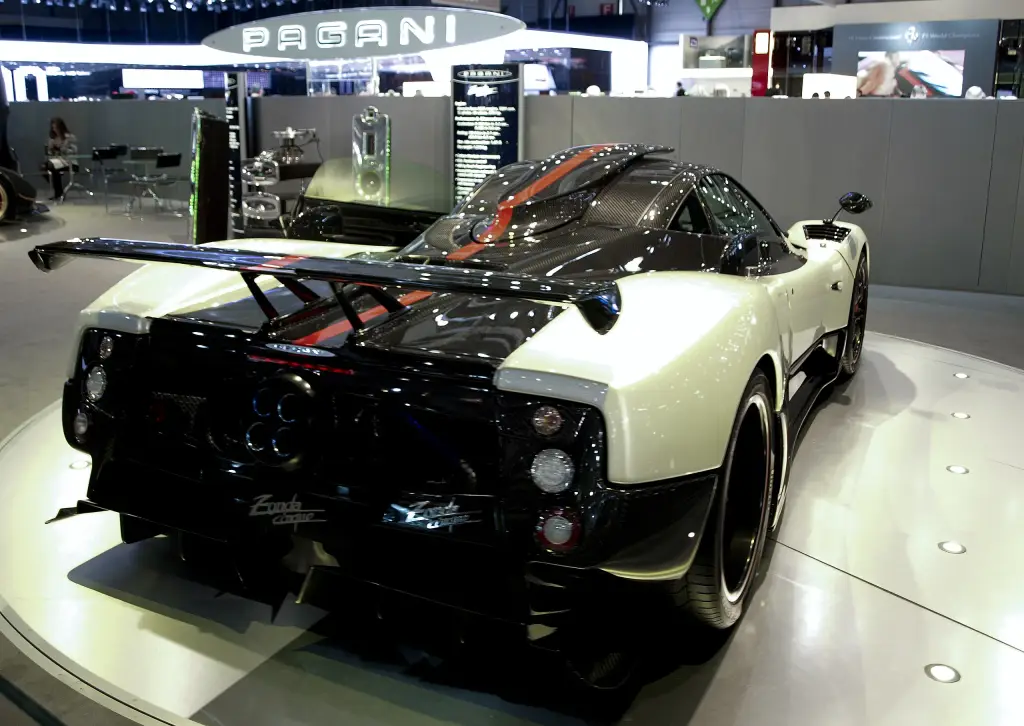
The Cinque used a new form of carbon fibre called carbo-titanium, which includes titanium in the weave to increase strength and rigidity, and magnesium and titanium suspension parts, made with the Swedish firm Öhlins. The revised bodywork has a longer front splitter, new side skirts, a rear diffuser, bumper canards, a flatter underside and a large roof-mounted air scoop that cools the engine as well as helping aerodynamics.
Design and features
- Cockpit: a carbon-fibre steering wheel, Toora sport seats covered in leather and a steel roll bar.
- Brakes: carbon-ceramic discs of 380 mm with Brembo six-piston calipers at the front and four-piston at the rear.
- Wheels and tyres: forged aluminium and magnesium wheels with Pirelli P Zero Corsa tyres, 255/35 at the front and 335/30 at the rear.
- Weight balance: 47 per cent at the front and 53 per cent at the rear.
Pagani Zonda Cinque versions
- Cinque coupé: five cars.
- Cinque Roadster (2009): five cars, same specification as the coupé but without a roof.
- Zonda Tricolore (2010): announced to mark the 50th anniversary of the Frecce Tricolori, Italy’s aerobatic team; three were built from a planned one-off. It has much of the Cinque body, clear blue lacquer with red, white and green stripes, and a small wing echoing the tail of the team’s Aermacchi MB-339; it was priced at £1.2 million and reached 354 km/h.
More Pagani cars are in our Pagani collection: the Zonda with all its versions, the track-only Zonda R and the Huayra that replaced it.
Sources
- Pagani Zonda, English Wikipedia: Cinque, Roadster and Tricolore
- Pagani Zonda Cinque, Italian Wikipedia: design, mechanics, performance