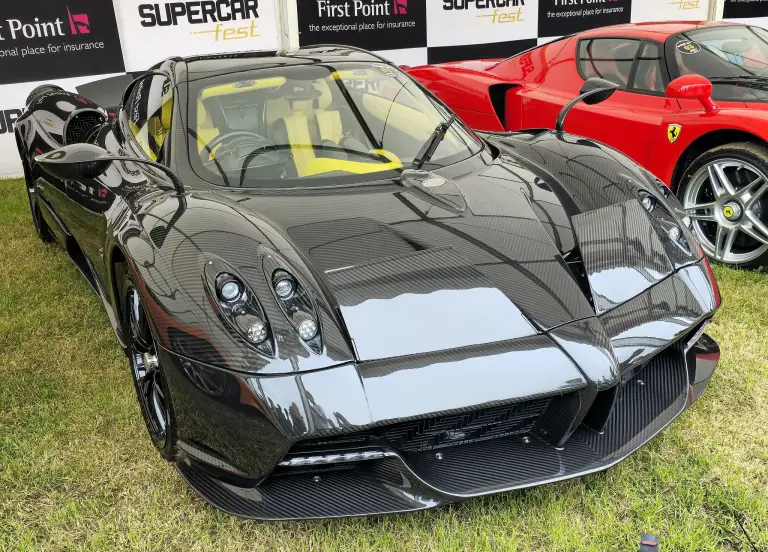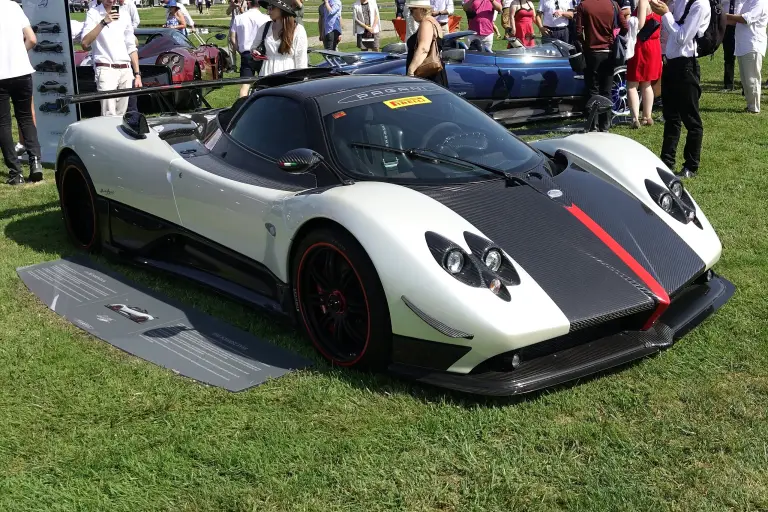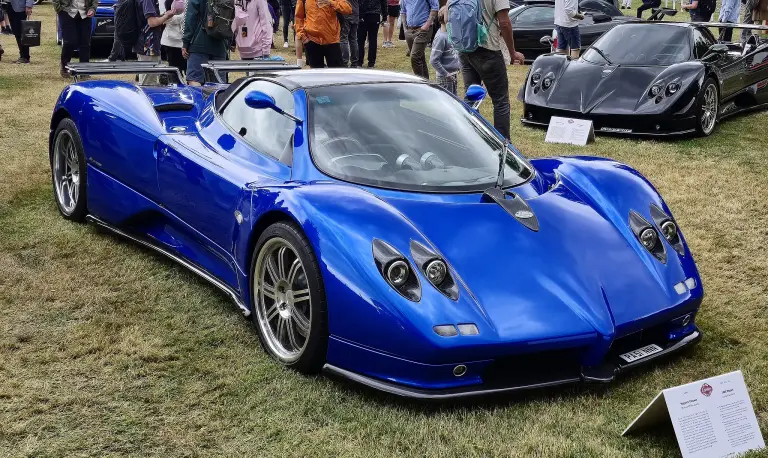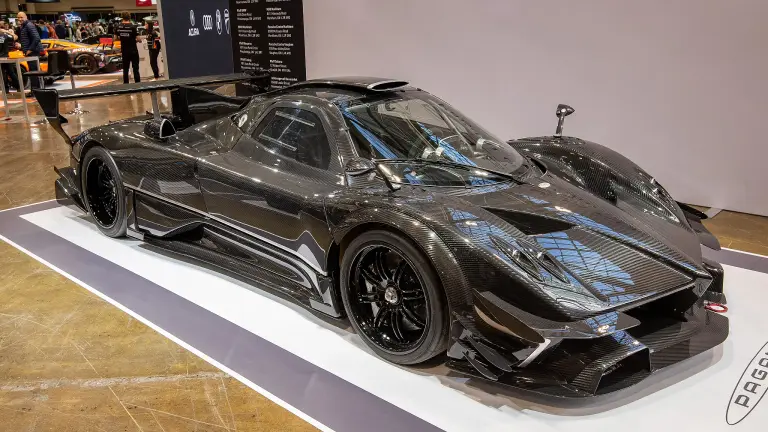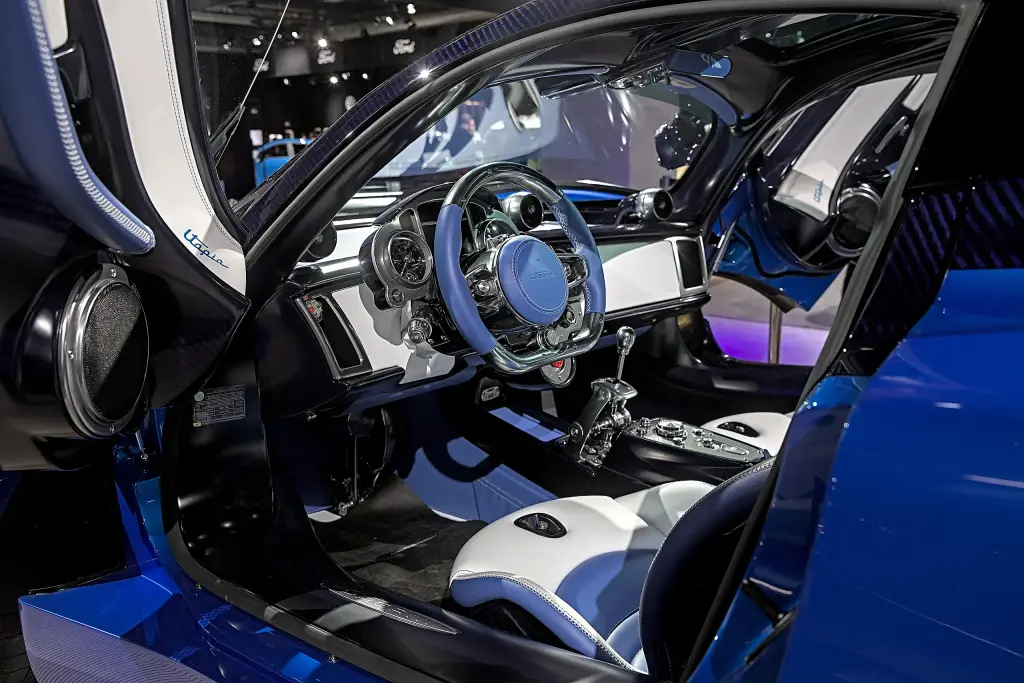
The Pagani Utopia is a mid-engine sports car from the Italian maker Pagani, developed under the code name C10. It was presented on 12 September 2022 at the Teatro Lirico in Milan. It is the third Pagani model, superseding the Huayra, with more power and a manual gearbox option.
Pagani Utopia at a glance
| Maker | Pagani, Italy |
|---|---|
| Code name | C10, after the C8 (Zonda) and C9 (Huayra) |
| Presented | 12 September 2022, Teatro Lirico, Milan |
| Engine | M158 twin-turbo V12, 5,980 cc, built by Mercedes-AMG |
| Power | 864 PS at 6,000 rpm |
| Torque | 1,100 N·m between 2,800 and 5,900 rpm |
| Engine weight | 262 kg, dry |
| Gearbox | 7-speed Xtrac, transverse; manual or automated manual |
| Dry weight | 1,280 kg (German Wikipedia) |
| 0–100 km/h | 3.1 seconds (German Wikipedia) |
| Production | 99 coupés, all already assigned |
Power, torque and engine weight agree in English, German and Italian Wikipedia; dry weight and acceleration are given by German Wikipedia only. This page covers the car as it was presented in 2022.
History of the Pagani Utopia
Six years of development
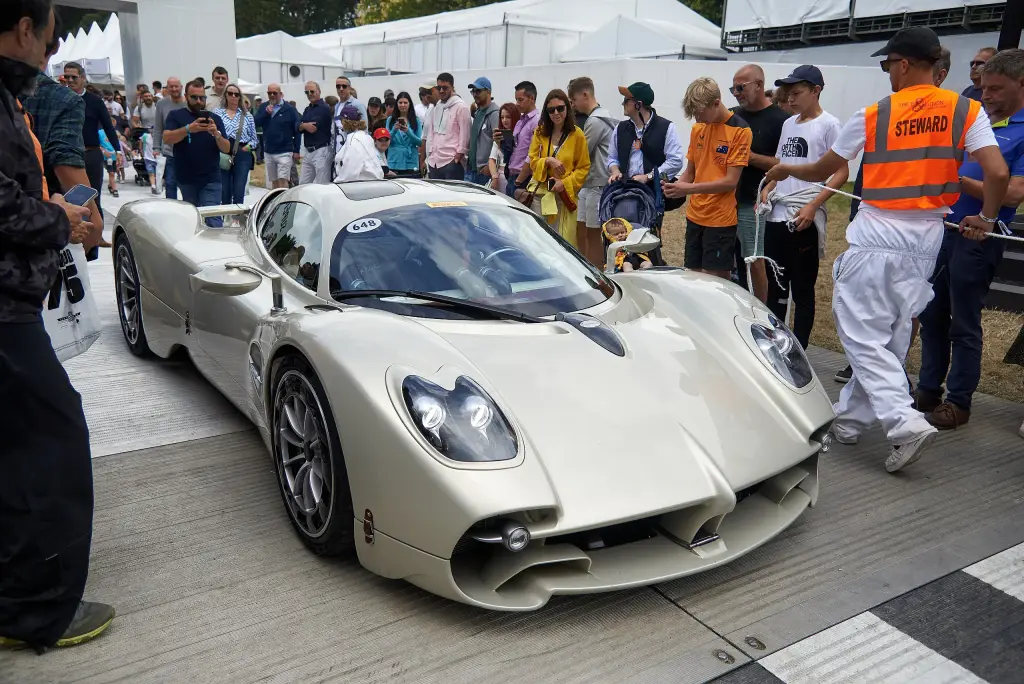
The Utopia was developed over more than six years and used eight complete prototypes, three of which were dedicated to engine testing that lasted about two years. Twelve scale models were made: ten at 1:5 scale and two at full size. The first road-testing prototypes were spotted in May 2022, and the finished car was presented on 12 September 2022 in Milan; the next day it was shown to the public in the Sala del Cenacolo of the Leonardo da Vinci science museum.
Engine and gearbox
The six-litre V12 has its banks at 60 degrees and two turbochargers. It was designed and built in Germany by Mercedes-AMG and produces 864 PS and 1,100 N·m, with the torque available over a wide band. Pagani worked with Xtrac on a 7-speed gearbox mounted transversally, offered as a pure manual or an automated manual and coupled to an electro-mechanical differential with a triple-plate clutch. The driver can choose between Comfort, Wet, Sport and Race modes.
Structure and chassis
The car has a new multi-material monocoque of titanium and carbon, which Italian Wikipedia says raises torsional rigidity by 38 per cent for the same weight. The front and rear subframes are made of chrome-molybdenum steel, and the double-wishbone suspension is of forged aluminium, based on experience gathered during the development of the track-only Huayra R. The Utopia has butterfly doors and, for the first time on a Pagani, two windows in the roof.
Design and features
- Brakes: Brembo carbon-ceramic discs of 410 mm at the front with six-piston calipers and 390 mm at the rear with four-piston calipers.
- Tyres: Pirelli P Zero Corsa tyres made for the car, 21 inches at the front and 22 inches at the rear.
- Exhaust: titanium with a ceramic coating, four square-arranged tailpipes, about 6 kg.
- Interior: aluminium and leather, a steering wheel milled from a block of aluminium, analogue instruments without screens, and a raised gear lever with an open gate.
Pagani Utopia versions
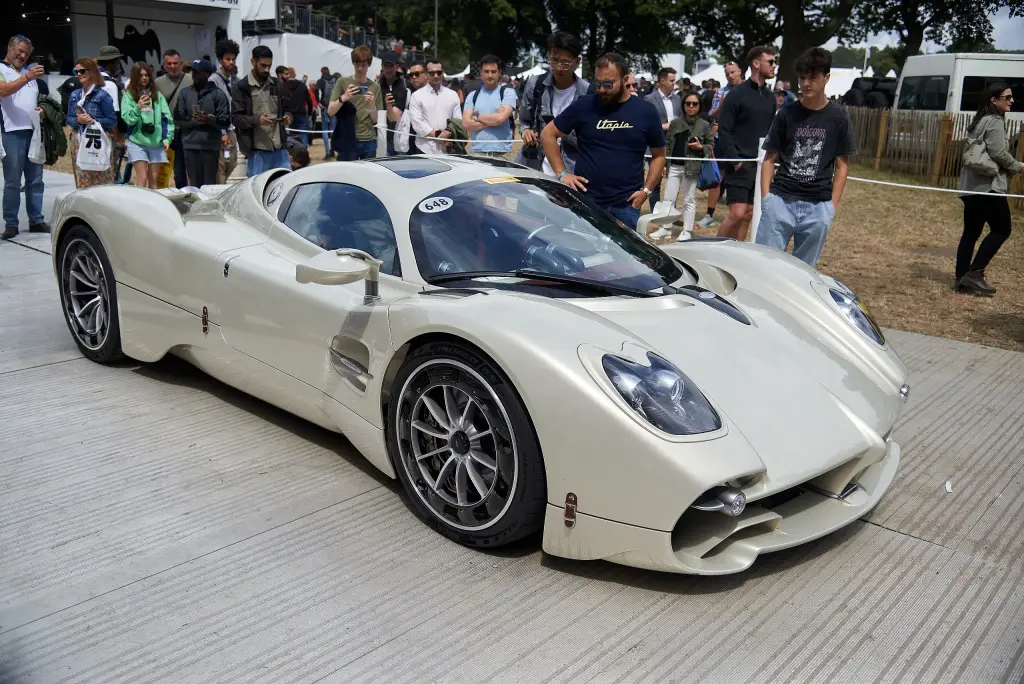
- Coupé (2022): 99 cars planned, excluding the eight coupé prototypes, all of them already assigned to customers; with a base price of more than two million euros according to German Wikipedia.
More Pagani cars are in our Pagani collection, among them the Huayra that the Utopia replaces, the Zonda that started the brand and the track-only Zonda R.
Sources
- Pagani Utopia, English Wikipedia: development, engine, production
- Pagani Utopia, Italian Wikipedia: debut, monocoque, brakes and tyres
- Pagani Utopia, German Wikipedia: weight, acceleration, interior