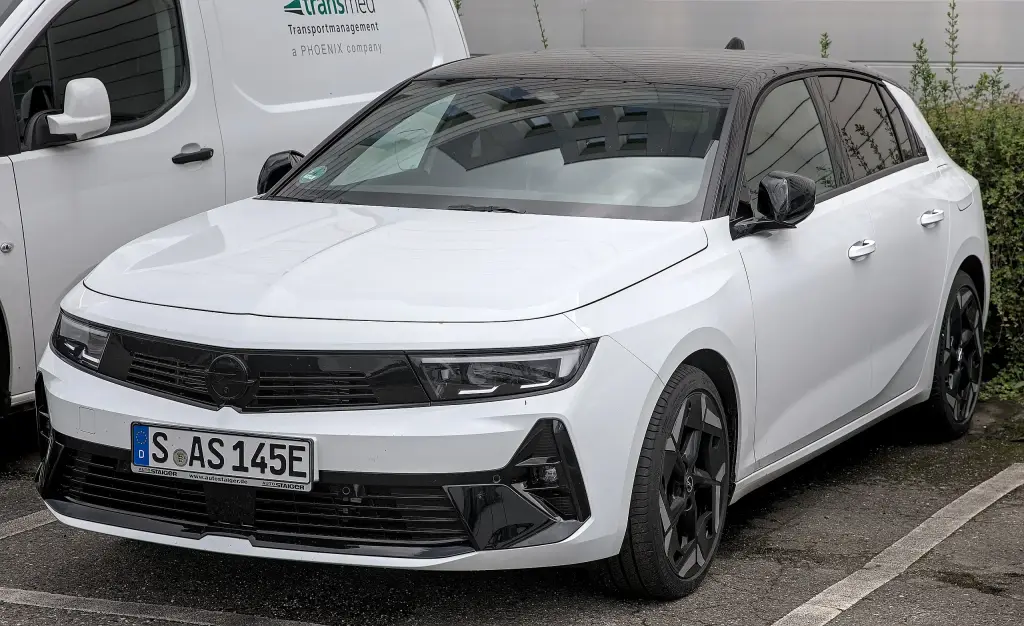
The Opel Astra is Opel’s compact car, launched in September 1991 as the direct replacement for the Kadett. Six generations have followed, in hatchback, saloon, estate, coupé and cabriolet forms, and the name is also used by Vauxhall in Britain.
Opel Astra at a glance
| Maker | Opel, a General Motors brand |
|---|---|
| Production | since September 1991 |
| Generations | six (Astra F to Astra L) |
| Class | compact car, C-segment |
| Replaced | Opel Kadett |
| Body styles | hatchback, saloon, Caravan/Sports Tourer estate, cabriolet, panel van |
| Coupé | Astra GTC, from 2004 |
| Sports model | Astra OPC, from 2005 |
| Retractable hardtop | Astra Twin Top, from 2006 |
| Estate renamed | Sports Tourer, 2009 |
| British name | Vauxhall Astra |
Based on one source, the English Wikipedia article on the Opel Astra.
History of the Opel Astra
From Kadett to Astra
The Astra name came from Vauxhall, which had sold the Kadett D and Kadett E as the Vauxhall Astra since March 1980. In the early 1990s GM Europe standardised model names across its marques, so the Kadett’s successor became the Astra in every market. Because Opel treats the Astra as a continuation of the Kadett line, the first Astra was called the Astra F rather than the Astra A, following the Kadett E. Enthusiasts sometimes call the first two Vauxhall Astras the Astra D and Astra E for the same reason.
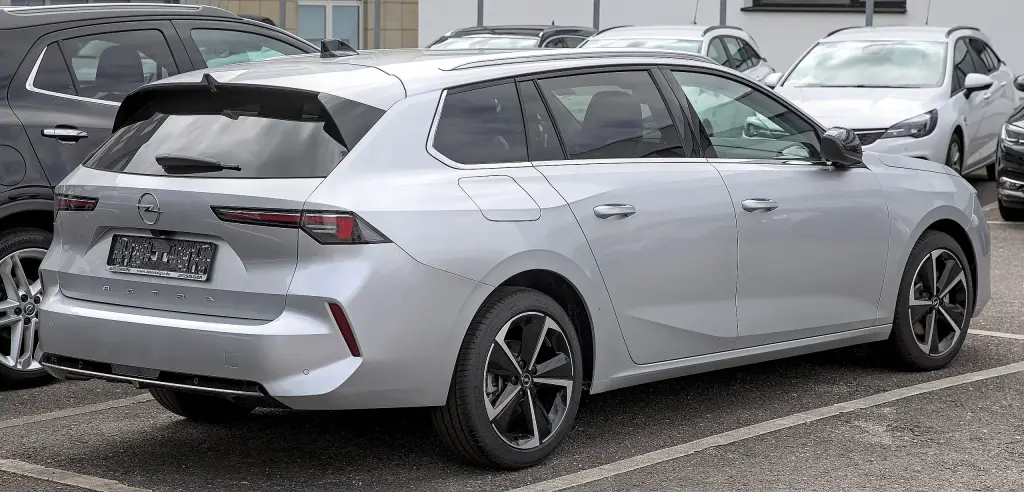
Astra F (1991)
The Astra F arrived in September 1991 as a three- or five-door hatchback, a saloon and an estate called the Caravan, the last available only with five doors. The Caravan appeared in October 1991 together with the 16-valve GSi, which had an aggressive body kit. A cabriolet designed and built by Bertone in Italy completed the range. Compared with the Kadett the car grew slightly in every dimension except the wheelbase, the windscreen moved forward by 7.5 cm and the roof was extended by the same amount at the rear. A facelift in 1994 brought a new grille with a larger badge, clear front indicators and new door mirrors. The Astra F ended production in Germany in 2000, but Polish-built cars continued as the Opel Astra Classic from 1999 to 2003, and the new Ecotec engine arrived in 1995.
Later generations
The Astra G replaced the F in 1998 and took the name further upmarket. A three-door coupé, the Astra GTC, appeared in 2004, the sporting Astra OPC in 2005, and in 2006 the Astra Twin Top retractable hardtop replaced the soft-top cabriolet. The estate was renamed Astra Sports Tourer in 2009. After General Motors sold Opel to PSA Group the Astra K continued in production under licence before the Astra L arrived, following the creation of Stellantis. The Astra is also sold as the Vauxhall Astra in Britain; earlier it was badged Saturn Astra in North America, Buick Excelle XT and Verano in China and Holden Astra in Australia.
Design and features
- Full range of bodies: hatchback, saloon, Caravan estate, cabriolet and Astravan panel van from the start.
- Sporting versions: the 16-valve GSi of 1991, the OPC of 2005, and the Bertone-built cabriolet.
- Continuous line: the Astra is officially the eleventh generation of the Kadett/Astra family.
- Global badges: Vauxhall, Holden, Saturn and Buick versions have all used the same car.
Opel Astra versions
- Astra F (1991): hatchback, saloon, Caravan and Bertone cabriolet.
- Astra G (1998): the second generation, with the GTC coupé added in 2004.
- Astra OPC (2005): the sporting model of the range.
- Astra Twin Top (2006): retractable hardtop convertible.
- Astra K: the generation produced under PSA licence.
- Astra L: the generation that followed the creation of Stellantis.
The Astra replaced the Kadett and sits above the Corsa in the range. More cars are in the Opel collection.
Sources
- Opel Astra, English Wikipedia: generations, body styles, Astra F details, badges