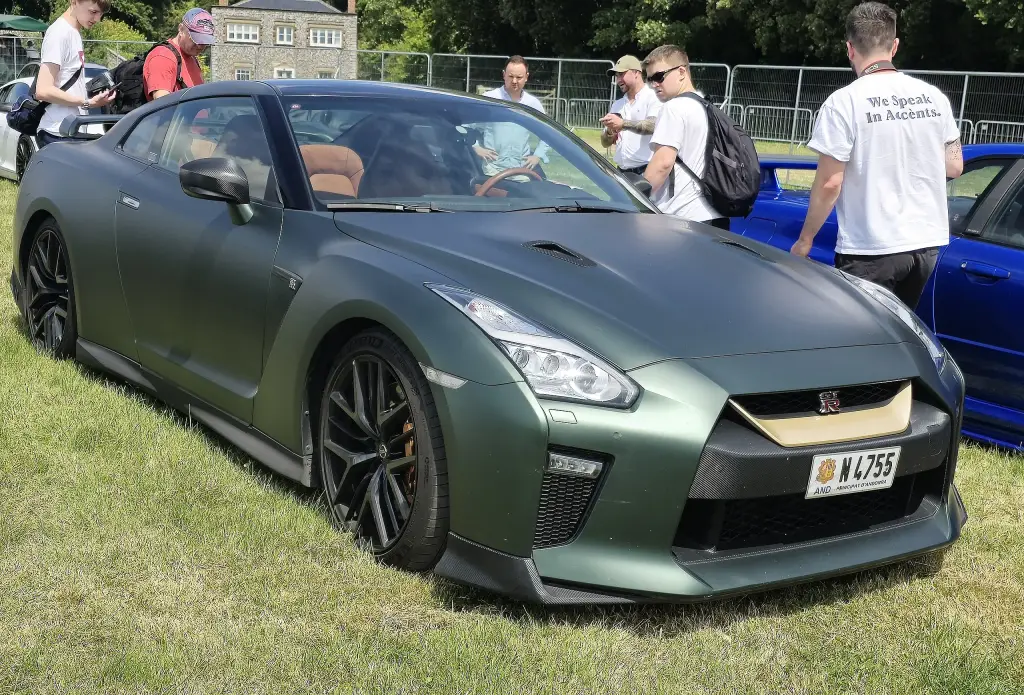
The Nissan GT-R, model code R35, is a sports car with 2+2 seating built from 2007 to 2025. It succeeded the Skyline GT-R but was no longer part of the Skyline line-up. It was built at Nissan’s Tochigi plant on the PM platform, a development of the FM platform used by the Skyline and Z models.
Nissan GT-R at a glance
| Production | 2007–2025 |
|---|---|
| Model code | R35 (CBA-R35, DBA-R35, 4BA-R35) |
| Engine | VR38DETT twin-turbocharged V6 |
| Layout | front mid engine, all-wheel drive |
| Platform | PM, derived from the FM platform |
| Built at | Tochigi, Japan |
| Unveiled | 2007 Tokyo Motor Show |
| Gearbox | dual-clutch |
| Nickname | Godzilla |
| Total built | about 48,000 |
based on one source: the English Wikipedia article on the Nissan GT-R.
History of the Nissan GT-R
Reviving the badge
Nissan had built high-performance Skyline GT-Rs from 1969 to 1973 and again from 1989 to 2002. In 2000, as part of the Nissan Revival Plan, Carlos Ghosn asked for the badge to return as a halo car that could rival Porsche, Lamborghini and Ferrari at a comparatively affordable price, keeping the four round tail lights that he saw as the GT-R signature. Development began in 2000, with sketches from Nissan designers in Japan, the United States and Europe; fifty reached design director Shiro Nakamura. Ghosn announced the programme in 2001 with a concept at the Tokyo Motor Show, and chief designer Hiroshi Hasegawa spent more than four years on the interior and exterior.
Engineering
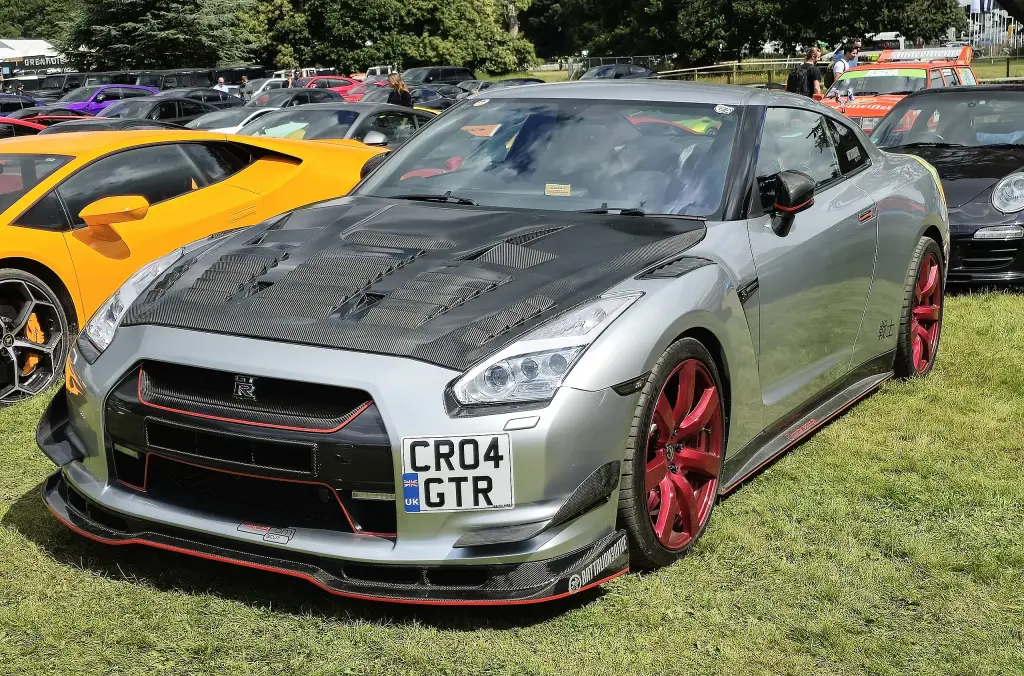
Kazutoshi Mizuno, chief engineer of the Skyline GT-R R34, led the mechanical work. He initially rejected the project because it was to be built on the FM platform, saying he could not make a world-class performance car from it, and in April 2003 built a prototype based on the Infiniti G35. The production car used advanced aerodynamics, the VR38DETT engine, an active suspension system and the ATTESA E-TS Pro all-wheel drive, and was the first rear-mounted independent transaxle all-wheel-drive vehicle. It was among the first production cars with launch control and a dual-clutch transmission, and its body combined steel, aluminium and carbon fibre. The GT-R dropped the HICAS four-wheel steering of its predecessor because engineers judged it incompatible with the all-wheel-drive system.
A global car
Unlike earlier GT-Rs, the R35 was sold worldwide. It was updated several times and offered in many special editions, and it raced successfully in the FIA GT1 World Championship, Super GT and GT3 series. Top Gear called it “one of the most incredible cars of any kind ever built”, and it set a record as the fastest accelerating four-seater production car. Sales ended in Australia in 2021 because of side-impact rules and in Europe because of noise rules, followed by North America in 2024; production ended in Japan in late August 2025 after 18 years and about 48,000 cars.
Design and features
- VR38DETT: a twin-turbocharged V6 in place of the RB26DETT straight-six.
- ATTESA E-TS Pro: all-wheel drive with a rear transaxle.
- Launch control: one of the first production cars to offer it.
- Godzilla: the nickname given to the R32 in 1989 and kept ever since.
Nissan GT-R versions
- GT-R R35 (2007–2025): the standard car.
- GT-R Nismo: the track-focused version.
- Special editions: a long series of limited models through the production run.
The GT-R followed the Skyline GT-R and stands beside the 370Z in Nissan’s sports range. More cars are in the Nissan collection.
Sources
- Nissan GT-R, English Wikipedia: development, engineering, motorsport, end of production