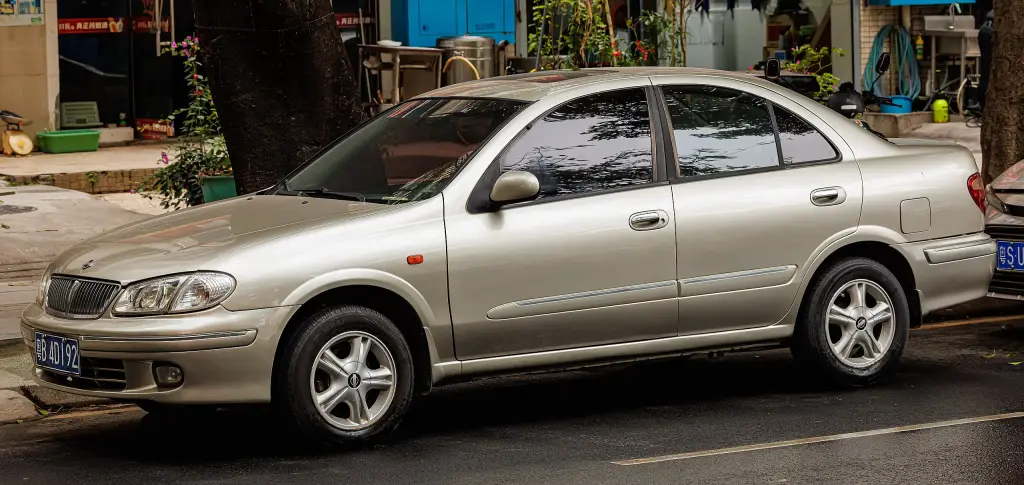
The Nissan Sunny was built from 1966 until 2004. In the early 1980s the badge changed from Datsun to Nissan with the rest of the range. Production in Japan ended in 2004, but the name is still used in China and the Gulf states for a rebadged Nissan Almera. In North America later Sunny models were the Nissan Sentra, and in Mexico the Sunny is the Nissan Tsuru.
Nissan Sunny at a glance
| Production | 1966–2004 |
|---|---|
| First generation | B10 |
| Launched | September 1966 |
| First bodies | two-door sedan and van/station wagon |
| First engine | 988 cc A10 four, 62 PS |
| Gearbox | four-speed manual |
| Export name | Datsun 1000 |
| Rival | Toyota Corolla |
| Japanese dealers | Nissan Satio Store |
| Name choice | from a national mail-in vote |
based on one source: the English Wikipedia article on the Nissan Sunny.
History of the Nissan Sunny
The name
In December 1965 Nissan ran a national mail-in ballot to name its newest product. More than eight million entries arrived, the name Sunny had been suggested 3,105 times, and it was announced on 19 February 1966 by Yoshisuke Ayukawa, Nissan’s founder. The first Datsun Sunny, exported as the Datsun 1000, was launched in September 1966 in two body styles, the two-door sedan (B10) and a van or station wagon (VB10). It was built on a dedicated B-series platform that drew on Nissan’s pre-war small-car experience and on engineering from the newly acquired Aichi Manufacturing, meeting the goals of Japan’s national car programme. In Japan it was sold through a dealer channel created for it, Nissan Satio Store.
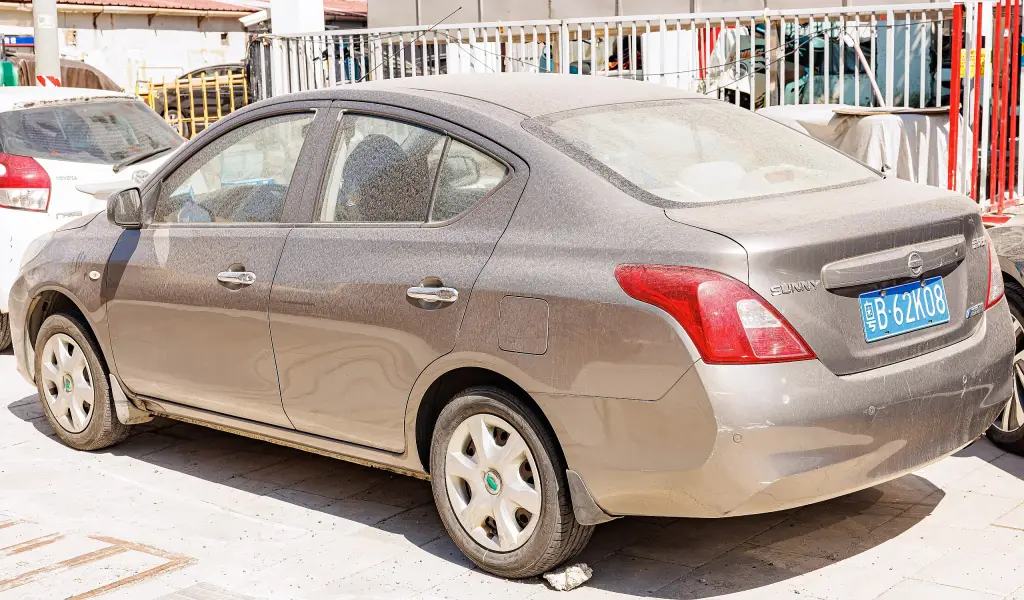
B10 details
The first cars came in Standard and Deluxe forms with drum brakes, leaf springs at the rear and a wishbone independent front end using a single transverse leaf spring. The engine was the 988 cc A10 four of 62 PS with a four-speed gearbox, kept below one litre to stay in the lowest Japanese road tax bracket. The Sunny arrived in the same year as the Toyota Corolla and Subaru 1000. A four-door sedan joined in October 1967 and a coupé (KB10) in February 1968, sold as the Sunny Coupé in Standard and GL levels. The only country besides Japan to get the coupé seems to have been Australia, where it was the Datsun 1000 Coupé in Deluxe trim only, with higher compression, a different Hitachi carburettor and a dual-outlet exhaust.
Later history
The Sunny was designed to compete with the Toyota Corolla, was sold in Japan at Nissan Satio Store and appeared worldwide under many names and body styles. Through at least the B11 series it was a subcompact, and later versions grew into compact cars. The name has also been used on export versions of the Pulsar line, and it remains in use in China and the Gulf states on a rebadged Almera.
Design and features
- Eight million votes: the name came from a national competition.
- Datsun 1000: the export name of the first generation.
- Tax-friendly engine: under one litre for the lowest bracket.
- Many names: Sentra in America, Tsuru in Mexico, Almera-based today.
Nissan Sunny versions
- Sunny B10 (1966–): two-door sedan and van, then four-door and coupé.
- Sunny Coupé (1968–): the KB10 fastback coupé.
- Datsun 1000: the export version.
- Nissan Tsuru: the Mexican name for later Sunny generations.
The Sunny became the Sentra in North America and the Tsuru in Mexico, and its platform later underpinned the Pulsar family. More cars are in the Nissan collection.
Video: Nissan Sunny GTI-R
Video by YouTube on YouTube.
Sources
- Nissan Sunny, English Wikipedia: name competition, B10 details, engine, export names, later history