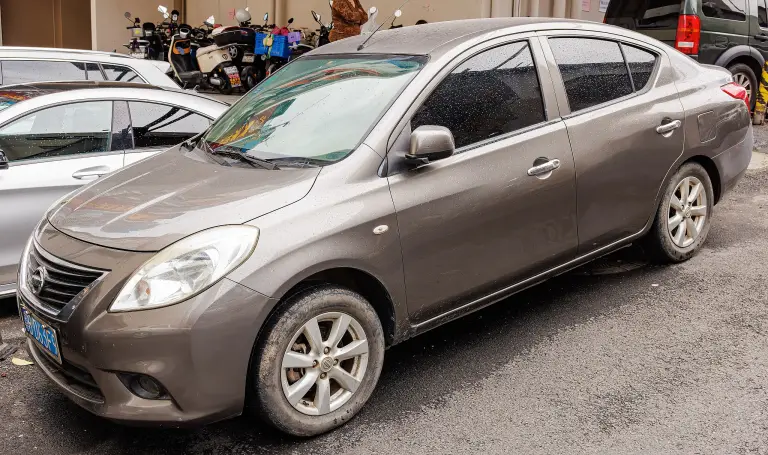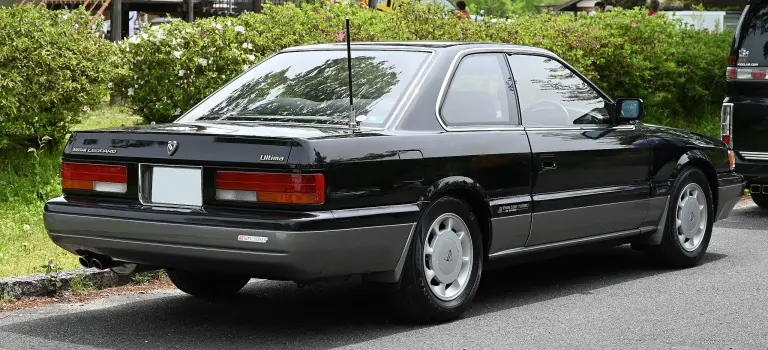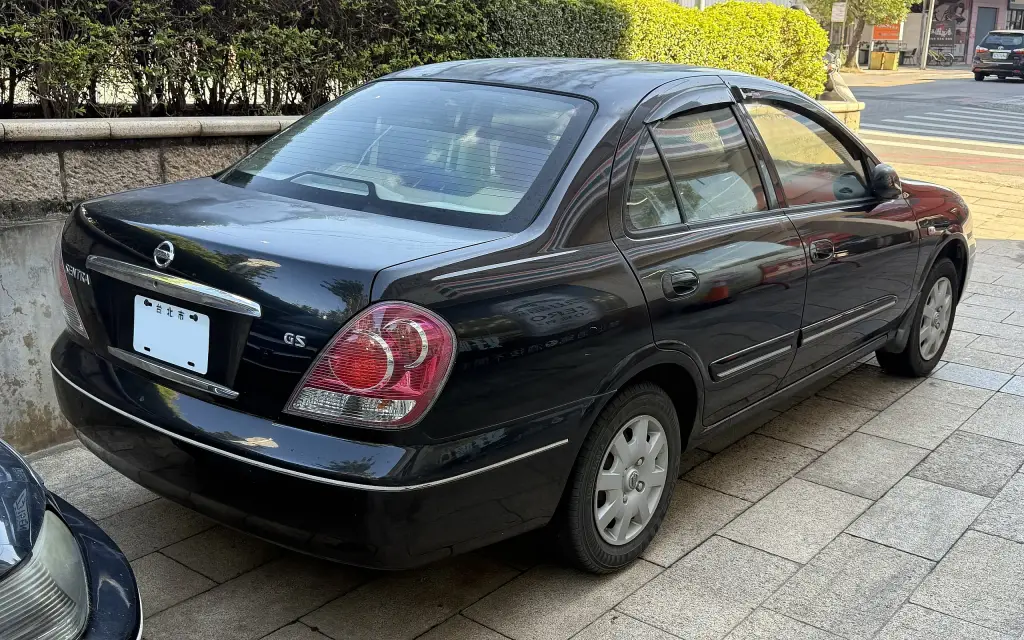
The Nissan Sentra is a series of cars built since 1982. It was a subcompact until it became a compact in 1999, and until 2006 it was a rebadged Japanese Nissan Sunny for markets outside Japan; since 2013 it has been a rebadged Sylphy. In Mexico the first three generations were known as the Nissan Tsuru, and the B13 was sold under that name until 2017.
Nissan Sentra at a glance
| Production | since May 1982 |
|---|---|
| First generation | B11 |
| First sold as | direct replacement for the Datsun 310 |
| Bodies at launch | two-door sedan, four-door sedan, five-door wagon, three-door hatchback coupé |
| Engine | 1.5-litre E15 four, 67 hp |
| Transmissions | four- or five-speed manual, three-speed automatic |
| Drag coefficient | 0.39 coupé, 0.40 saloons |
| US production | Smyrna, Tennessee, from April 1985 |
| Draught name in Mexico | Nissan Tsuru |
| Current basis | Nissan Sylphy, since 2013 |
based on one source: the English Wikipedia article on the Nissan Sentra; the collected material concentrates on the first generation.
History of the Nissan Sentra
B11 (1982)
The first Sentra was introduced in the United States in May 1982 as a direct replacement for the Datsun 310. It was imported from Japan, where it was built at the Zama plant, and came in four body styles, making it the second car marketed in the United States under the Nissan name with a model name rather than a number, after the Stanza. It was the first Sunny-based car with front-wheel drive, powered by the 67 hp 1.5-litre E15 SOHC four with semi-hemispherical combustion chambers, high-swirl intake ports and a semi-dual exhaust manifold for strong low-speed torque. Gearboxes were four- and five-speed manuals or a three-speed automatic with lock-up torque converter. The drag coefficient was 0.39 for the coupé and 0.40 for the saloons.
Economy and equipment
The Sentra MPG was rated by the EPA at 43 mpg city and 58 highway, a combined 48, helped by a kerb weight of 1,875 lb. Trims were Standard, Deluxe and XE, with prices from US$4,949 for the base two-door to US$6,899 for the XE hatchback coupé. All cars had four-wheel independent suspension, front discs and rear drums, rack-and-pinion steering and bucket seats; Deluxe added halogen headlamps, a remote-locking fuel door, a carpeted boot and a rear wiper for the wagon, and the XE brought cut-pile carpeting, a quartz clock, power steering, a tachometer and whitewall tyres. In its first year the Sentra was the best-selling import in the United States, with 191,312 sales of it and the earlier 210, and 209,889 in 1983. A 1.7-litre CD17 diesel and a 1.6-litre E16 arrived for 1983.
Later history
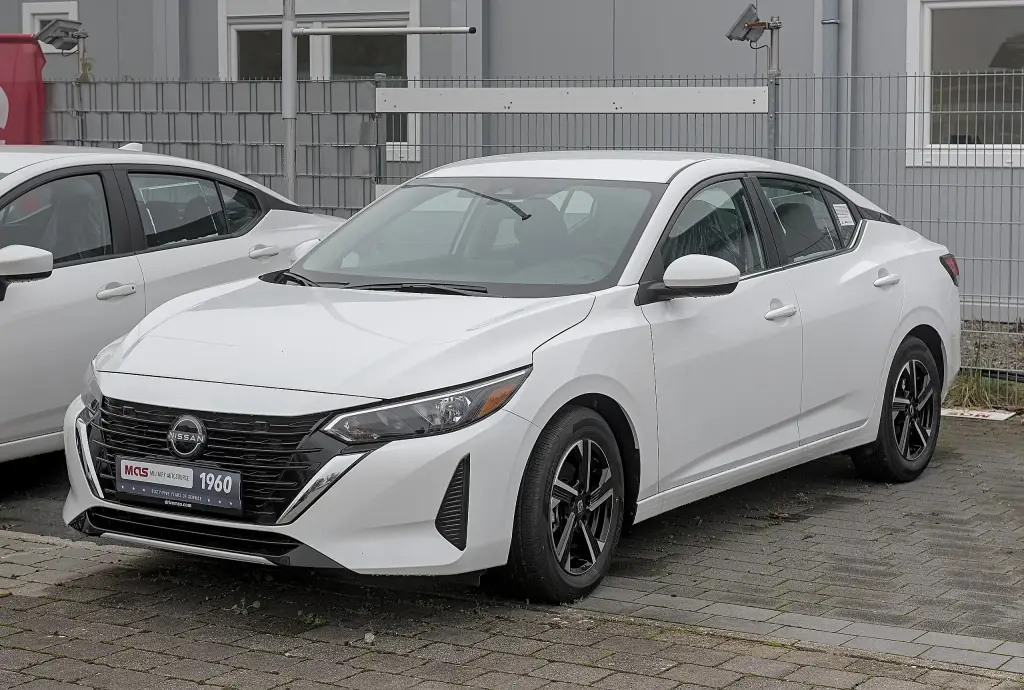
In April 1985 Nissan began building the Sentra at Smyrna, Tennessee after an $85 million investment, initially only the two-door sedan. The B11 was ranked seventh safest car in a 1983 Center for Auto Safety list. Since 1999 the Sentra has been a compact, with the Versa taking the entry-level role, and since 2013 it has been a rebadged Sylphy. The name was created by Ira Bachrach of NameLab, who said it echoes both “central” and “sentry” to suggest safety.
Design and features
- Economy leader: the MPG version was the most economical petrol car on sale in America.
- Front-wheel drive: the first Sunny-based Sentra to use it.
- Smyrna build: American production from 1985.
- Tsuru in Mexico: the first generations kept the old name there.
Nissan Sentra versions
- Sentra B11 (1982–1986): four body styles and three trims.
- Sentra MPG: the high-economy version.
- Sentra SE: the two-door hatchback with alloy wheels.
- Nissan Tsuru: the Mexican name, used on the B13 until 2017.
The Sentra was a rebadged Sunny and later a Sylphy, and it also appears as the Tsuru name in Mexico. More cars are in the Nissan collection.
Video: Тест-драйв Nissan Sentra
Video by YouTube on YouTube.
Sources
- Nissan Sentra, English Wikipedia: B11 details, engines, equipment, sales, Smyrna, later history