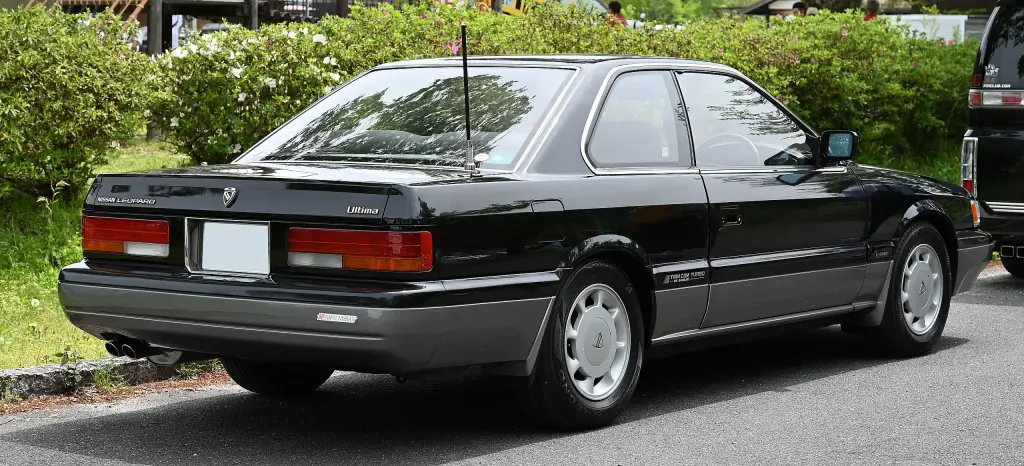
The Nissan Leopard was a line of sport and luxury cars built from 1980 to 2000. Early cars were based on the Japanese-market Skyline and Laurel, later ones on the Cedric and Gloria, and all were rear-wheel drive. The final versions contributed to Nissan’s Infiniti M and J models, and the Leopard was succeeded by the Nissan Fuga.
Nissan Leopard at a glance
| Production | 1980–2000 |
|---|---|
| First generation | F30, from September 1980 |
| Bodies | two-door hardtop coupé and four-door hardtop saloon |
| Engines at launch | 1,800, 2,000 and 2,800 cc fours and sixes |
| Turbo added | 2.0-litre, July 1981, 145 PS |
| Coupé drag coefficient | 0.37 |
| Platform | based on the Skyline R30 |
| Sold at | Nissan Store (coupé), Nissan Cherry Store (saloon) |
| Succeeded by | Nissan Fuga |
based on one source: the English Wikipedia article on the Nissan Leopard.
History of the Nissan Leopard
F30 (1980–1986)
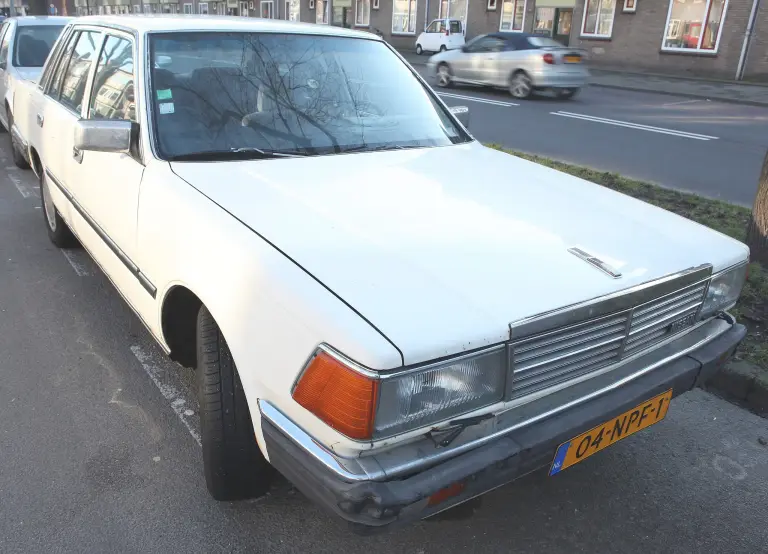
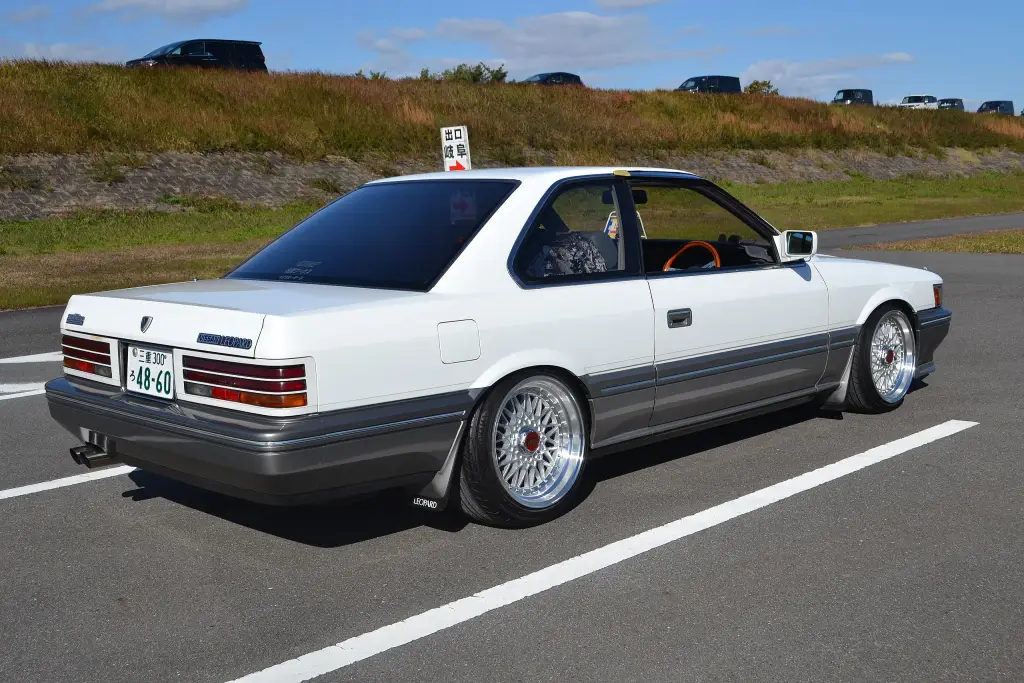
The first Leopard, also called the Leopard TR-X, was introduced in September 1980 as a contender in the upper medium class, positioned above the six-cylinder Nissan Bluebird 810. It was sold as a two-door hardtop coupé and a four-door hardtop saloon, the saloon having very slim C- and D-pillars and large glass areas, while the coupé carried a glass-to-glass rear window. The angular style was shared with the Fairlady Z, and the coupé replaced the Cedric and Laurel coupés. Both bodies cost the same at launch. The coupé had a drag coefficient of 0.37.
Engines and equipment
The Leopard came with 1,800, 2,000 and 2,800 cc four- and six-cylinder engines; the largest used an electronic management system developed with Hitachi and called NAPS-Z. The 1.8-litre four could be had with a four-speed manual, while the others had five speeds as standard or an optional three-speed automatic. In July 1981 a two-litre turbocharged engine was added in GX, SGX and ZGX trims, making the same 145 PS as the heavier 2.8. A mild facelift in September 1982 dropped the under-performing 2.8, and in June 1984 a limited Turbo Grand Edition joined the range with the 230 PS 3-litre VG30ET turbo V6 from the 300ZX.
Details and later life
The car shared many parts with the six-cylinder Bluebird 910, sold in North America as the Datsun 810 and later the Maxima, but used a platform based on the Skyline R30. Japanese cars had door mirrors mounted on the front wings, with small wipers on top of the mirrors to clear rain and dirt, and the Leopard offered a fuel consumption gauge in the dashboard, an industry first. The coupé was sold at Nissan Store and the saloon at Nissan Cherry Store. The line ran until 2000 and was cancelled under the Nissan Revival Plan as a casualty of overproduction.
Design and features
- Fender mirrors with wipers: a uniquely Japanese detail of the F30.
- Fuel consumption gauge: an industry first in the dashboard.
- NAPS-Z engine: the 2.8-litre six with Hitachi electronics.
- Turbo Grand Edition: the 300ZX’s 230 PS V6 in a limited Leopard.
Nissan Leopard versions
- Leopard F30 coupé (1980–1986): the two-door personal luxury car.
- Leopard F30 saloon (1980–1986): the four-door hardtop.
- 200 Turbo (1981–): GX, SGX and ZGX with 145 PS.
- Turbo Grand Edition (1984): the VG30ET-powered limited model.
- Later Leopard generations (to 2000): cars based on the Cedric and Gloria.
The Leopard was a companion to the Fairlady Z and shared its platform with the Skyline, before giving way to the Fuga line. More cars are in the Nissan collection.
Video: 1984 NISSAN LEOPARD Ad
Video by YouTube on YouTube.
Sources
- Nissan Leopard, English Wikipedia: F30 design, engines, trims, details, later generations