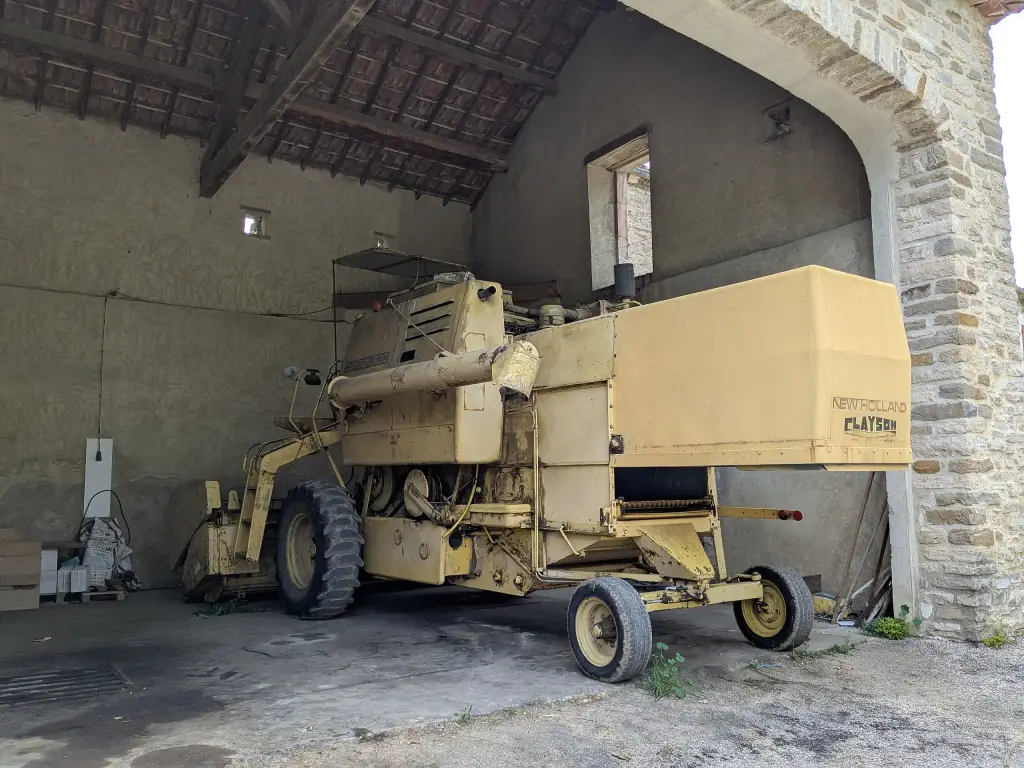
New Holland Clayson is the name the combines carried after New Holland took over the Belgian combine maker Claeys. The film below shows a Clayson 133 harvesting rye. The sources used for this page describe the two companies and their works; the individual models are not documented in detail there.
New Holland Clayson at a glance
| Name | New Holland Clayson, the combine line |
|---|---|
| Origin | Claeys of Belgium |
| Clayson founder | Leon Claeys, a Belgian mechanic, in 1906 |
| First products | threshing machines |
| Zedelgem factory | built by Claeys in 1909, still a New Holland harvesting plant |
| New Holland interest bought | 1964, a major interest in Claeys |
| Position by the 1960s | one of the largest combine makers in Europe |
| Twin-rotor combine | introduced by Sperry New Holland in 1975 |
| Technical data of the models | not given in the sources used here |
| Example filmed | a Clayson 133 in rye |
The sources describe the two companies and their works, not the individual Clayson models; model data is left out because it is not in them.
History of the New Holland Clayson
Claeys of Belgium
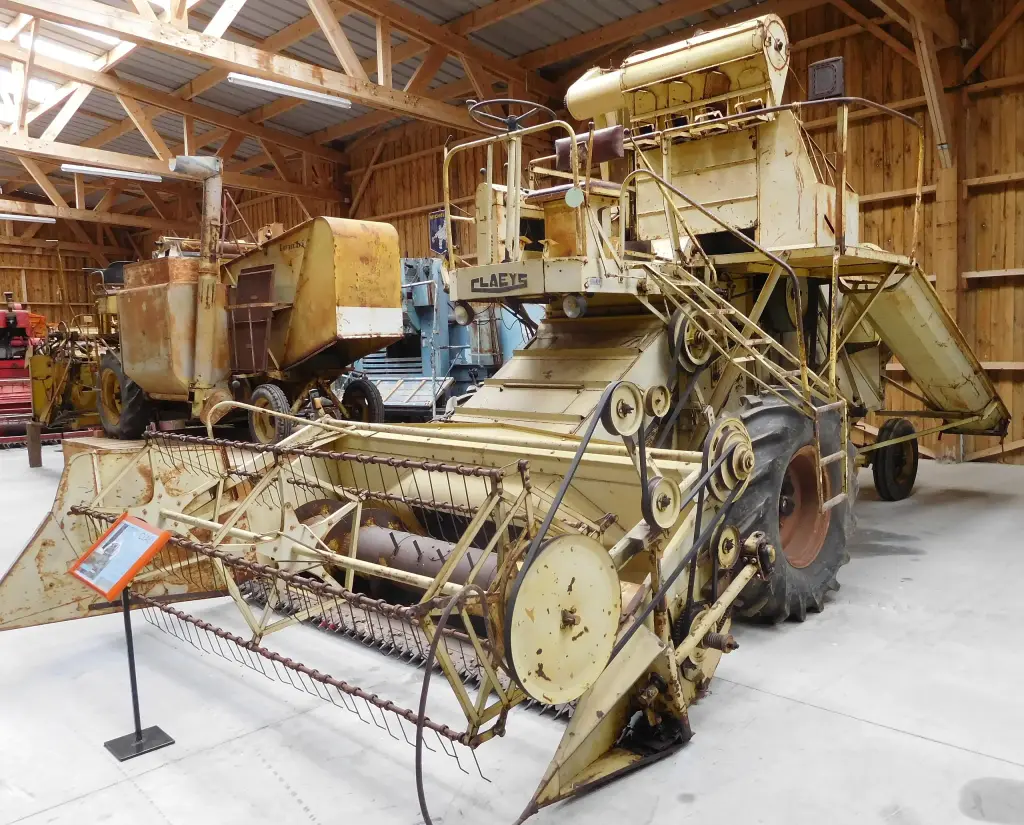
Claeys was founded in 1906 by Leon Claeys, a Belgian mechanic who began with threshing machines and in 1909 built a factory at Zedelgem in West Flanders. By the 1960s the firm was one of the biggest combine manufacturers in Europe, and in 1964 Sperry New Holland bought a major interest in it. The name Clayson, used for the combines that followed, is the compromise badge of that union: the Belgian firm’s machines sold through the American company’s network.
From Clayson to twin rotors
The Claeys works gave New Holland a European harvesting base and the engineering depth to push the combine further. In 1975 Sperry New Holland introduced the world’s first twin-rotor combine, a machine that threshed the crop between two longitudinal rotors rather than a transverse cylinder; the idea proved durable and is still in use today. Clayson-badged combines stayed in the fields of Europe through those years, and the Zedelgem plant remains one of the group’s harvesting factories, building combines, self-propelled forage harvesters and big square balers.
The machine in the film
The film below shows a Clayson 133 harvesting rye. It is a working machine of the kind the Clayson name was put on: a European combine of modest size, bought to bring in a grain crop on a family farm. The sources used here do not list the model’s engine or working width, and this page does not invent them. They do record what the name means and where it came from.
Design and features
- Belgian roots: the name comes from Claeys of Zedelgem, founded in 1906.
- European combines: the line that gave New Holland a harvesting base in Europe.
- 1964 purchase: the year Sperry New Holland bought a major interest in Claeys.
- Working machine: Clayson 133 combines are still used on European farms.
New Holland Clayson versions
- New Holland Clayson 133: the combine shown in the film.
- Clayson M 140: an earlier Clayson model described on French Wikipedia.
- Later New Holland combines: the TX, TR, CX and CR ranges that followed.
The combines that followed the Clayson years are on the New Holland 66 and New Holland TR pages. More machines are in the New Holland section.
Video: Żniwa 2011 Żyto – New Holland Clayson 133
Video by Mareluka on YouTube.
Sources
- New Holland Agriculture, English Wikipedia: Claeys founding, Zedelgem, 1964 purchase, twin-rotor combine
- New Holland Clayson M 140, French Wikipedia: the Clayson combine line
- New Holland, Dutch Wikipedia: Zedelgem plant today