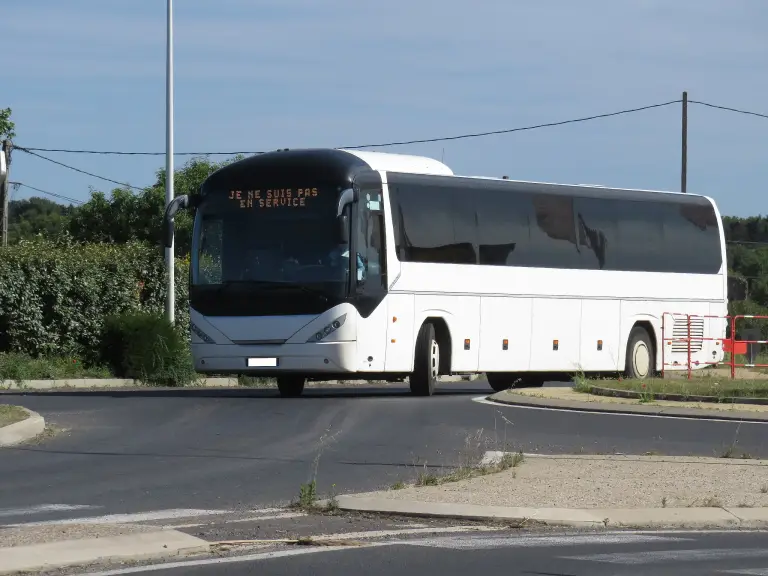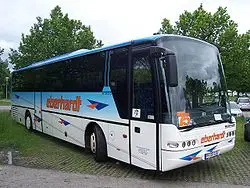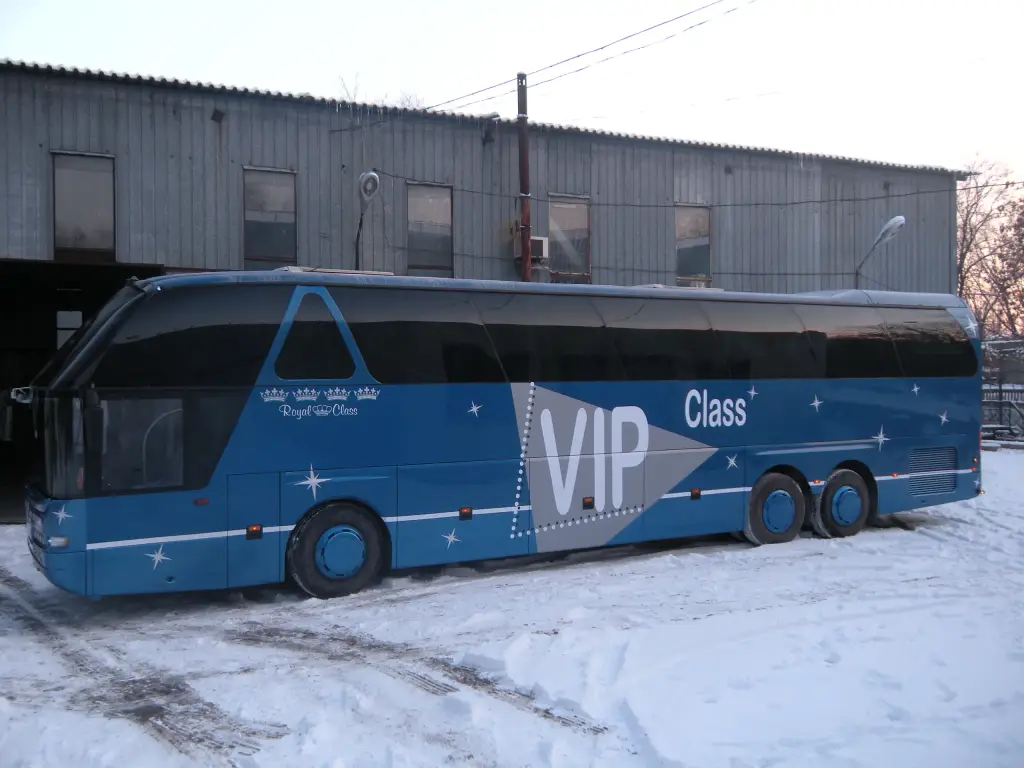
The Neoplan Starliner was the brand’s top touring coach, built in two generations from 1996 to 2015 at Stuttgart, Plauen and Pilsting. The first generation introduced individual ventilation at every seat, and the second combined a 3.9 m height with a 440 PS six-cylinder engine.
Neoplan Starliner at a glance
| Production | 1996–2015 |
|---|---|
| Generations | two |
| Starliner 1 | 1996–2004, two- and three-axle, built in Stuttgart |
| Starliner 2 | shown at the IAA 2004, first delivery May 2005 |
| Dimensions | 2.55 m wide, 3.9 m high |
| Lengths | 12.99 m and 13.99 m, both three-axle |
| Engine | six-cylinder, 324 kW (440 PS), Euro 4 |
| Seats | up to 59 or 63 passengers |
| Interior | Andrea Lipp; front and rear styling by Michael Streicher |
| Awards | Bus of the Year 1998, 1999, 2001 and 2002 |
History of the Neoplan Starliner
Starliner 1 (1996–2004)
The first Starliner went into production in 1996 at the Stuttgart works as a two- and three-axle touring coach, and it was the most expensive model in the Neoplan range. Its main novelty was individual ventilation for each passenger without the usual nozzles above the seats: adjustable rotary knobs near the windows controlled the airflow. Equally new on the market were metal pillars between the double seats, which carried three-point seat belts for every passenger and also held the reading lights. The coach won Bus of the Year in 1998 and 1999.
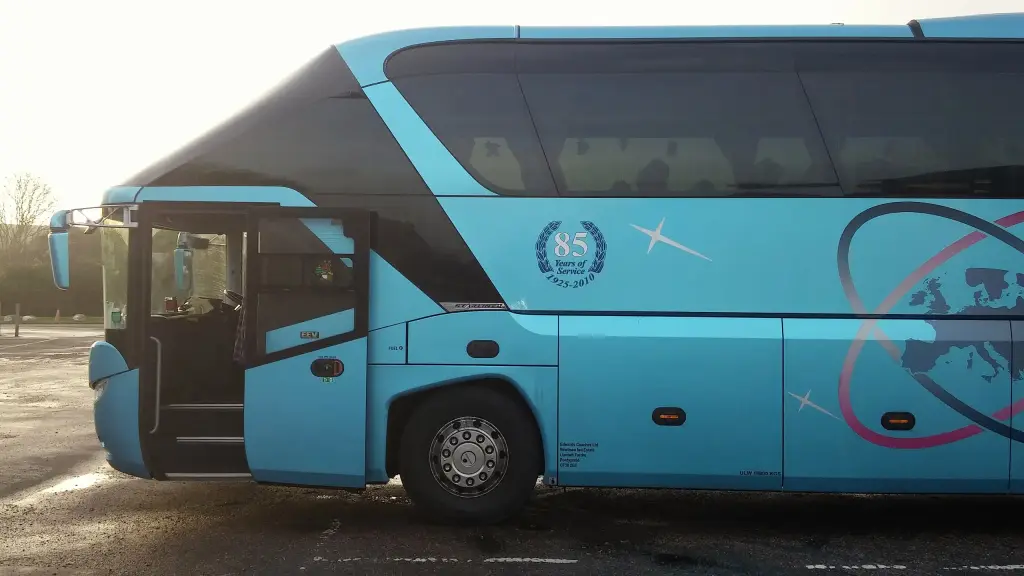
Starliner 2 (2004–2015)
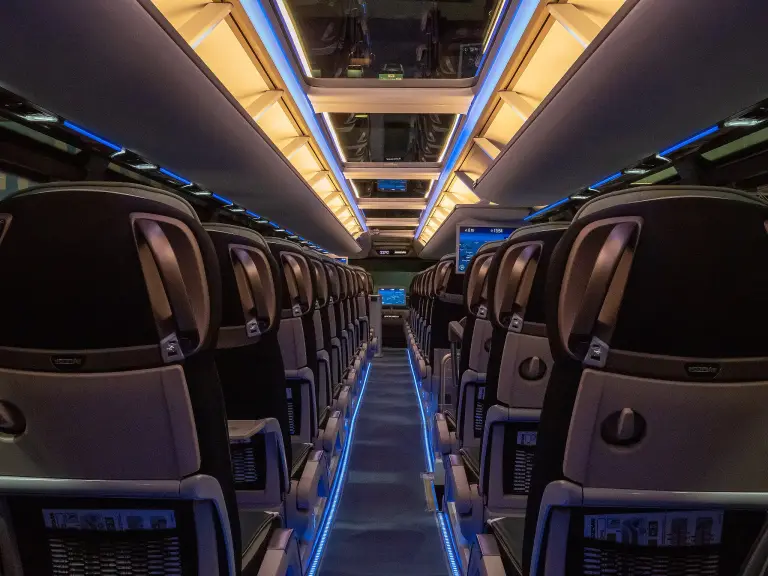
Neoplan presented the second and last generation at the IAA in 2004, and the first customer car was handed over in Stuttgart in May 2005. The Starliner 2 measured 2.55 m wide and 3.9 m high and came in two lengths, 12.99 m and 13.99 m; both were three-axle and used a 324 kW (440 PS) six-cylinder engine meeting Euro 4. Every version could be ordered in the four-star classification or the five-star standard, carrying up to 59 or 63 passengers. The interior was styled by the Neoplan designer Andrea Lipp, the front and rear by Michael Streicher. The coach was built at Plauen and Stuttgart, with final assembly in Stuttgart, then at Pilsting until that plant closed, and afterwards at Plauen again. Toyota’s Formula One team and the WALTER Tigers Tübingen basketball team both used Starliners.
The end
The second generation also won Bus of the Year, in 2001 and 2002, and remained in production for a decade. In May 2014 MAN announced that the last German plant, Plauen, would close in 2015. The Cityliner was transferred to Turkey, but Starliner production was stopped entirely in May 2015.
Design and features
- Individual ventilation: rotary knobs by the windows replaced overhead nozzles, a first for the Starliner.
- Belts at every seat: metal pillars between the double seats carried three-point belts and reading lights.
- Flagship comfort: the Starliner 2 was offered in four- and five-star classifications with up to 63 seats.
- Designer interior: the cabin was created by Andrea Lipp, with body styling by Michael Streicher.
- Strong six-cylinder: 324 kW (440 PS) with Euro 4 in the second generation.
Neoplan Starliner versions
- Starliner 1 two-axle (1996–2004): the shorter first-generation coach.
- Starliner 1 three-axle (1996–2004): the longer version built alongside it in Stuttgart.
- Starliner 2, 12.99 m (2004–2015): three axles, up to 59 passengers.
- Starliner 2, 13.99 m (2004–2015): the longest version, up to 63 passengers.
- Four- and five-star versions: two comfort classifications offered across the range.
The Starliner was the model above the Cityliner, whose 2006 generation used its platform. The double-deck alternative was the Skyliner, and the full range is in the Neoplan collection.
Sources
- Neoplan Starliner, German Wikipedia: both generations, dimensions, engine, interior, end of production
- Neoplan, English Wikipedia: 1996 introduction and the four Bus of the Year awards