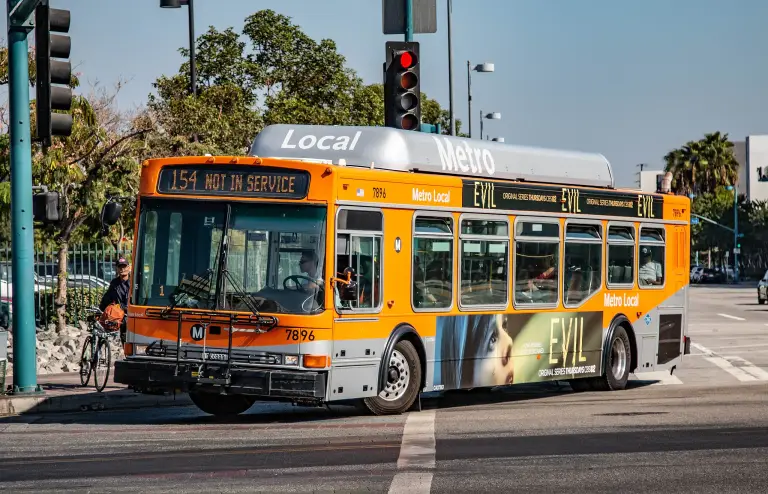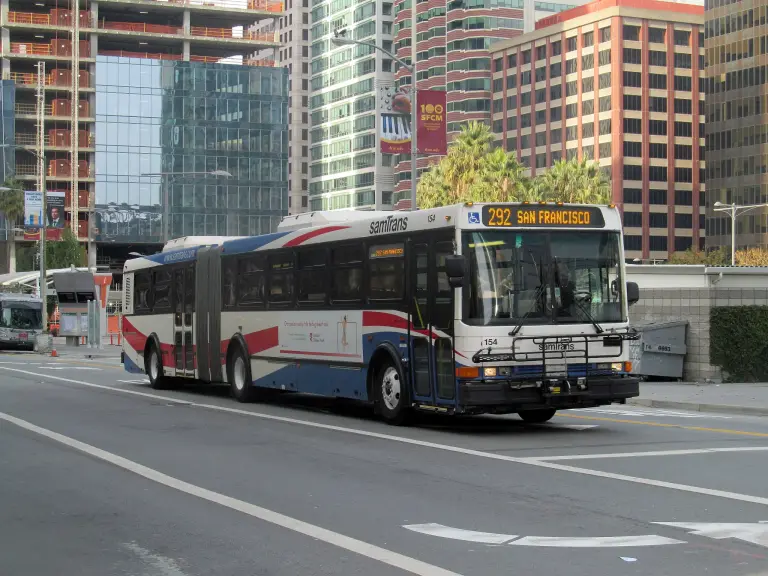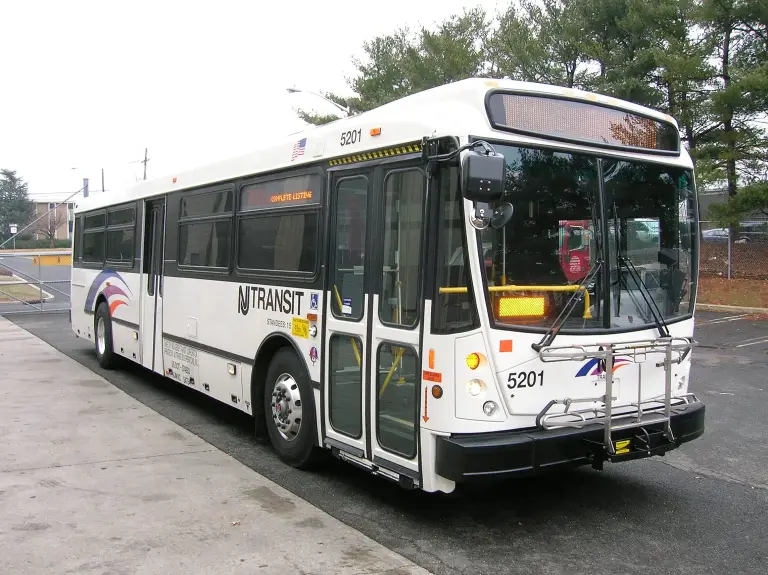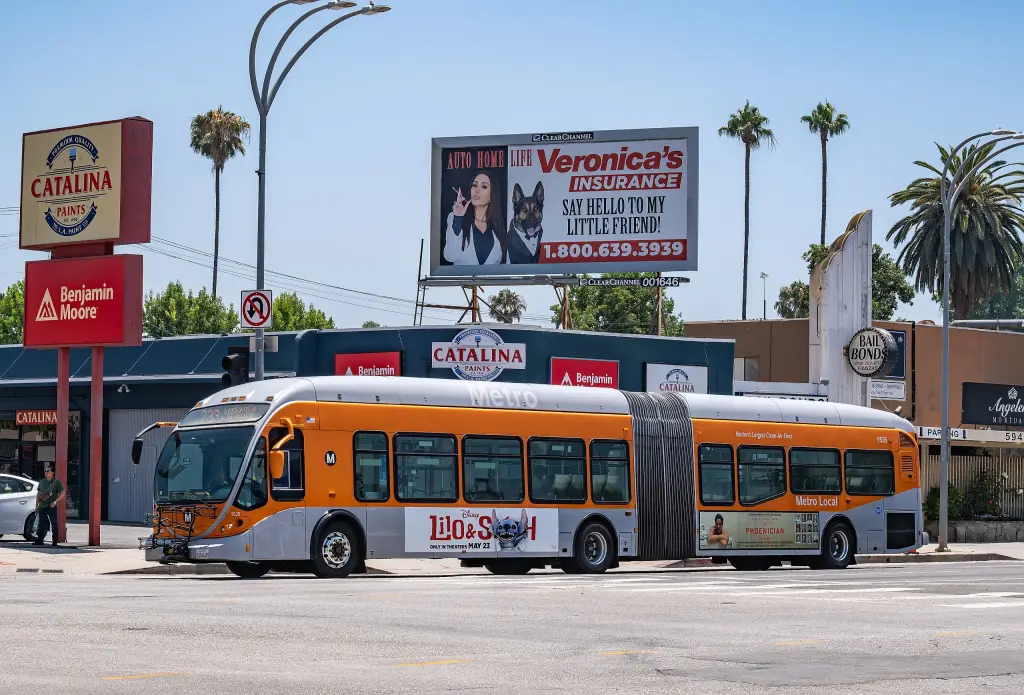
The NABI BRT was a line of low-floor buses styled to look like light-rail vehicles, produced from 2004 to 2015. It was born from a Los Angeles specification for the Orange Line and grew into the company’s most visible product of its final decade, in 42-foot rigid and 60-foot articulated versions.
NABI BRT at a glance
| Maker | North American Bus Industries (NABI), Anniston, Alabama |
|---|---|
| Production | 2004–2015 |
| Class | low-floor bus rapid transit vehicle |
| Versions | 42-BRT rigid, 60-BRT articulated, one 65-BRT |
| Powertrains | diesel, diesel-electric hybrid, CNG, LNG |
| Designed for | LACMTA Orange Line, Los Angeles |
| First delivery | pilot vehicle, autumn 2004 |
| Price | US$633,000 as bid for the 60-BRT |
| Doors | three extra-wide doors on the 60-BRT |
| Body shells | assembled in Hungary until late 2012 |
| Last built | 2015, for Transfort and Massport |
Based on one source: the English Wikipedia article on the NABI BRT.
History of the NABI BRT
The 60-BRT was designed for a Los Angeles County Metropolitan Transportation Authority request for the rolling stock of its forthcoming Orange Line, now the G Line. The specification asked for a vehicle that was sleek, streamlined and aerodynamic, with three extra-wide doors for faster boarding and a noise level below 78 dBA — a bus that would read to passengers as a rail car.
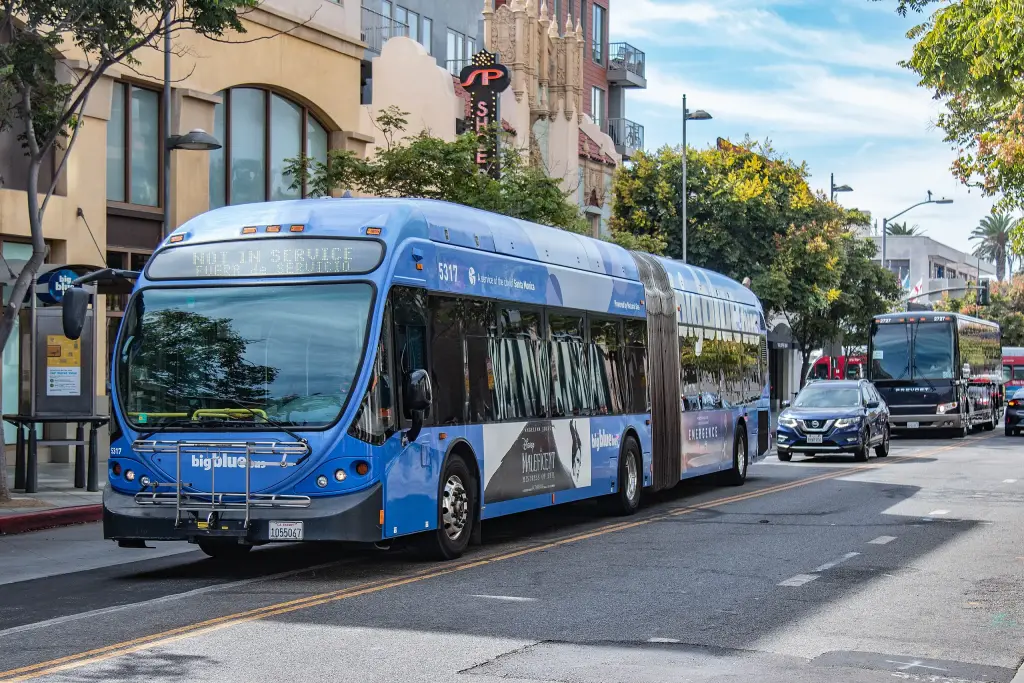
The design was announced in 2003 and production began in 2004. A pilot vehicle was delivered that autumn for a two-month trial, and the first 28 buses, which LACMTA called Metro Liners, arrived in June 2005. The as-bid price was US$633,000 each. To meet regional air quality rules the buses used Cummins L-Gas Plus CNG engines, with 27,088 cubic feet of gas in twelve tanks giving a range of about 400 miles.
The double roof was the model’s signature: an 18-inch space running the length of the bus for HVAC equipment, gas tanks or hybrid batteries. Body shells were still assembled in Hungary and shipped to Anniston for finishing until production moved to Alabama, a transition complete by late 2012. A 42-foot rigid version followed in 2006, with LACMTA again the first customer, then LA World Airport’s FlyAway service and Foothill Transit.
A single 65-foot bus, the 65-BRT, was built for LACMTA as number 9495. Nicknamed Longfellow, it entered service in September 2007 with a CalTrans special permit and carried only eight CNG tanks to keep its weight near that of the 60-BRT. The last BRT buses were completed in 2015, a 60-BRT for Transfort in Fort Collins and a 42-BRT for Massport at Logan Airport, after which the Anniston factory switched to New Flyer Xcelsior buses.
Design and features
- Rail-like styling: a streamlined body designed to resemble a light-rail car rather than a conventional bus.
- Three wide doors: faster boarding on busy bus rapid transit corridors.
- Double roof: an 18-inch full-length space for HVAC, CNG tanks or hybrid batteries.
- CNG range: twelve tanks and about 400 miles of range on the original Los Angeles buses.
- Quiet operation: specified at 78 dBA or less.
NABI BRT versions
- 60-BRT (2004–2015): the articulated original, most of the production.
- 42-BRT (2006–2015): rigid version for smaller BRT routes and airport shuttles.
- 65-BRT (2007): a single extended bus for LACMTA, nicknamed Longfellow.
- 42-BRT hybrid: diesel-electric buses, most notably 105 ordered by WMATA in 2013.
- Thundervolt 42-BRT: six gasoline-electric buses of 2008 whose ISE system proved unreliable.
The BRT was sold alongside the older NABI 40-LFW and the high-floor NABI 416. More buses are in the NABI collection.
Video: VIA Metro San Antonio 2013 NABI 60-BRT on the Primo line
Video on YouTube.
Sources
- NABI BRT, English Wikipedia: design, Los Angeles contract, variants, deployment