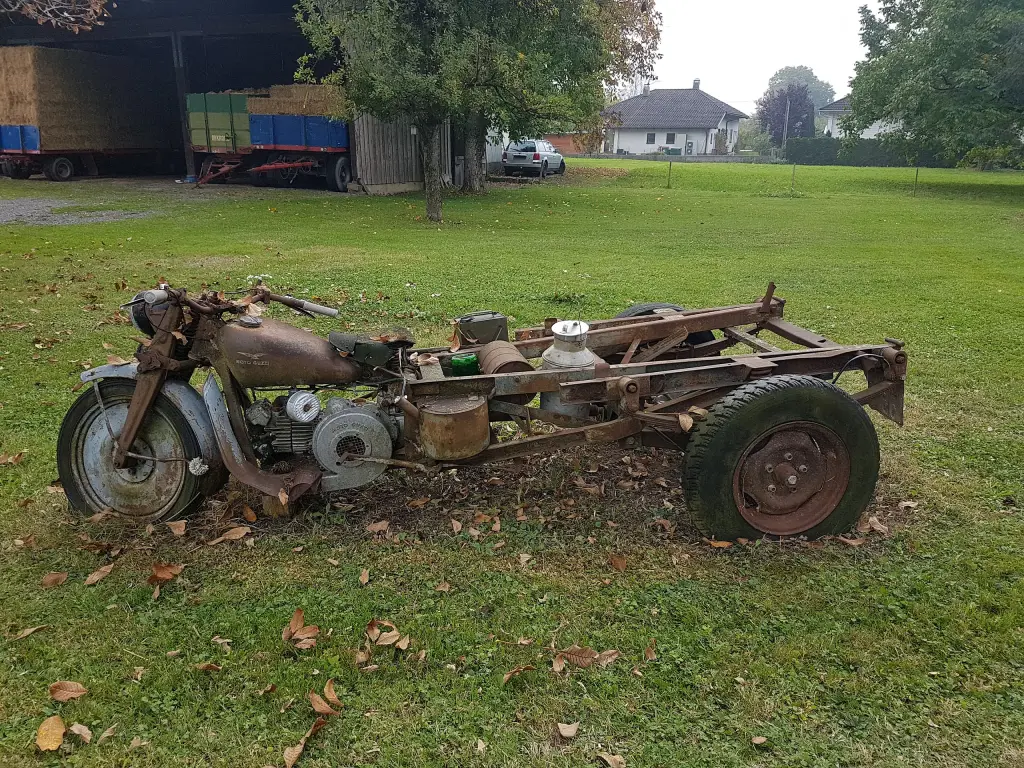
The Moto Guzzi three-wheelers, called motocarri or triporteurs, were transport machines of the Moto Guzzi brand. All of them carried the load behind the driver, which allowed goods to be stacked high without blocking the view and made the steering only slightly heavier when the machine was loaded.
Moto Guzzi three-wheelers at a glance
| Maker | Moto Guzzi, Mandello del Lario |
|---|---|
| First model | Motocarro Tipo 107, 1928 |
| Type | three-wheeled transport machine with the load behind the rider |
| Tipo 107 price | 8,150 lire for the bare chassis, 8,600 with the body |
| Gearbox | three speeds on the 107, four or three plus reverse on the S |
| Later payload | 800 kg on the S, 1,000 kg on the ER, 1,500 kg on the Ercole |
| Military model | Mototriciclo 32, 935 delivered to the army |
| Last model | Ercole, 1946–1980 |
History of the Moto Guzzi three-wheelers
In 1928 the first model appeared, the Tipo 107. The whole front was a Moto Guzzi Sport with a frame bolted on, so a normal motorcycle could be turned into a motocarro fairly quickly. The bare chassis cost 8,150 lire and with the body 8,600. Like the Sport, the Tipo 107 had a unit engine and gearbox with a common sump and lubrication system, a head and side valve engine with the cylinder laid horizontally so that the exhaust valve, which needs most cooling, was exposed to the airflow; the cast iron cylinder had lengthwise cooling fins and the piston had four rings plus two oil rings. The rear brake was a pedal-operated band.
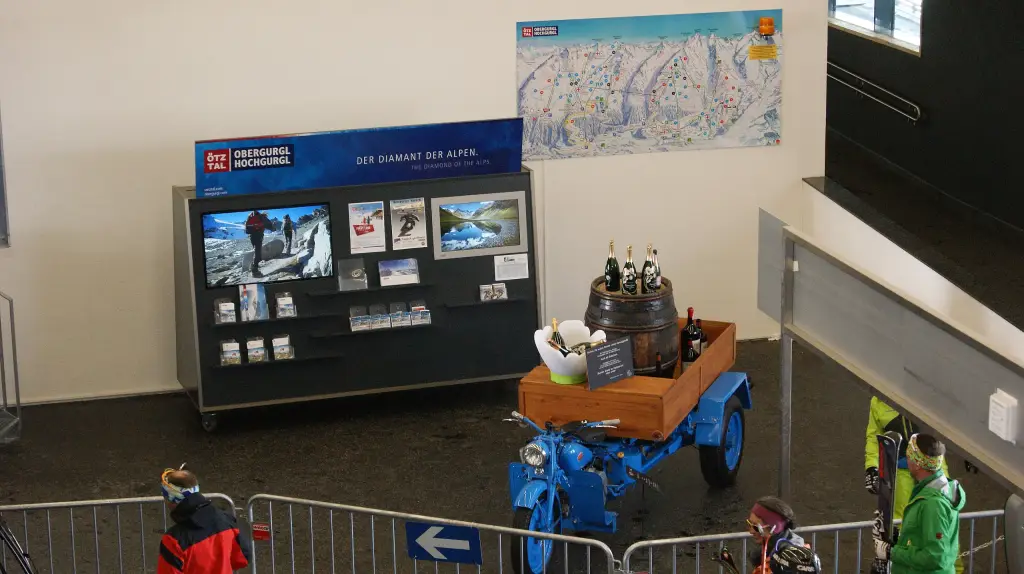
The chassis was welded in one piece. The Sport had no front brake, but the motocarro had a drum brake on the front wheel, the front suspension being a girder fork with a central coil spring and no damping. Two box girders ran from the engine to the rear axle and two leaf spring assemblies above the rear axle carried the body rather than the engine. When the Moto Guzzi Sport 14 arrived in 1929 the transport tricycle was immediately fitted with its parts, probably with nothing changed apart from the price and the structure of the rear section.
Military and heavier models
The Mototriciclo 32 came from a military order for the Italian army: to improve manoeuvrability the wheelbase and track were slightly reduced, and the technique came from the Sport 15 of 1931 apart from a Magneti Marelli generator instead of Bosch, probably because the army did not want to depend on foreign suppliers, and a larger fuel tank. 935 copies were delivered to the army, while another 143 went to civilian buyers as the Motocarro 109-32. When the P 250 arrived in 1934 a trike was built on it with its 232 cc engine and a body on leaf springs, with a cab and canvas roof available, but the project never reached production.
The Motocarro S of 1934 combined the head and side valve engine of the Sport 15 with the four-speed gearbox of the V series, and was modernised with a rear differential and a choice of a four-speed gearbox or three speeds plus reverse; payload rose to 800 kg and the rear axle used car-type rims. In 1938 the ER received the overhead valve engine of the V series, three forward gears and reverse, drum brakes on all three wheels and a payload of 1,000 kg, at 9,800 lire for the bare chassis. The Tipo U of 1942 was an improved ER built to government requirements, with fan-forced air cooling and a reduction stage in the final drive giving high and low gearing, six forward and two reverse ratios from a three-speed gearbox.
Ercole
The Ercole appeared in 1946 and stayed in production until 1980. It was more heavily built than its predecessors and, because of its increasing load capacity, was fitted with additional bevel gears behind the gearbox. Its V-series engine had five forward gears and one reverse with forced air cooling, and payload reached 1,500 kg. Later versions had the engine of the Moto Guzzi Falcone and an electric starter, and from 1960 a cab could be fitted, placed on the motorcycle itself.
Design and features
- Load behind the rider: cargo could be stacked high without blocking the view, the great advantage over front-box three-wheelers.
- From motorcycle parts: the first Tipo 107 was a Sport front with a bolted-on frame, easily converted back.
- Growing payload: from the Tipo 107 to the Ercole, which carried 1,500 kg.
- Military work: the Mototriciclo 32 for the army and the Tipo U built to government requirements.
- Long life: from 1928 to 1980, more than fifty years of motocarri.
Moto Guzzi three-wheelers versions
- Motocarro Tipo 107 (1928): the first model, based on the Sport front end.
- Motocarro Sport 14 (1929): the same idea with the parts of the Sport 14.
- Mototriciclo 32 and Motocarro 109-32 (1931): military version, 935 delivered to the army and 143 sold to civilians.
- Prototipo P 250 (1934): a 232 cc trike with a cab, never produced.
- Motocarro S (1934): differential, 800 kg payload and car-type rear rims.
- ER (1938) and Tipo U (1942): overhead valve engines and payloads up to more than 1,000 kg.
- Ercole (1946–1980): the heaviest and longest-lived model, with 1,500 kg payload.
The motocarri shared their engines with the motorcycles of the period, such as the GT series and the Falcone, while the Alce produced the military TriAlce. More machines are in the Moto Guzzi collection.
Sources
- Moto Guzzi Triporteurs, English Wikipedia: model history, engine details, Ercole
- Motocarri Moto Guzzi, Italian Wikipedia: models, payloads, prices, military orders