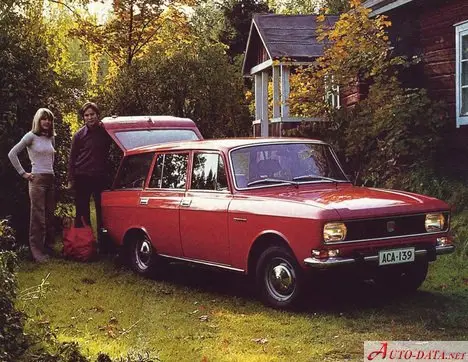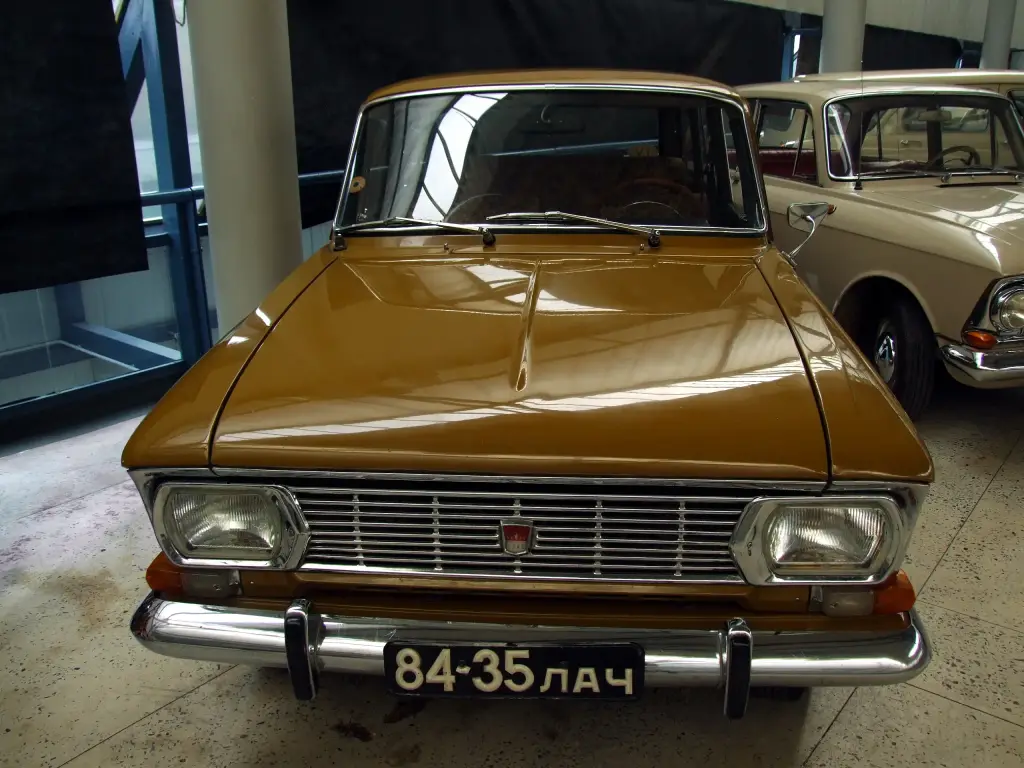
The Moskvich 426 was the estate version of the Moskvich 408, built at the Moscow factory from 1967 to 1976. It carried the same 1.4-litre engine as the sedan, but with stiffer rear springs, a folding rear seat and a load floor that could take 250 kg. It was replaced by the Moskvich 2136 when the 408 family gave way to the 2140 line.
Moskvich 426 at a glance
| Maker | MZMA / AZLK, Moscow |
|---|---|
| Production | 1967–1976 |
| Based on | Moskvich 408 |
| Body | five-door estate |
| Engine | 1.4-litre (1,357 cc) four from the 408 |
| Designer | Yefim Mastbaum |
| Capacity | four or five people and 100 kg, or two people and 250 kg |
| Rear seat | metal backrest that folds for loads up to 250 kg |
| Tailgate | two-piece until 1972, then a single upward-opening door |
| Rear springs | stiffer than on the saloon |
| Spare wheel | under the rear floor with the tools |
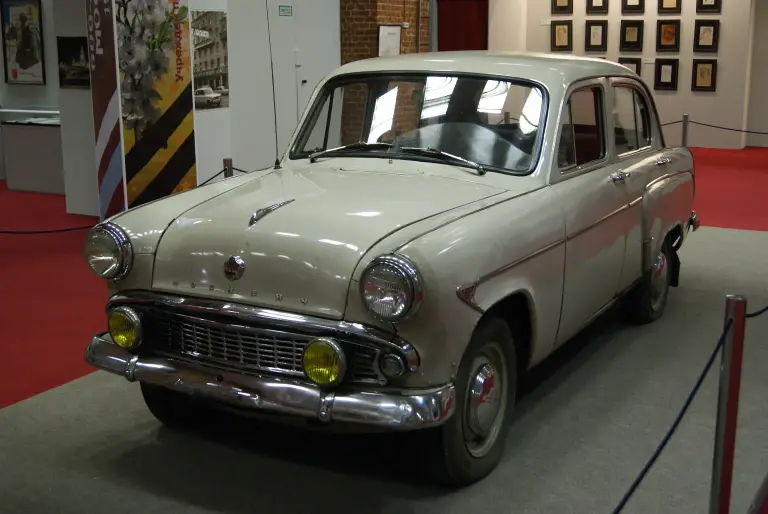
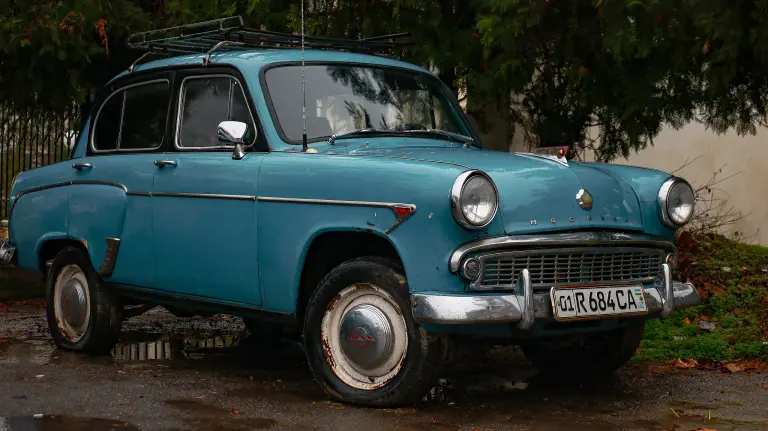
A separate article on the 426 exists only in Russian Wikipedia; the English article covers it as a body style of the 408. No free photographs of the 426 estate were found, so the article uses the existing cover image.
History of the Moskvich 426
The Moskvich 426 appeared in March 1967 as the estate of the new 408 generation. It replaced the previous estate, the Moskvich 423, and its development followed the same thinking: a car that could serve as family transport and as a light delivery vehicle at the same time. Like the delivery version of the range, the 433, it was given stiffer rear springs than the saloon. The body carried four or five people with 100 kg of luggage, or two people and 250 kg of goods, and the rear seat had a metal backrest that folded flat. The spare wheel and tools lived in a well under the rear floor.
The first cars had a tailgate in two halves, the upper part lifting up and the lower part dropping down, as on the earlier 423. From 1972 this gave way to a single door hinged at the top and opening upwards, which was simpler and cheaper to build. Visually the 426 followed the 408, and it differed from the Moskvich 427, the estate based on the 412, mainly by having the smaller 1.4-litre engine of the 408 instead of the 1.5-litre unit.
In December 1969 the whole 408 range was modernised and the cars received the letters IE in their designations, standing for compliance with new safety standards and export potential. The 426IE followed with the same changes as the saloon and no visible differences from the cars built before. The factory offered a long list of versions: a medical estate (426M), a taxi (426T), an export model (426E), a knock-down kit (426K), a hot-climate version (426Yu), the 426I and 426IE for the safety-standard cars, and even a right-hand-drive 426P, of which only a small number were built.
Production ran until 1976. When the 408 family was replaced by the 2138 and 2140 line, the estate role passed to the Moskvich 2136, which mated the same 1.36-litre engine to the new 2140 body. Estates were always a small share of Moskvich output, and the 426 is remembered less for numbers than as the practical member of a range that sold by the hundred thousand.
Design and features
- Stiffer rear springs: fitted to cope with a 250 kg payload.
- Folding rear seat: a metal backrest that opened up the load bay.
- Single-piece tailgate: a simpler upward-opening door from 1972.
- Shared engine: the 1.4-litre unit of the 408, easier to service than the 412.
- Wide choice of versions: medical, taxi, export, hot-climate and right-hand-drive cars.
Moskvich 426 versions
- Moskvich 426 (1967–1976): the standard estate.
- Moskvich 426M: estate for medical service.
- Moskvich 426T: taxi version.
- Moskvich 426E: export version.
- Moskvich 426IE (from December 1969): modernised car to the new safety standards.
- Moskvich 426P: right-hand-drive estate built in small numbers.
The 426 was the estate version of the Moskvich 408; its more powerful sister is the Moskvich 427, and its predecessor was the Moskvich 423. Its successor is described under Moskvich 2137, and more models are in the Moskvich collection.
Sources
- Москвич-426, Russian Wikipedia: body, capacity, tailgate, versions
- Moskvitch 408, English Wikipedia: introduction, springs, development