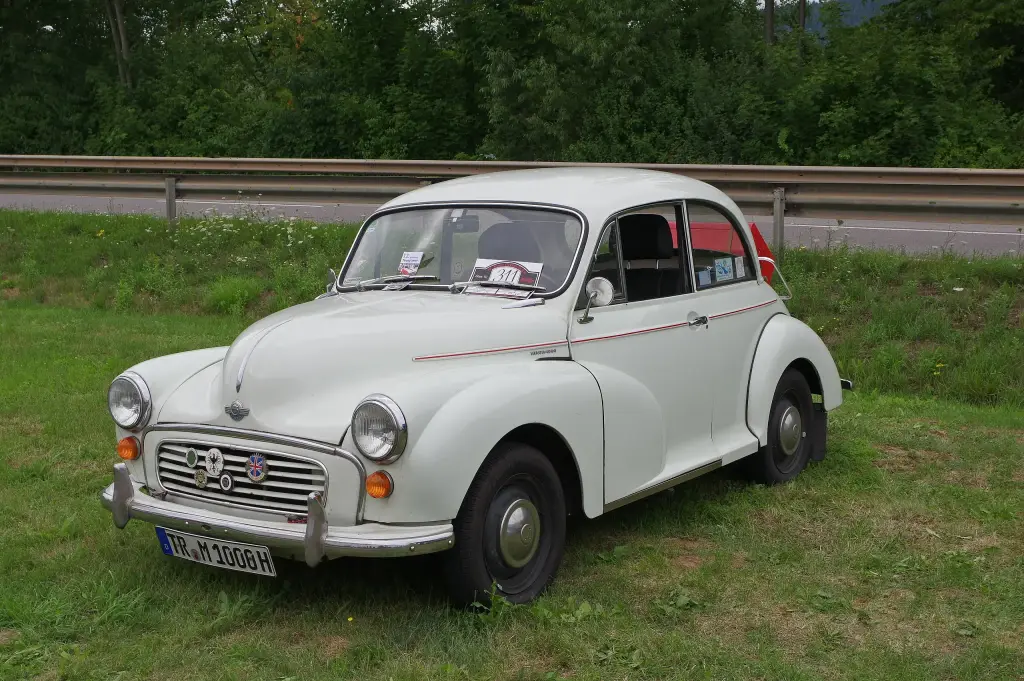
The Morris Minor made its debut at the Earls Court Motor Show in October 1948 and stayed in production until 1971, a run of 23 years. Designed under Alec Issigonis, it was the first British car to sell more than a million, and it is considered a classic of automotive design that typified ‘Englishness’.
Morris Minor at a glance
| Production | 1948–1971 |
|---|---|
| Debut | Earls Court Motor Show, October 1948 |
| Designer | Alec Issigonis |
| Series | Series MM (1948–1953), Series II (1952–1956), 1000 (1956–1971) |
| Bodies | two-door saloon and tourer; four-door saloon from 1950 |
| Traveller | wood-framed estate from October 1953 |
| Commercials | panel van and pickup from May 1953 |
| Suspension | independent front, torsion bars |
| Steering | rack and pinion |
| Construction | unitary body |
| Built | more than 1.6 million |
History of the Morris Minor
The Minor was conceived in 1941, while the Nuffield Organization was busy with war work and civilian car production was banned. Morris Motors’ vice chairman, Miles Thomas, wanted new products ready for peacetime, and the company’s chief engineer Vic Oak pointed him to a young designer, Alec Issigonis, who had joined Morris in 1935 and specialised in suspension. Thomas approved a new small family car to replace the Morris Eight and named the project Mosquito, keeping it secret both from the Ministry of Supply and from William Morris, Lord Nuffield, who was expected to dislike Issigonis’s radical ideas.
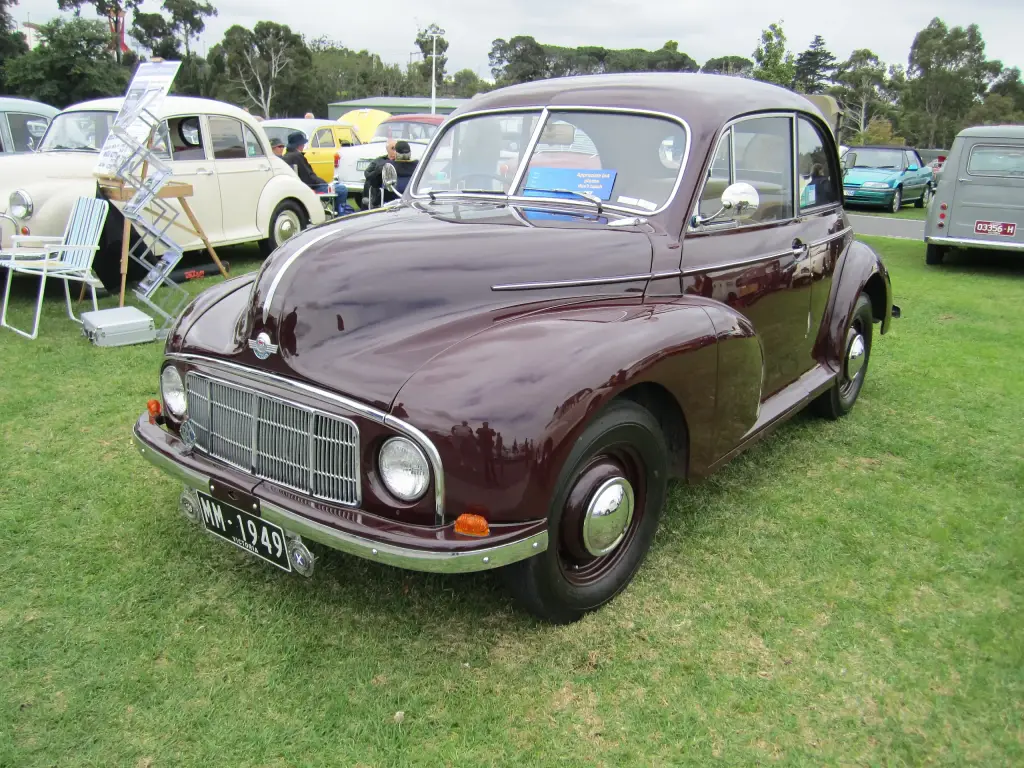
Issigonis wanted a practical, economical and affordable car that would equal or surpass the convenience of a more expensive one. He used the ideas he had proposed for the Morris Ten before the war: independent suspension, rack and pinion steering and unitary construction. Inspired by the Citroën Traction Avant, he chose torsion bars at each wheel instead of coil springs. The car had 14-inch wheels, smaller than any other British production car of the time and far smaller than the 17-inch wheels of the Morris Eight, which reduced intrusion into the cabin and cut unsprung weight. The independent front suspension also allowed the engine to sit low and far forward, which improved the weight distribution when the car was fully loaded.
Three series
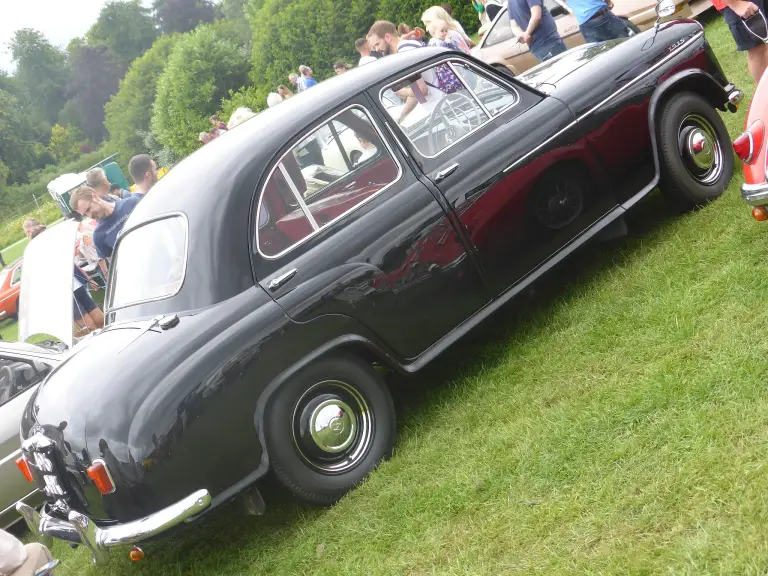
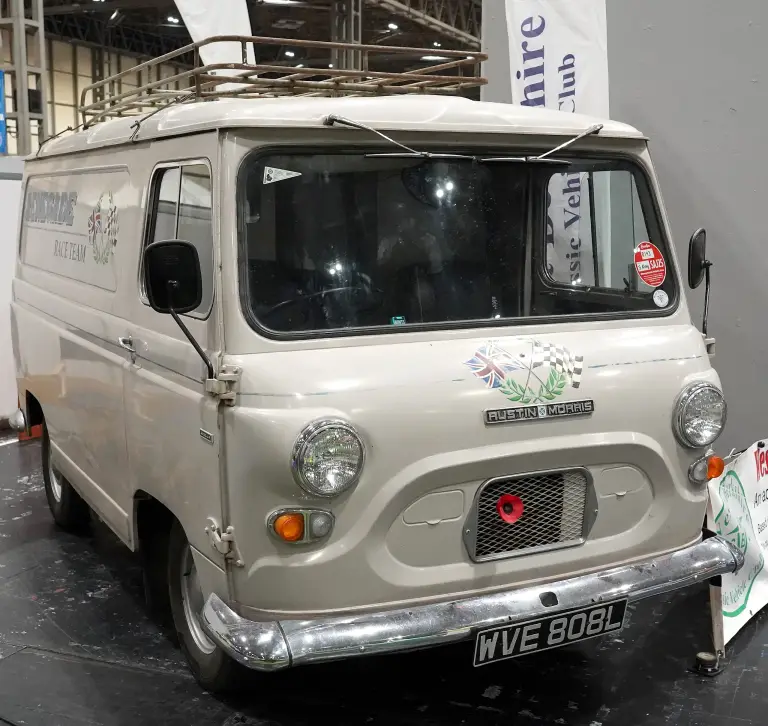
The Minor was launched as a two-door saloon and tourer, with a four-door saloon added in September 1950. A wood-framed estate, the Traveller, arrived in October 1953 and panel van and pickup versions in May 1953. The Series MM ran from 1948 to 1953, the Series II from 1952 to 1956, and the 1000 series from 1956 to 1971. Although Morris launched the similarly named and similarly positioned Mini in 1959, the Minor stayed in production for more than a decade afterwards, and Autocar later described its 23-year run as one of the longest of any single-generation car, calling it a primary way Britain got back on the road after the Second World War.
Design and features
- Issigonis design: independent suspension, rack and pinion steering and unitary construction, all advanced for 1948.
- Small wheels: 14-inch wheels pushed to the corners gave more cabin space and less unsprung weight.
- Engine far forward: the lack of a front axle let the engine sit low and ahead, improving balance when loaded.
- Torsion bars: chosen after Issigonis’s admiration for the Citroën Traction Avant.
- Three series, many bodies: saloon, tourer, Traveller, van and pickup over 23 years.
Morris Minor versions
- Series MM (1948–1953): the original two-door saloon and tourer, four-door from 1950.
- Series II (1952–1956): the middle series.
- Minor 1000 (1956–1971): the longest-running series.
- Traveller (1953–1971): wood-framed estate car.
- Van and pickup (1953–1971): commercial versions.
The Minor was replaced in the Morris range by the Morris Marina, and its small-car successor was the Morris Mini. Its Australian cousin was the Morris Major, and more cars are in the Morris collection.
Sources
- Morris Minor, English Wikipedia: origins, design, series, production