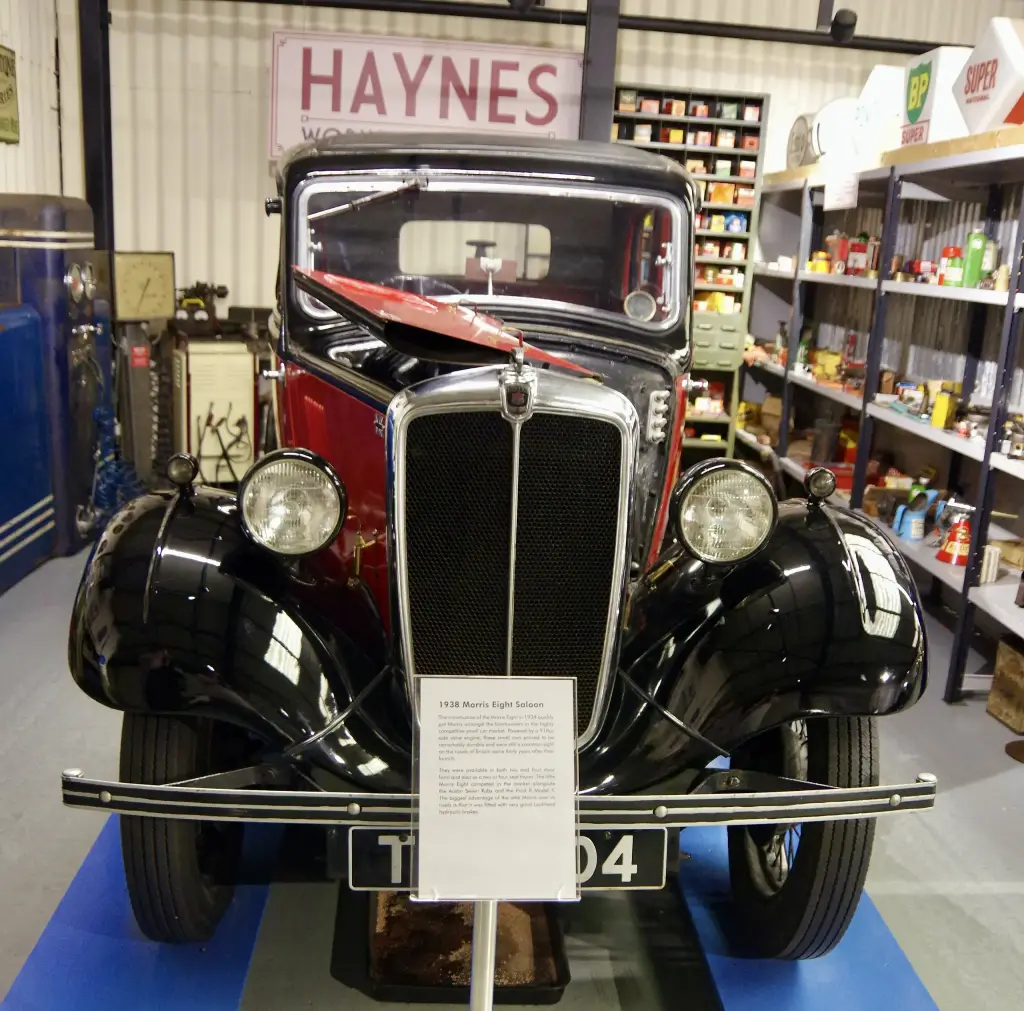
The Morris Eight was Morris’s small family car of 1935 to 1948, inspired by the sales success of the Ford Model Y. It was well equipped for its price, with hydraulic brakes, a full set of instruments and an electric windscreen wiper, and its success helped Morris regain its place as Britain’s largest motor manufacturer.
Morris Eight at a glance
| Production | 1935–1948 |
|---|---|
| Engine | 918 cc side-valve four, 23.5 bhp |
| Series E engine | Morris USHM, 29 bhp |
| Gearbox | three-speed, four-speed on the Series E |
| Brakes | Lockheed hydraulic, 8-inch drums |
| Electrics | 6-volt Lucas, coil ignition |
| Wheelbase | 7 ft 6 in (Series I) |
| Bodies | two- and four-door saloons and open tourer |
| Price | from £118 to £142 |
| Series I built | 164,102, of which about 24,000 tourers |
| Van version | Series Z 5 cwt van, 1940–1953 |
History of the Morris Eight
The Eight was introduced in October 1934 as a 1935 model and designed to attack the market the Ford Model Y had opened. Its styling followed the Ford closely, but under the skin it was a more modern car than the Austin 7 that had dominated small British cars for years. The 918 cc side-valve four gave 23.5 bhp through a three-speed gearbox with synchromesh on the top two ratios, and the car had Lockheed hydraulic brakes and a 6-volt Lucas electrical system.
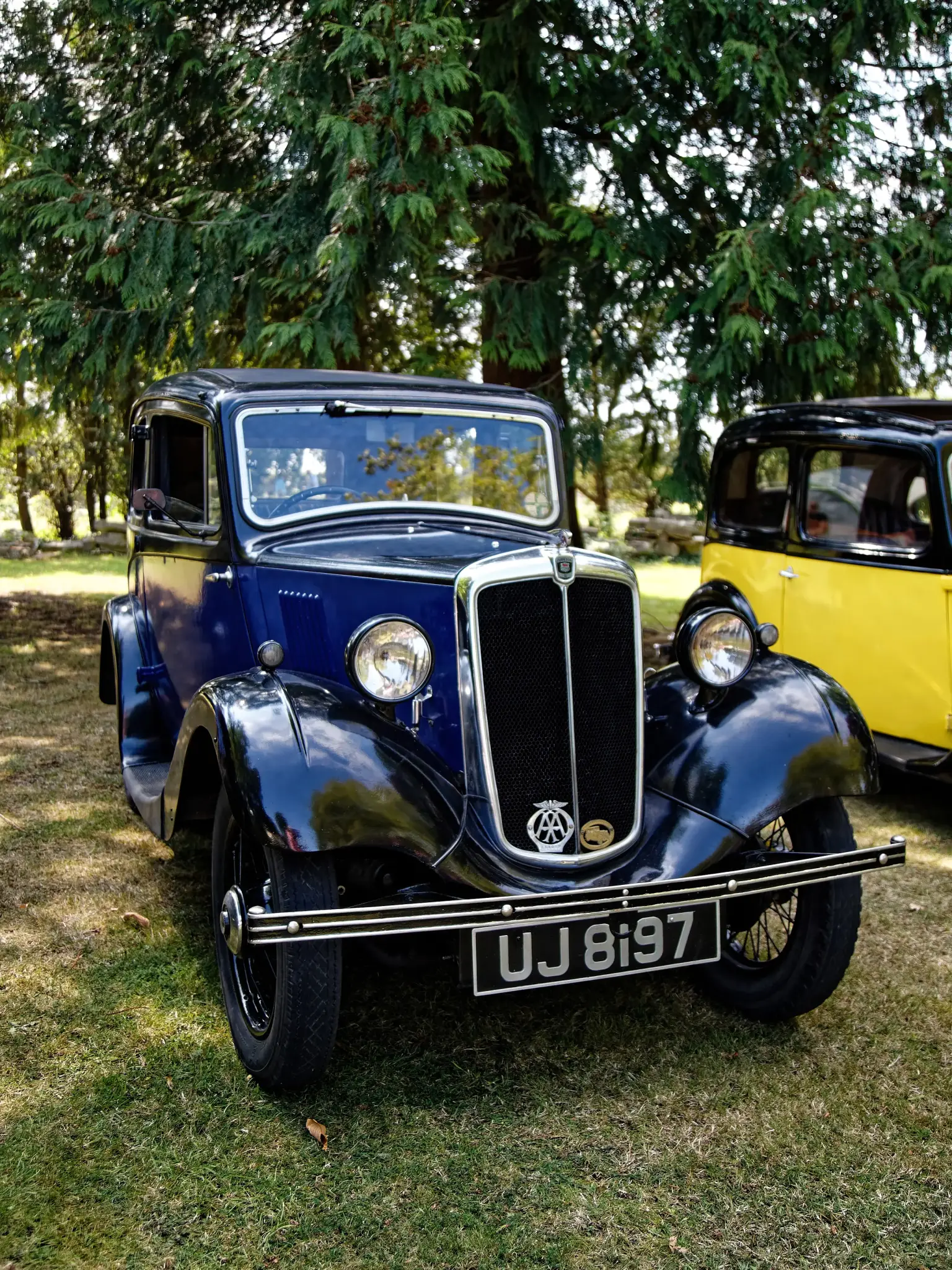
Complete cars cost from £118 for the basic two-seater to £142 for a four-door saloon with a sunshine roof and leather seats, with bumpers and indicators at £2 10s extra; a bare chassis was offered for £95 in September 1934. For the money the driver got a speedometer with odometer, oil pressure and fuel gauges and an ammeter, hydraulic brakes instead of the Austin 7’s cable system, an electric windscreen wiper rather than a vacuum one, and a relatively wide 45-inch track that helped stability in corners. The Series I name was used from June 1935; of the 164,102 cars built, about 24,000 were tourers.
Series II and Series E
In 1938 the car was restyled to match the rest of the Morris range, with a painted rather than plated radiator surround and disc ‘Easiclean’ wheels in place of Magna wire wheels; the engine and running gear were unchanged. Australian buyers could also have a coupé utility, built by Ruskin Bodyworks in Victoria from CKD kits and available with a fixed or open roof. The Series E, announced in October 1938, was a bigger restyle with a waterfall dummy grille, headlights in the wings and no running boards. It was longer, wider and heavier although its wheelbase was an inch shorter, and it added a luggage compartment with external access, a full-width parcels tray and a rear-hinged alligator bonnet that made engine access poor. The engine became the USHM, still side-valve but with 29 bhp, a counterbalanced crankshaft and shell bearings, and the gearbox gained a fourth speed with synchromesh on all three upper ratios. That engine went on, almost unchanged, into the 1948 Morris Minor.
Wartime and the van
Production continued through the war for the military, for essential civilian use and for export, but no more tourers were made in Britain after 1945. A van version of the Series E, the Series Z rated at 5 cwt, was built from 1940 to 1953; mechanically it was closer to the Series II, with a three-speed gearbox, and more than 51,000 were made, including an Australian coupé utility.
Design and features
- Hydraulic brakes: 8-inch Lockheed drums, a real advantage over the cable brakes of the Austin 7.
- Full instrumentation: speedometer with odometer, oil pressure, fuel and ammeter gauges.
- Electric wiper: instead of the vacuum type still used by Ford.
- Wide track: 45 inches, which gave better stability than its rivals.
- Dummy grille: a chrome shell and honeycomb grille hid the real radiator behind.
Morris Eight versions
- Series I (1935–1938): two- and four-door saloons and the open tourer.
- Series II (1938): painted radiator surround, disc wheels, Australian coupé utility.
- Series E (1938–1948): waterfall grille, 29 bhp USHM engine, four-speed gearbox.
- Series Z van (1940–1953): 5 cwt commercial version, over 51,000 built.
The Eight was replaced in the Morris range by the Morris Minor, and it is closely related to the Morris Ten of the same years. More cars are in the Morris collection.
Sources
- Morris Eight, English Wikipedia: series, engineering, prices, production