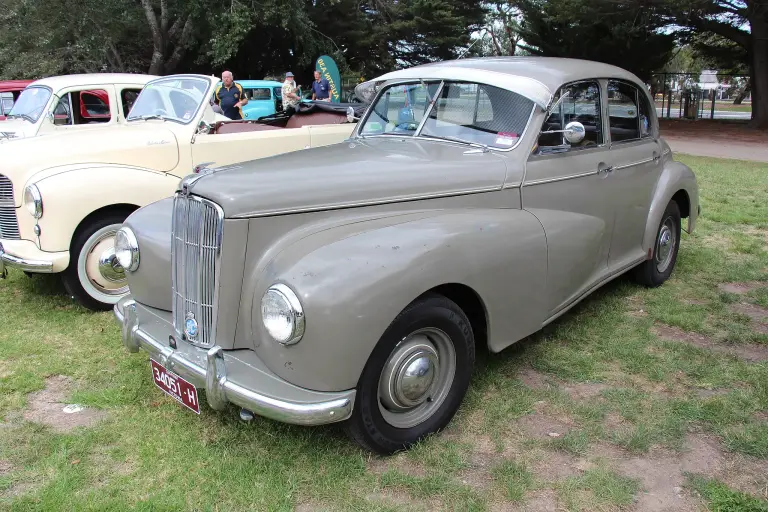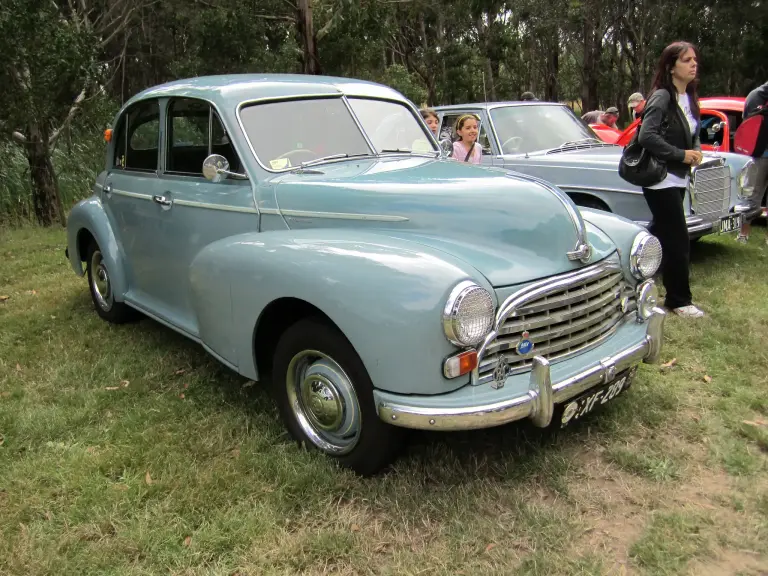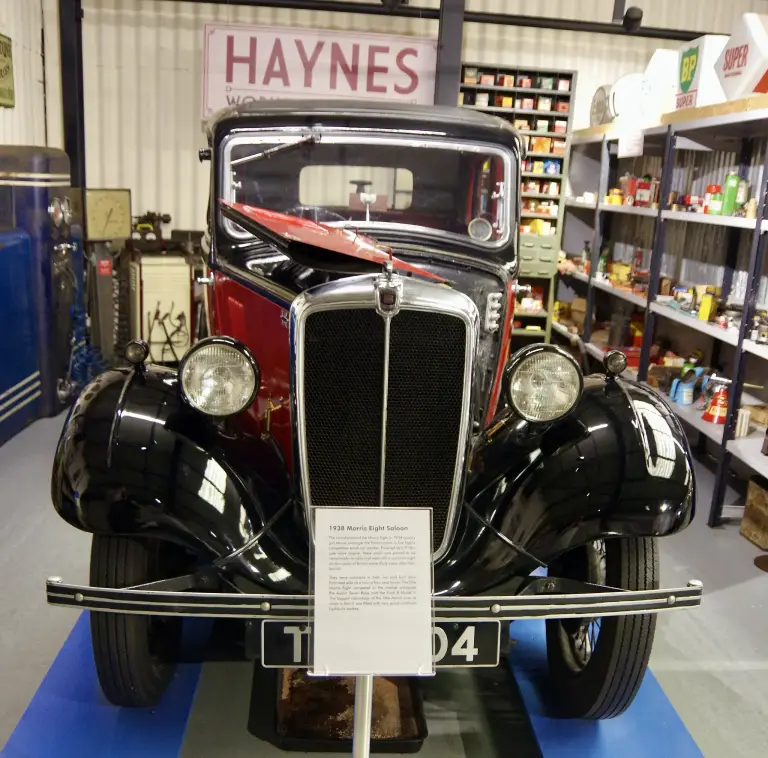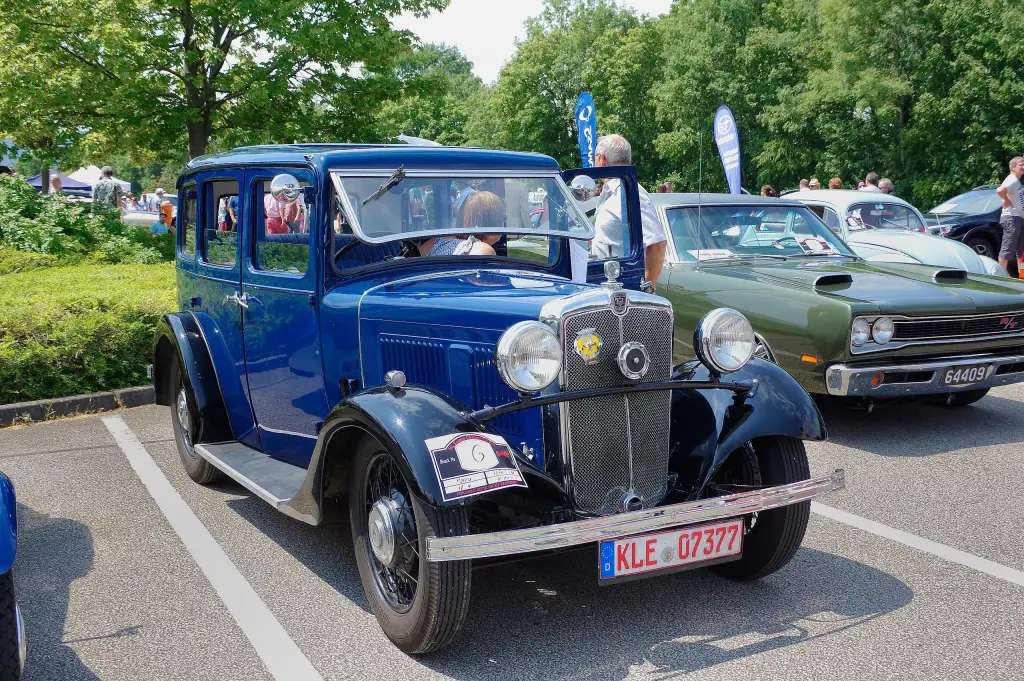
The Morris Ten was introduced on 1 September 1932 as Morris’s entry in the 10 hp class, then one of the most important sectors of the British market. It was the first small Morris with hydraulic brakes and a four-speed gearbox, and it stayed in production in various forms until October 1948.
Morris Ten at a glance
| Announced | 1 September 1932 |
|---|---|
| Production | 1932–1948 |
| Engine | 1292 cc side-valve four, single SU carburettor |
| Power | 24 bhp at 3,200 rpm, later 27½ bhp |
| Gearbox | four-speed, wet cork clutch |
| Brakes | Lockheed hydraulic, 19-inch wheels |
| Wheels | 19-inch, 18-inch from 1933 |
| Prices in 1932 | chassis £127 10s; saloon £169 10s; coupé £195 |
| Series M engine | 1140 cc X-Series overhead valve, 37 bhp |
| Replaced by | Morris Oxford MO, 1948 |
History of the Morris Ten
The Ten was announced on 1 September 1932 and was a new class of car for Morris. It had wire wheels and a new kind of mudguarding, with domed wings and wing side shields, and power came from a 1292 cc four-cylinder side-valve engine with a single SU carburettor giving 24 bhp at 3,200 rpm. The gearbox had four speeds behind a wet cork clutch, and the car had Lockheed hydraulic brakes on 19-inch wheels. Early cars had a centre accelerator pedal and large sidelamps on the wings, and the propeller shaft used leather-faced Cardan disc couplings; from 1933 the wheels became 18-inch and the accelerator moved to the right in the modern way.
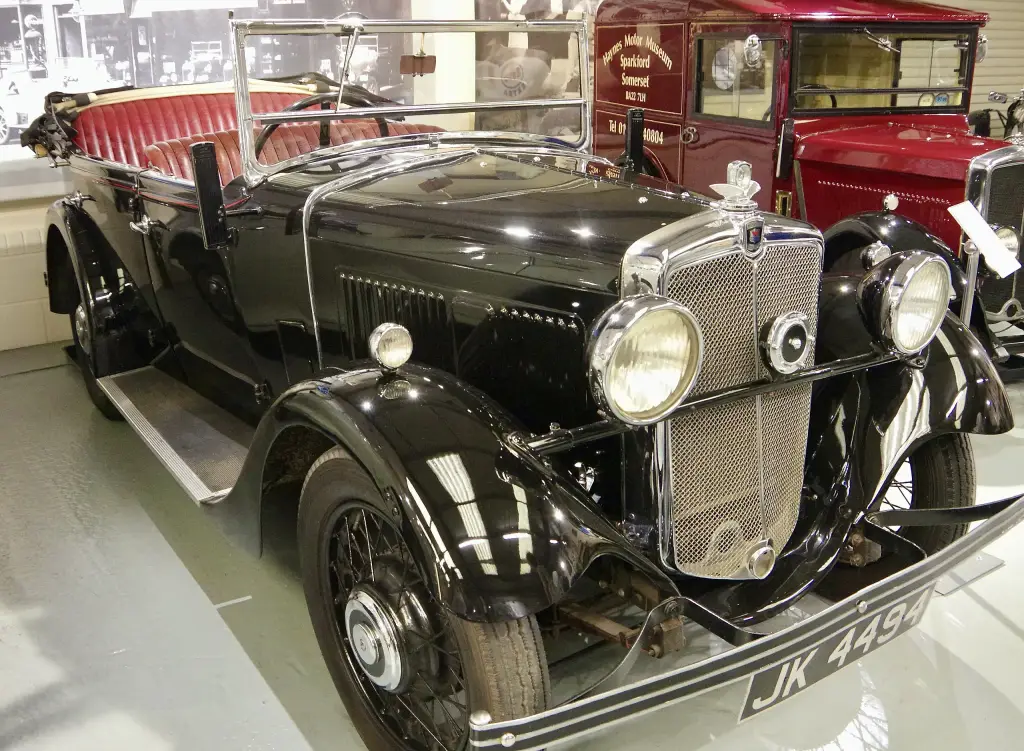
At the October 1932 Olympia Motor Show the chassis cost £127 10s, a coach-built saloon with sliding head £169 10s and a special coupé £195. Only a saloon and a two-door coupé were offered at first, with a four-door tourer from December 1932 and, in 1934, a two-seater with dickey seat and a Traveller’s Saloon. Twelve months after launch, with the arrival of the Ten Six, the word Four was added to the name: the chassis was strengthened, the engine mountings revised, synchromesh appeared and output rose to 27½ bhp by April 1934. Two-tone paint became optional in 1935.
Ten Six and the series cars
On 28 August 1933 a 12 hp six-cylinder version, the Ten Six, was announced on the longer-wheelbase chassis of the Cowley Four, priced from £180 for a two-seater to £215 for the special coupé. A sporting Ten Six Special was built in small numbers with a tuned engine and twin SU carburettors, and the car shown at Olympia in October 1933 had a long strapped bonnet, cutaway doors and a low tail. Morris rationalised its range in 1935 and the Ten Series II shared its body and chassis with the Morris Twelve Series II, using a three-speed gearbox at first and a four-speed as an option from 1936 and as standard from 1937; steel disc Easiclene wheels replaced wire ones at the end of 1936. For 1938 the Series III gained an overhead-valve engine, as fitted to the Wolseley Ten, raising power from 27 to 37.5 bhp, and the radiator surround became painted rather than chromed.
Morris Ten Series M
The Series M of 1938 was a completely new car with unitary construction, although its styling changed little from the Series III. Its engine was also new: the 1140 cc X-Series overhead-valve unit produced 37 bhp at 4,600 rpm, with a free-flow eight-port cylinder head, a pressurised cooling system, a fully filtered lubrication system and an automatic camshaft chain tensioner. With the Vauxhall 10-4 it was one of the first mass-market British cars with an overhead-valve engine, and it was praised for smoothness, efficiency and quiet running, giving a top speed of about 62 mph. The running gear was otherwise conventional, with solid axles and leaf springs all round, because plans for independent front suspension and rack and pinion steering were shelved on cost grounds. Only saloon bodies with an optional sun roof were made for civilians, but pickups were built during the war as part of the ‘Tillie’ utility programme, and the car was assembled in India as the Hindustan 10.
Design and features
- Hydraulic brakes: Lockheed brakes on all four wheels, unusual in the 10 hp class in 1932.
- Four-speed gearbox: behind a wet cork clutch, at a time when three speeds were normal.
- New mudguarding: domed wings with side shields were part of the car’s modern look.
- Six-cylinder option: the Ten Six of 1933 offered 12 hp on a longer chassis.
- X-Series engine: the Series M’s 1140 cc overhead-valve unit with an eight-port head.
Morris Ten versions
- Ten (1932–1933): 1292 cc, 19-inch wheels, centre accelerator.
- Ten Four (1933–1935): strengthened chassis, synchromesh, 27½ bhp.
- Ten Six (1933–1935): 12 hp six-cylinder on a longer wheelbase; Ten Six Special sports version.
- Ten Series II (1935–1937): body and chassis shared with the Twelve, three- or four-speed gearbox.
- Ten Series III (1938): overhead-valve engine, 37.5 bhp, painted radiator surround.
- Ten Series M (1938–1948): unitary construction, 1140 cc X-Series engine, 62 mph.
The Ten was the smaller stablemate of the Morris Twelve and Fourteen, and its post-war replacement was the Morris Oxford. More cars are in the Morris collection.
Sources
- Morris Ten, English Wikipedia: models, prices, engines, Series M