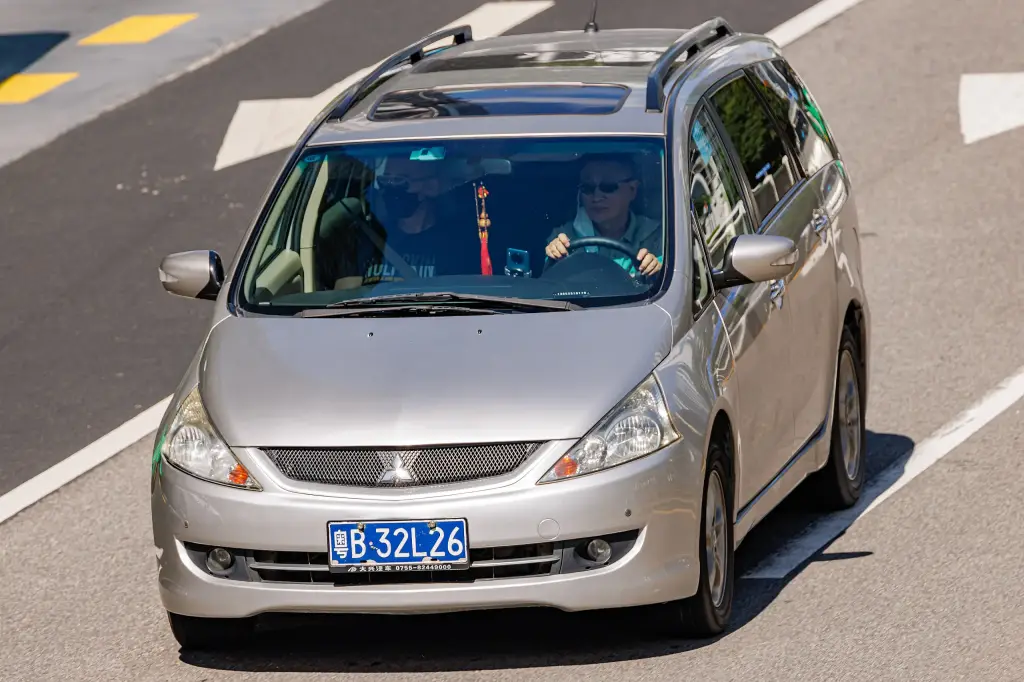
The Mitsubishi Grandis is a seven-seat MPV built between 2003 and 2011. It replaced the Chariot, Space Wagon and Nimbus minivans, was sold in Thailand as the Space Wagon, and was the first new Mitsubishi to wear the company’s common front-end design.
Mitsubishi Grandis at a glance
| Maker | Mitsubishi Motors |
|---|---|
| Production | 2003–2011 |
| Launched | 14 May 2003, as a 2004 model |
| Seats | seven |
| Platform | shared with the Airtrek, without the raised ride height |
| Engines | 2.4-litre four; Volkswagen 2.0 DI-D turbodiesel in Europe |
| Diesel output | 136 PS, later 140 PS |
| Design basis | Mitsubishi Space Liner concept, Tokyo 2001 |
| Also called | Mitsubishi Space Wagon in Thailand |
| Award | Best MPV, Bangkok International Motor Show, 2005–2010 |
| End of production | Japan March 2009, worldwide 2011 |
Based on one source: the English Wikipedia article on the Mitsubishi Grandis.
History of the Mitsubishi Grandis
A new face
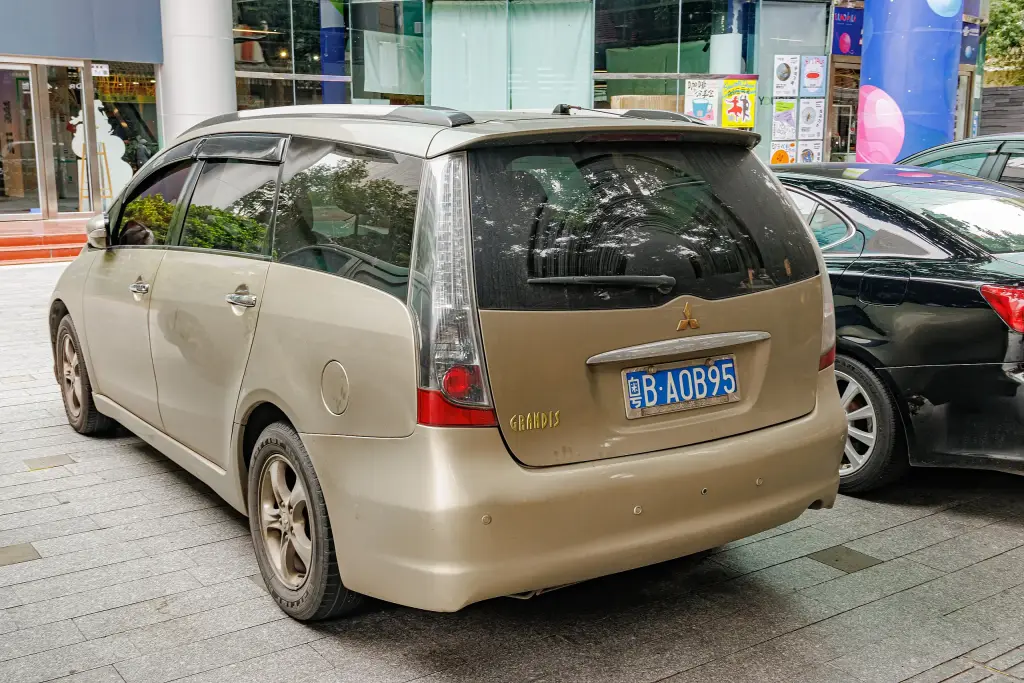
The Grandis was launched on 14 May 2003 as a 2004 model and sold in Japan, Asia, Europe, Oceania, Mexico, Honduras, Jamaica and South America. Its exterior was loosely based on designer Olivier Boulay’s earlier Mitsubishi Space Liner, a monobox four-seat concept with centre-opening suicide doors shown at the Tokyo Motor Show in October 2001. It was the first all-new vehicle with the company’s common face, with a curved lower grille edge and a sharp crease rising up the leading edge of the bonnet from the badge, and it shared its platform with the Mitsubishi Airtrek, minus the extra ground clearance.
Engines and the fuel cell study
Buyers could choose a 2.4-litre four-cylinder petrol engine or, in Europe only, a 2.0-litre turbodiesel from Volkswagen badged DI-D rather than TDI. The diesel came with the European launch in 2004 and originally used the 136 PS BSY version of Volkswagen’s Pumpe Düse engine, changed in 2008 to the 140 PS BWC variant without declared performance changes.
The Grandis was also the basis for the Mitsubishi FCV fuel cell concept, powered by technology developed by the then controlling shareholder DaimlerChrysler. Its FC System used a fuel cell stack to recharge an array of nickel-metal hydride batteries from 117 litres of compressed hydrogen storage.
Markets and the end
The Grandis was launched in Malaysia on 28 July 2005 as Mitsubishi returned to that market, and was updated there in September 2007, July 2009 and August 2010. It won the Best MPV award at the Bangkok International Motor Show every year from 2005 to 2010. Japanese sales ended in March 2009 and the model was discontinued worldwide in 2011. The Grandis name was brought back in July 2025 on a crossover SUV based on the Renault Symbioz.
Design and features
- New family face: the first Mitsubishi with the common front-end design.
- Seven seats: a replacement for the Chariot and Space Wagon.
- Volkswagen diesel: a 2.0 DI-D for Europe only.
- Fuel cell study: the FCV concept used DaimlerChrysler technology.
- Award winner: Best MPV in Bangkok for six years running.
Mitsubishi Grandis versions
- 2.4 petrol: the main engine in most markets.
- 2.0 DI-D (2004): Volkswagen diesel with 136 PS.
- 2008 diesel: the 140 PS BWC version.
- Space Wagon (Thailand): the same MPV under the old name.
- FCV concept: hydrogen fuel cell study.
The Grandis replaced the Chariot and shared its platform with the Outlander‘s Airtrek ancestor. Its smaller relative was the Dion, and more cars are in the Mitsubishi collection.
Sources
- Mitsubishi Grandis, English Wikipedia: design, engines, markets, fuel cell concept