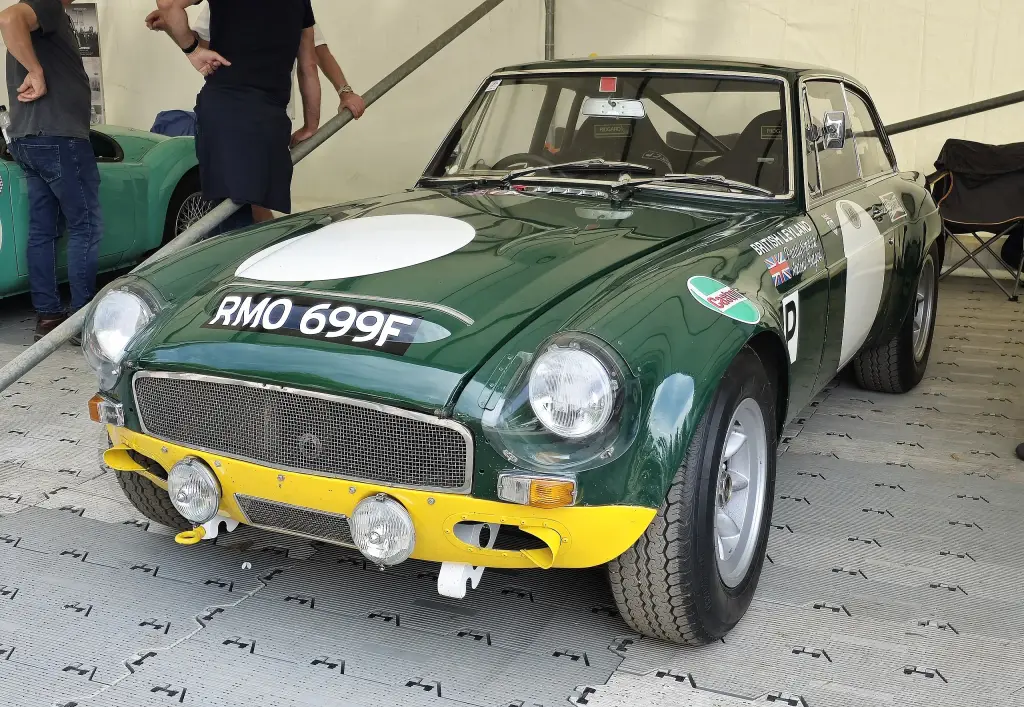
The MG MGC was the six-cylinder version of the MGB, sold from 1967 to 1969. It sat above the four-cylinder roadster and GT in the range and used a three-litre engine whose extra power demanded a stronger gearbox than the standard MGB could offer.
MG MGC at a glance
| Maker | MG (British Motor Corporation, later British Leyland), Abingdon |
|---|---|
| Production | 1967–1969 |
| Bodies | two-door roadster and GT 2+2 coupé |
| Engine | three-litre six-cylinder |
| Power | 150 bhp net |
| Gearbox | four-speed manual, fully synchromesh from 1968 |
| Relationship | six-cylinder member of the MGB range |
| Shared with | MGB from 1968 and the MGB GT V8 |
| Family production | 523,836 MGB, MGC and MGB GT V8 combined |
The MGC is covered in a section of the English Wikipedia article on the MGB, so this page is shorter than the others in the collection and based on one source.
History of the MG MGC
Above the MGB
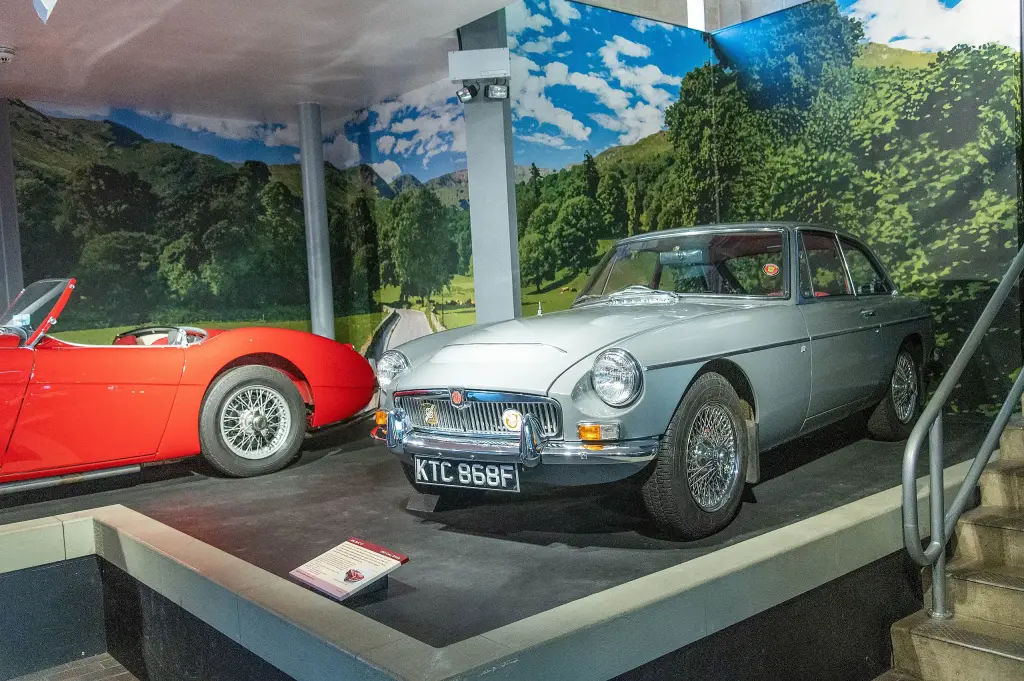
The MGC joined the MG range in 1967 as the six-cylinder member of the MGB family, which by then already included the four-cylinder roadster and the MGB GT coupé introduced in 1965. It was offered in the same two body styles, a two-door roadster and a three-door 2+2 coupé, and it remained in production until 1969.
The three-litre engine and its gearbox
The MGC’s three-litre six produced 150 bhp net, a considerable step up from the 95 hp of the standard MGB’s 1,798 cc B-Series four. The extra power had consequences for the transmission: the gearbox designed for the MGC was so over-engineered for the four-cylinder car that it was adopted for the standard MGB from 1968, replacing the earlier unit with its non-synchromesh first gear. The same transmission was then used in the 3.5-litre MGB GT V8 from 1973.
That shared gearbox is the clearest sign of how the MGC fitted into the range. It was not a separate model line but the most powerful member of the MGB family, and its mechanical parts fed back into the cheaper cars rather than the other way round.
Place in the range
The MGC was built for only two years, between 1967 and 1969, and it overlapped with the four-cylinder MGB that continued until 1980 and with the MGB GT V8 that appeared in 1973. Sales of the MGB, MGC and MGB GT V8 are counted together at 523,836 cars, a figure that underlines how completely the MGC was absorbed into the MGB story.
After the MGC and the V8, the next six- and eight-cylinder development of the theme came much later: the MGB re-entered production in the 1990s as the heavily modified MG RV8, a limited run of 2,000 cars, before the MG F replaced it in 1995. The MGC therefore marks the point at which MG first put a large engine into its unitary sports car, something the company returned to only with the V8 and again with the XPower SV in the 2000s.
Design and features
- Three-litre six: 150 bhp net, well above the standard MGB’s 95 hp.
- Strong gearbox: the MGC unit was adopted for the MGB in 1968 and for the V8.
- Two body styles: roadster and GT 2+2 coupé.
- Short production: built only from 1967 to 1969.
MG MGC versions
- MGC roadster (1967–1969): the open two-seater with the six-cylinder engine.
- MGC GT (1967–1969): the 2+2 coupé version.
- MGC Sebring cars: competition versions prepared for endurance racing.
The MGC was the six-cylinder member of the MGB family and shared its gearbox with that car; more cars are in the MG collection.
Video: MG MGC 2912 cc Original Engine 3
Video by 163MG on YouTube.
Sources
- MG MGB, English Wikipedia: MGC production years, engine output and gearbox