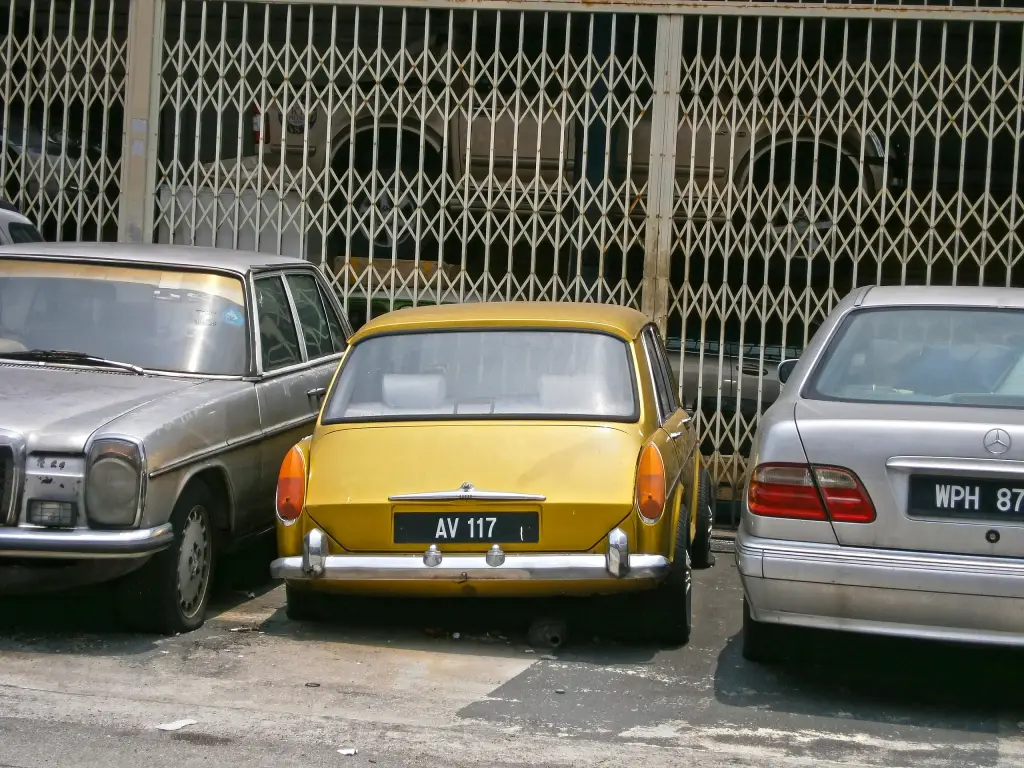
The MG 1100 was the MG-badged version of the BMC ADO16, the front-wheel-drive family car designed by Alec Issigonis and styled by Pininfarina. It appeared at the end of September 1962, six weeks after the Morris 1100 had been launched, and it was followed by the 1275 and 1300 versions once the bigger engine arrived.
MG 1100 at a glance
| Maker | MG (British Motor Corporation), assembled at Cowley |
|---|---|
| Range | BMC ADO16 |
| Launched | end of September 1962 |
| Engine | BMC A-Series, transversely mounted, front-wheel drive |
| Bodies | four-door saloon; three-door estate added in 1966 |
| Suspension | Hydrolastic, interconnected fluid and gas displacers |
| Brakes | front disc brakes with swinging calipers |
| Styling | Pininfarina |
| Designer | Alec Issigonis, development led by Charles Griffin |
| ADO16 production | 1962–1974, about 2.3 million cars |
| Best-seller | Britain’s best-selling car 1963–1966 and 1968–1971 |
| MG versions | 1100, 1275 and 1300 |
The English Wikipedia article covers the whole ADO16 range; this page uses only the parts that concern the MG-badged cars.
History of the MG 1100
A larger Mini
The ADO16 was the Amalgamated Drawing Office project number 16. After the success of the Mini, Alec Issigonis set out to design a larger and more sophisticated car with the same layout: the BMC A-Series engine mounted transversely and driving the front wheels. Pininfarina, which had already styled the Austin A40 Farina for BMC, was commissioned for the body, and the finished car offered interior space comparable to the larger Ford Cortina.
Two features set the ADO16 apart from its rivals in 1962. One was the Hydrolastic suspension designed by Alex Moulton, an interconnected fluid system that kept the car level and the tyres in contact with the road while adding roll stiffness. The other was a set of front disc brakes at a time when they were still rare on mass-produced cars. The engineering work was taken over at the end of the 1950s by Charles Griffin, who later had overall responsibility for the Princess, Metro, Maestro and Montego ranges.
The MG version
BMC launched the ADO16 as the Morris 1100 on 15 August 1962, and the range was then expanded with rebadged versions. The twin-carburettor MG 1100 came at the end of September 1962, followed by the Austin 1100 in August 1963, the Vanden Plas Princess 1100 in October 1963 and the Wolseley and Riley versions in 1965. MG versions were assembled at Cowley, while the Austin-badged cars were built at Longbridge.
Under BMC’s policy of the time the ADO16 was sold under many names around the world. The MG list included the 1100, the 1275 and the 1300, and in some markets an MG Princess, Sports Sedan, 1100S and MG-S 1300. A two-door MG 1100 saloon was offered in overseas markets, including the United States, before the two-door body reached Britain with the Mark II in 1967.
1100 and 1300
In its home market the car was widely known simply as the 1100, or as the 1300 once it was fitted with the 1275 cc engine. A three-door estate joined the range in 1966, badged Countryman by Austin and Traveller by Morris. An Automotive Products four-speed automatic transmission became available as an option.
The ADO16 remained Britain’s best-selling car for most of its life, holding around 15 per cent of the new car market at its peak before the Ford Cortina overtook it in 1972. Production reached about 2.3 million cars between 1962 and 1974, more than half of them sold at home, and British Leyland phased the range out between 1971 and 1974 in favour of the Morris Marina and the Austin Allegro.
Design and features
- Hydrolastic suspension: interconnected fluid displacers gave a soft ride and kept the car level.
- Front disc brakes: unusual on a small family car of 1962.
- Pininfarina body: a single envelope shape with far more room than the Mini.
- Twin carburettors: the MG 1100 was the sporting version of the ADO16 range.
- Front-wheel drive: transverse A-Series engine, as in the Mini.
MG 1100 versions
- MG 1100 (1962): the twin-carburettor four-door saloon, assembled at Cowley.
- Two-door MG 1100: built for overseas markets including the United States.
- MG 1275 and MG 1300: the same body with the 1275 cc engine, sold as the 1300 at home.
- MG 1100S and MG Princess: names used for MG-badged ADO16s in some export markets.
Other small MGs of the same era are in our MG collection, among them the MG Metro that eventually replaced this part of the range.
Video: 265 MG Tech | The Rare MG 1100
Video by UniversityMotorsOnline on YouTube.
Sources
- BMC ADO16, English Wikipedia: launch dates, MG versions, engineering, production totals