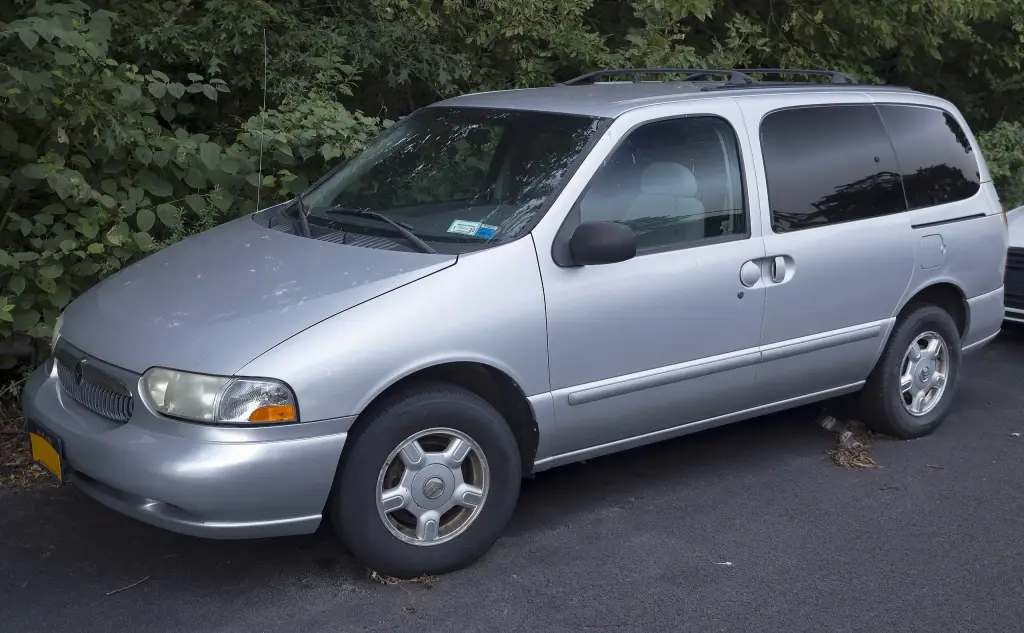
The Mercury Villager was a front-wheel-drive minivan sold from 1993 to 2002. It was developed in a joint venture between Ford and Nissan, which sold the same vehicle as the Nissan Quest, and it replaced in the Mercury range the wood-trimmed station wagons that had carried the Villager name since 1962.
Mercury Villager at a glance
| Production | 1993–2002 model years |
|---|---|
| Class | front-wheel-drive minivan |
| Joint venture | Ford and Nissan, developed and engineered by Nissan |
| Twin | Nissan Quest |
| Generations | two, with a full redesign for 1999 |
| Built at | Ohio Assembly, Avon Lake, Ohio |
| Position | between the Ford Aerostar and Ford Windstar |
| Engine supply | Nissan supplied the engine and transmission |
| Notable feature | repositionable rear seat instead of a removable one |
| Replaced by | the 2004 Mercury Monterey minivan |
The article is based on one source, the English Wikipedia page on the Villager.
History of the Mercury Villager
A name from the wagon era
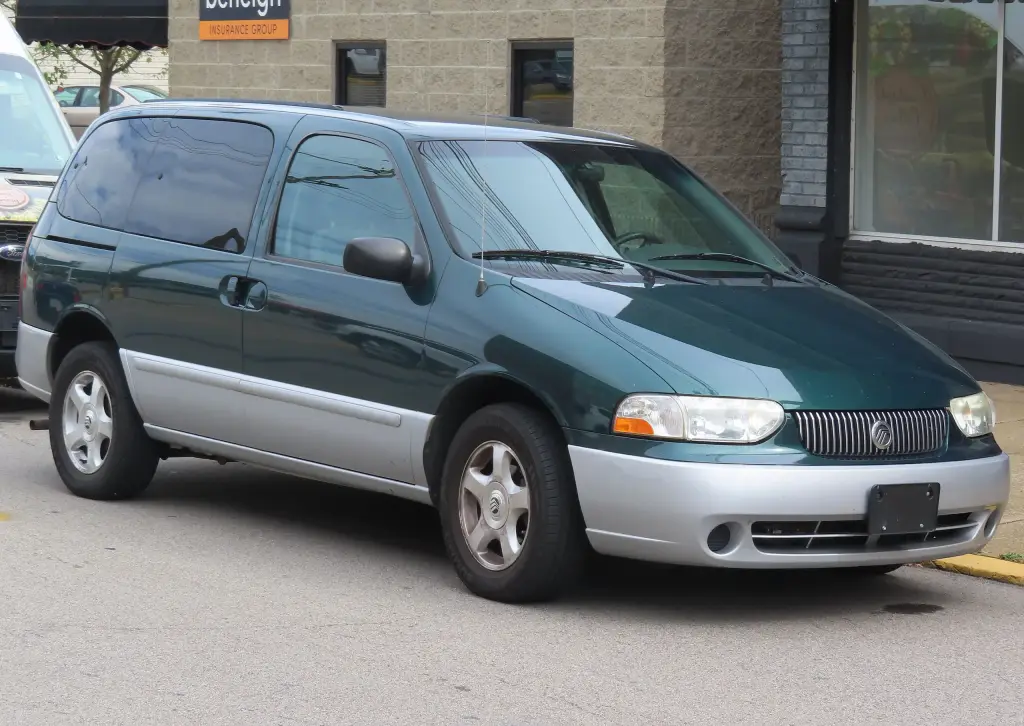
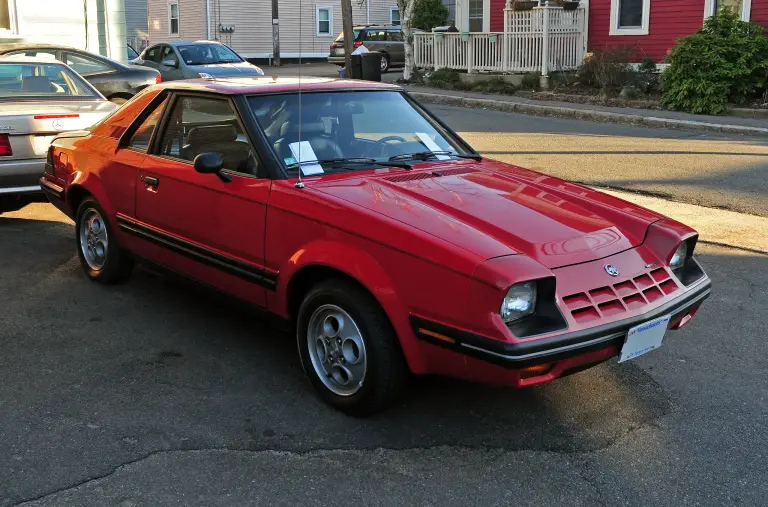
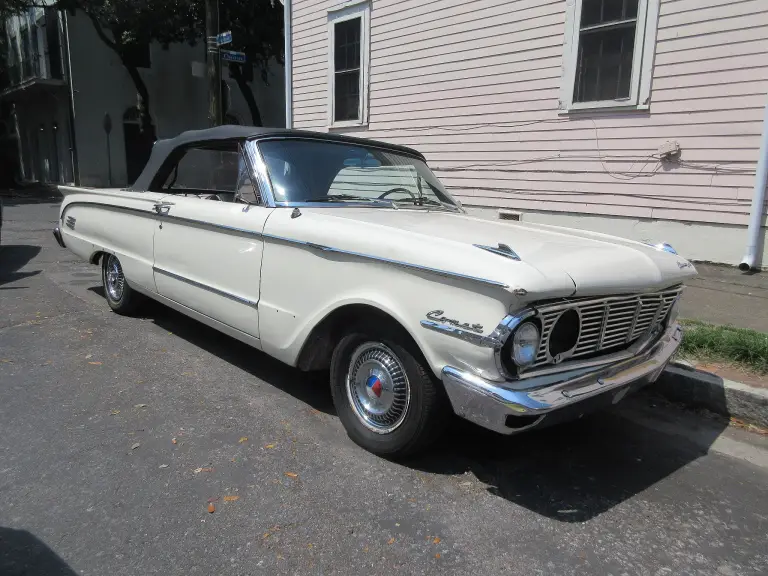
Within Ford Motor Company the Villager name was first used in 1958, when the Edsel Villager debuted as the mid-range station wagon of its brand and the only wagon sold through all three Edsel model years. After Edsel disappeared the name moved to Mercury for 1962, on the compact Comet series, and became the division’s marker for wood-trimmed station wagons. From 1962 to 1984 Mercury Villager wagons were the counterpart of Ford Squire trim, apart from the full-size Colony Park. After the Comet Villager of 1962–1967 the name was used on five more models: the Montego from 1970 to 1976, the Bobcat from 1975 to 1980, the Cougar in 1977 and 1982, the Zephyr from 1978 to 1981 and the Lynx from 1981 to 1984. With the 1983 Marquis, Mercury replaced the Villager name for wood-trim wagons with Brougham, and the Sable that followed was never offered with the option.
The joint venture
At the beginning of 1988 Ford and Nissan entered a joint venture to develop an all-new minivan to be sold by both companies. Under the agreement Nissan did the development and engineering in the United States and supplied the engine and transmission, while Ford built the vehicles in its own plant and supplied components. Development began later that year under the code VX54, replacing two Nissan lines developed in Japan, the Van and the Axxess; Ford’s version would be sold as a Mercury while the WIN88 programme became the Ford Windstar. Nissan chose the final designs in 1989, prototypes were tested from 1990, real-world testing ran through 1991 and development ended that year.
During the 1980s family vehicles moved from full-size station wagons towards minivans. Instead of the full-size Mercury Colony Park, the designers benchmarked the mid-size segment for features, ride and handling. The Villager took its front lightbar grille from the Sable and its two-way tailgate, with a hatchback-style rear window, from the station wagon. It was the first front-wheel-drive van produced by Ford, and it was the last Mercury developed with the brand’s lightbar grille.
On the market
The Villager was introduced between the Ford Aerostar and the Ford Windstar and competed with the Chrysler minivans and General Motors’ APV vans. Two generations were produced, with a full redesign for 1999, and in a first for the segment the model replaced a removable rear seat with one that could be repositioned depending on whether passengers or cargo were the priority. The Villager was built alongside the Nissan Quest by Ford at Ohio Assembly in Avon Lake, Ohio, where the Ford Econoline and Club Wagon were also made.
The end
After 2002 the Ford-Nissan joint venture ended and both companies developed minivans on their own. Nissan released a new generation of the Quest, while the Villager was replaced entirely: for 2004 Mercury released a revived Monterey as its second minivan, a version of the Ford Freestar.
Design and features
- Ford-Nissan project: Nissan engineering and powertrain, Ford assembly in Ohio.
- Nissan Quest twin: the same van sold through Nissan dealers.
- Lightbar grille: the last Mercury designed with the brand’s full-width grille.
- Repositionable seat: a segment first that replaced a removable rear bench.
- Front-wheel drive: Ford’s first front-wheel-drive van.
Mercury Villager versions
- Villager (1993–1998): the first generation of the minivan.
- Villager (1999–2002): the redesigned second generation.
- Nissan Quest: the joint-venture twin sold by Nissan.
- Monterey (2004–2007): the Ford Freestar-based minivan that replaced it.
The Villager was Mercury’s first minivan after the Econoline era and was replaced by the Monterey; the Mountaineer later covered the SUV side of family transport. More cars are in the Mercury collection.
Video: 1999 Mercury Villager Full Tour & Test Drive
Video by MercuryGuy68 on YouTube.
Sources
- Mercury Villager, English Wikipedia: name history, joint venture, development, generations and the end