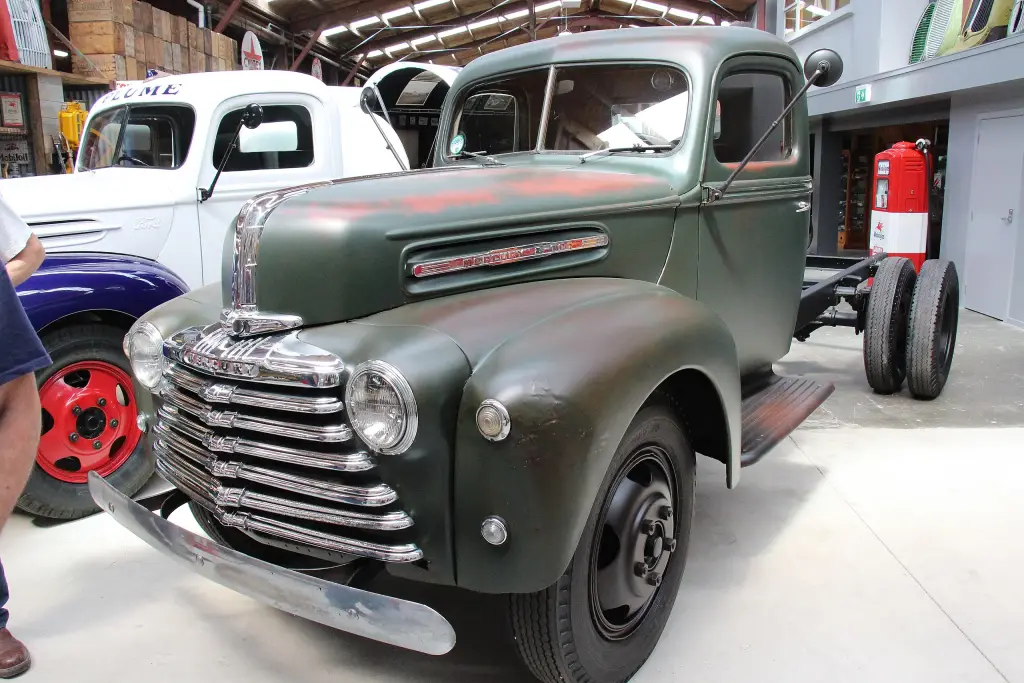
The Mercury M-Series was a line of pickup trucks sold by Mercury mainly in Canada from 1947 to 1968. It was a rebadged Ford F-Series with a Mercury grille and slightly different trim, created because many Canadian towns had only one of the two Ford dealer networks.
Mercury M-Series at a glance
| Production | 1947–1968 |
|---|---|
| Marketed | primarily in Canada by the Mercury division |
| Based on | Ford F-Series |
| Body styles | pickups, plus medium-duty trucks and bus chassis |
| Name system | from 1948, an M prefix with the GVWR divided by 100 |
| Example | an M-47 is a 4,700 lb GVWR truck |
| 1951–1952 | back in step with Ford as M-1, M-2 and so on |
| Badges | Mercury grille and different interior and exterior trim |
| End | production wound down in the late spring of 1968 |
| Successor | no Mercury light truck until the 1993 Villager |
The article is based on a single source, the English Wikipedia page on the Mercury M-Series.
History of the Mercury M-Series
Why Mercury sold trucks
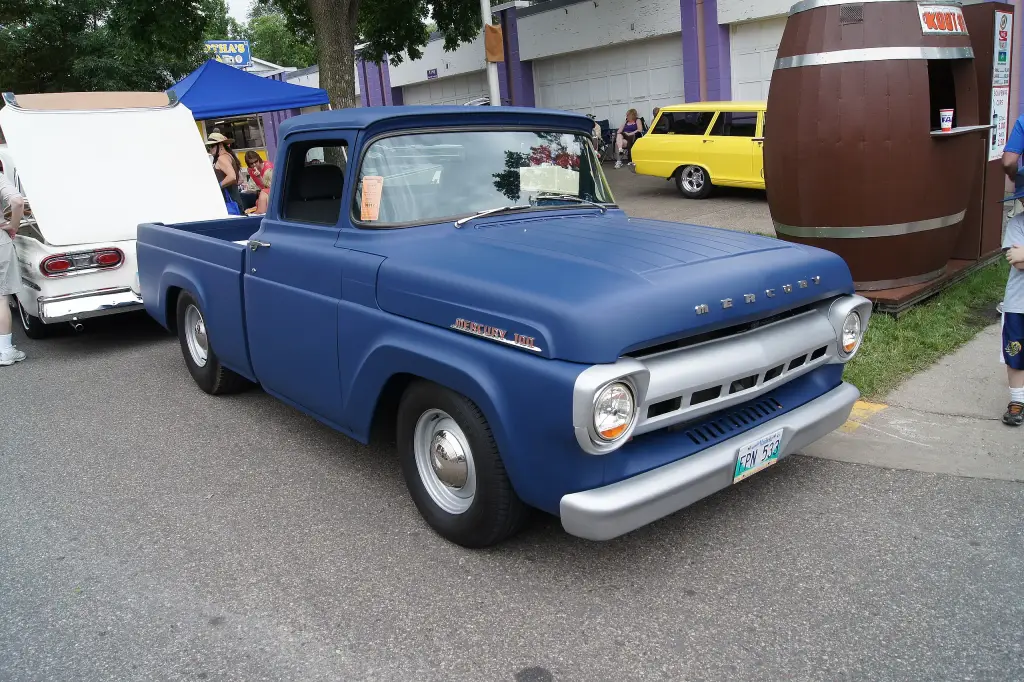
In 1946 Ford of Canada split its Ford and Lincoln-Mercury divisions into separate sales networks. Alongside the new Monarch and Meteor sub-brands, Ford of Canada gave the Mercury division a line of trucks. At the time few rural communities had both a Ford and a Lincoln-Mercury dealership, so selling the same truck through two networks minimised overlap and gave Ford Motor Company greater coverage of potential truck buyers. To tell the two apart, Mercury trucks received a brand-specific grille and slightly different exterior and interior trim.
The M numbers
In 1948, following the introduction of the Ford F-Series, Mercury adopted the “M” prefix for Mercury. From 1948 to 1950 the old nominal tonnage ratings were replaced by a series designation in which the number indicated the gross vehicle weight rating with tyres of appropriate capacity. Each code was the GVWR of the series divided by 100: an F-47, or M-47, was a truck with a 4,700 lb GVWR, while an F-135, or M-135, was rated at 13,500 lb. For 1951–1952 Ford of Canada got back in step with Ford USA, using F-1 (M-1), F-2 (M-2) and so on.
Following the F-Series
From 1948 to 1968 the Mercury M-Series followed the development of its Ford F-Series counterparts, differing largely in exterior trim. For 1961 to 1966 Mercury trucks had a gear or lightning-bolt symbol on the horn button and no other interior Mercury nameplates; for 1967 and 1968 they used Ford interior trim only, including the horn button, dash cluster bezel and radio block-off plate. The M-100 was the light pickup of the range, while the M-250 and M-700 names appeared on heavier models.
Alongside the F-Series pickups, Lincoln-Mercury marketed other Ford trucks as Mercury M-Series vehicles. The medium-duty Ford F-Series from the F-500 upwards was part of the M-Series, including an MB-series bus chassis based on the Ford B-Series, and the Ford C-series tilt-cab truck was sold as an M-Series until 1968. The first-generation Ford Econoline was marketed in Canada as the Mercury Econoline EM-series in both van and pickup form; because Mercury light-truck production ended during the 1968 model year, there was no Mercury version of the second-generation Econoline, which moved to the 1969 model year. The Lincoln-Mercury division also marketed the first-generation 1957–1959 Ford Ranchero through its Meteor brand in Canada, though not as a Mercury.
The end
When the Auto Pact was signed in 1965, opening the border to tariff-free movement of vehicles built on both sides, Mercury truck production was split between the Oakville plant in Ontario and the San Jose plant in California. That let Oakville ramp up to supply the eastern United States and Canada with Ford trucks. No Mercury trucks were sold in the United States. Ford wound down Mercury truck production in the late spring of 1968, and documented Mercury trucks have been found built as late as 15 May 1968. Employees of the period reported that leftover M-Series trucks were converted into Ford trucks, although no paperwork or confirmation of the final disposition, or of an official end date, has surfaced. The next Mercury light truck was the 1993 Villager minivan.
Design and features
- Mercury grille on a Ford: a brand-specific grille and different trim on the F-Series body.
- Two dealer networks: sold where a Lincoln-Mercury dealer existed but a Ford dealer did not.
- M numbering: the series number was the GVWR divided by 100, so an M-47 was rated at 4,700 lb.
- Wider range than pickups: medium-duty trucks, an MB bus chassis and the C-series tilt-cab.
- Canada only: no Mercury trucks were sold in the United States.
Mercury M-Series versions
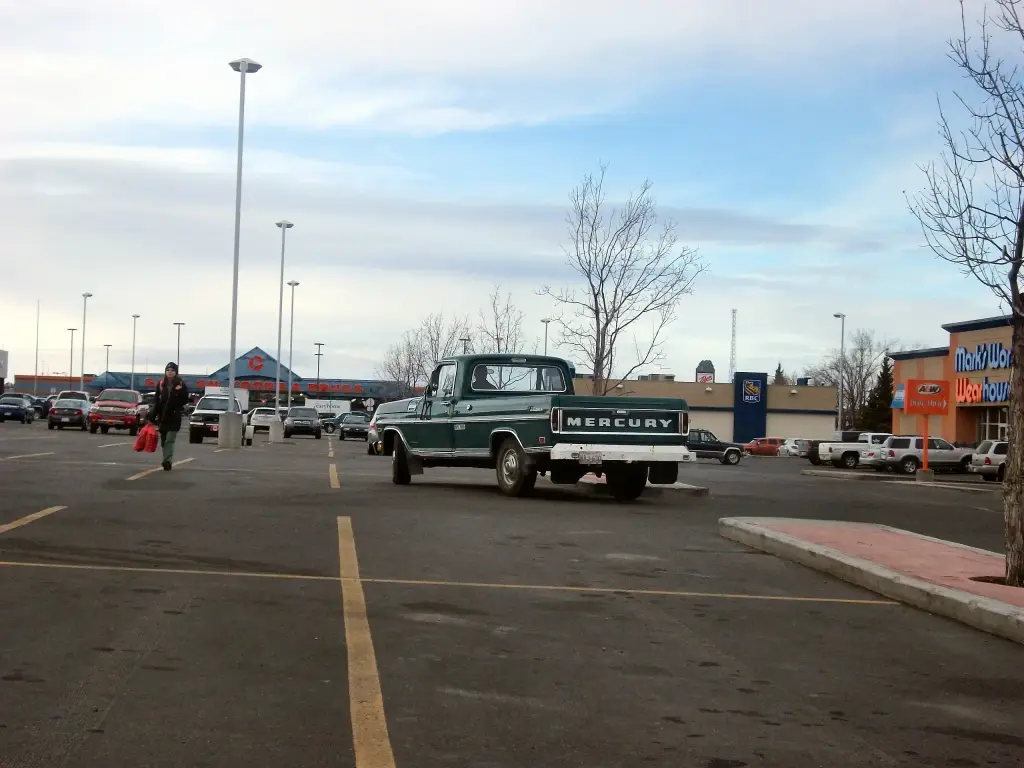
- M-100: the light pickup, the Mercury counterpart of the Ford F-100.
- M-250 and M-700: heavier trucks from further up the F-Series range.
- MB-series: a bus chassis based on the Ford B-Series.
- Mercury Econoline EM-series: the Canadian Mercury-badged Econoline van and pickup.
- C-series: the Ford tilt-cab truck sold as an M-Series until 1968.
The M-Series was replaced in Mercury showrooms by the Econoline until 1968 and eventually by the 1993 Villager. More cars are in the Mercury collection.
Sources
- Mercury M-Series, English Wikipedia: origins, M numbering, models, the Auto Pact and the end of production