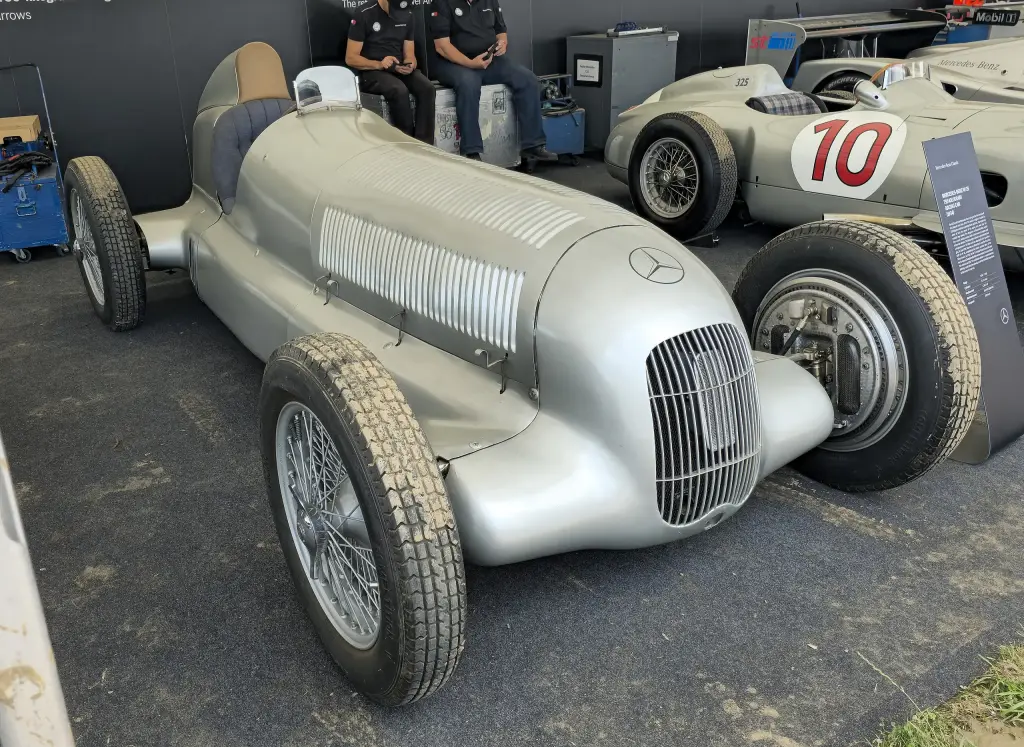
The Mercedes-Benz W25 was a Grand Prix racing car designed by Daimler-Benz for the 1934 season, when the 750 kg formula was introduced. Rudolf Caracciola won the 1935 European Championship in one, and in developed form the car raced until 1937, when it was succeeded by the Mercedes-Benz W125.
Mercedes-Benz W25 at a glance
| Maker | Daimler-Benz AG |
|---|---|
| Seasons | 1934–1936, developed form until 1937 |
| Designers | Hans Nibel, Max Wagner, Albert Heeß, Otto Schilling |
| Formula | 750 kg maximum weight, without driver, fuel, oil, water and tyres |
| Engine | supercharged straight-eight M25, 3.36 litres at first |
| Power | 354 PS (260 kW), later 430 PS and more |
| Fuel | 86% methyl alcohol, 4.4% nitrobenzene, 8.8% acetone, 0.8% ether |
| Front suspension | double wishbones with coil springs |
| Rear suspension | swing axle, De Dion axle in 1936 |
| Brakes | hydraulic drum brakes |
| Championship | Rudolf Caracciola, 1935 European Championship |
| Successor | Mercedes-Benz W125 (1937) |
Records titled “Mercedes grand” and “Mercedes gp” are treated here as the Grand Prix cars; the W125 is covered as the successor of the W25.
History of the Mercedes-Benz W25
The 750 kg formula
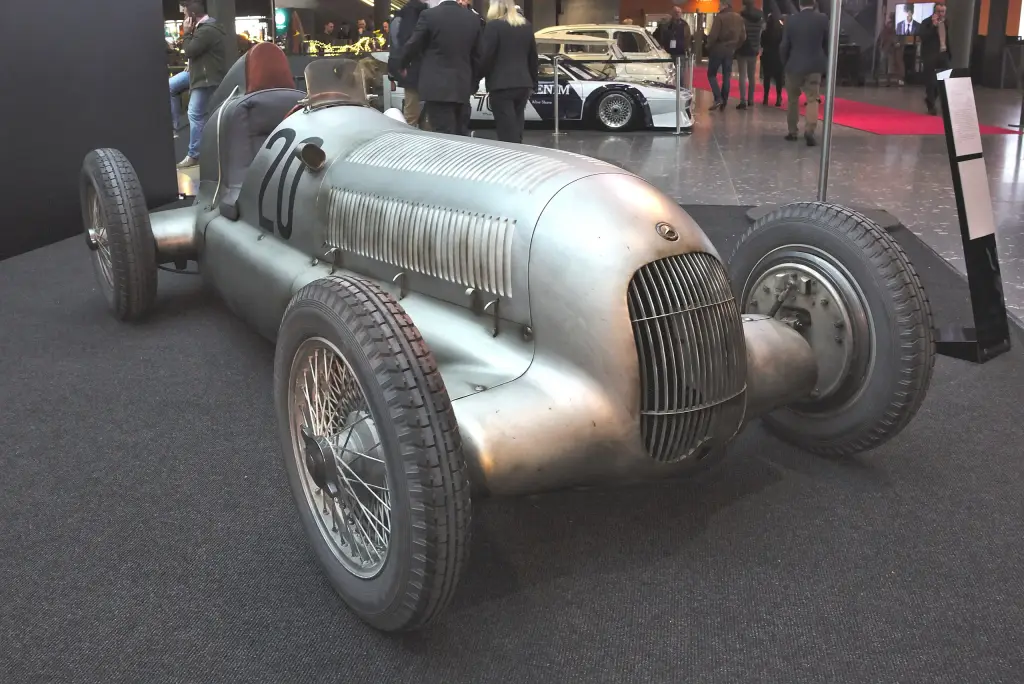
For 1934 the AIACR introduced a formula limited mainly by a maximum weight of 750 kg, far below the weight of Daimler’s outdated seven-litre SSK. The project was backed by Adolf Hitler, who supported both the new Auto Union, which took over Ferdinand Porsche’s P-Wagen concept, and Mercedes-Benz. Despite halving the weight and engine size, the Daimler engineers got more power from the supercharged straight-eight M25 than the 300 hp of the SSK. The car was developed in 1933; its first planned appearance at the AVUS race on 27 May 1934 ended in withdrawal after carburettor or fuel pump problems in practice.
1934
A week later at the Nürburgring Eifelrennen Manfred von Brauchitsch won. The first race was run in heavy rain, and the story that the silver paint was stripped overnight to save a kilogram is now widely doubted, as a silver-streamlined SSKL had already been called a “silver arrow” in 1932. The W25 won four major races that year: the Eifelrennen, the Coppa Acerbo and the Spanish and Italian Grands Prix. The French Grand Prix near Paris was a disaster with no German car finishing, and at Spa the Belgian customs demanded duty on the alcohol-based racing fuel, so both German teams withdrew at short notice.
1935–1936
In 1935 the European Championship was resumed and Caracciola took the title, winning three of the five championship events; Luigi Fagioli added three more to the nine Grand Prix wins of the W25, known that year as the W25B. For 1936 the chassis was shortened (K for kurz) to take a V12 that proved too heavy, and handling suffered. Auto Union’s Bernd Rosemeyer dominated; Caracciola won only the Monaco and Tunisian Grands Prix, and Mercedes skipped the rest of the season to develop the W125. In 1937, two streamlined V12 W25K cars ran at the AVUS, where weight and handling mattered less.
The W125
The W125 of 1937 was designed by Max Wagner and Rudolf Uhlenhaut, with a De Dion rear axle and oval-tube frame. Its M25 engine grew from 4.74 to 5.66 litres and up to 646 PS, and it took six wins, nine second and six third places in the 1937 Grands Prix. A record car based on it reached 432.7 km/h over a kilometre from a flying start on the Frankfurt–Darmstadt motorway in January 1938, a speed not beaten on a public road for 79 years. The 1938 rules limited supercharged engines to three litres, so the W125 was followed by the V12 W154.
Design and features
- 750 kg formula: the W25 was designed to the weight limit that defined Grand Prix racing from 1934.
- Supercharged straight-eight: the M25 engine began at 3.36 litres and 354 PS and grew to 4.7 litres.
- Special fuel: the engine ran on a methanol mixture with nitrobenzene, acetone and ether, at about 100 litres per 100 km.
- Light body: a hand-formed aluminium body on two U-section longitudinal members with cross bracing.
- Record cars: streamlined derivatives reached 311.38 km/h in 1934 and 366.9 km/h in 1936.
Mercedes-Benz W25 versions
- W25 (1934): the original 3.36-litre car.
- W25B (1935): four-litre engine and 430 PS, the championship-winning version.
- W25K (1936): shortened chassis for the V12 experiment.
- Streamline W25K (1937): two V12 cars for the AVUS race.
- W125 (1937): the successor with a 5.66-litre engine and up to 646 PS.
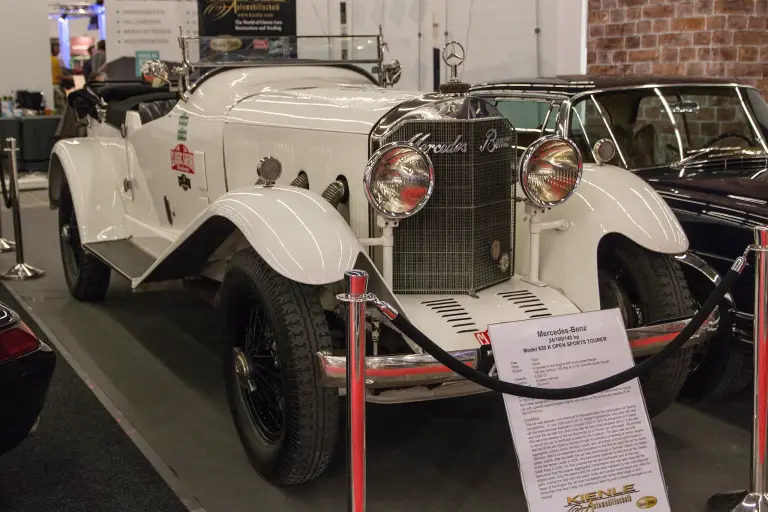
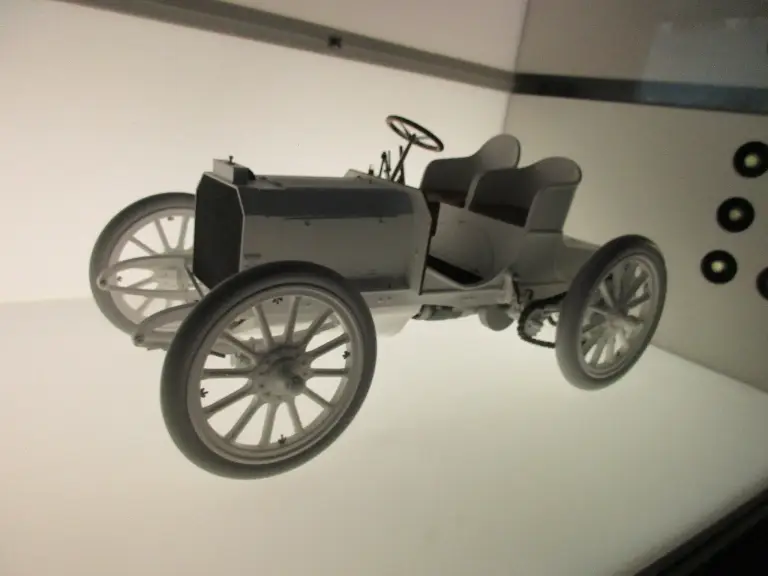
The W25 used technology from the supercharged road cars such as the Mercedes 24/100/140 PS, and it followed the first Mercedes, the 35 hp, into international racing. More cars are in the Mercedes collection.
Sources
- Mercedes-Benz W25, English Wikipedia: history, seasons, development
- Mercedes-Benz W 25, German Wikipedia: engine, chassis, races, record cars
- Mercedes-Benz W 125, German Wikipedia: successor, 1937 season, record car