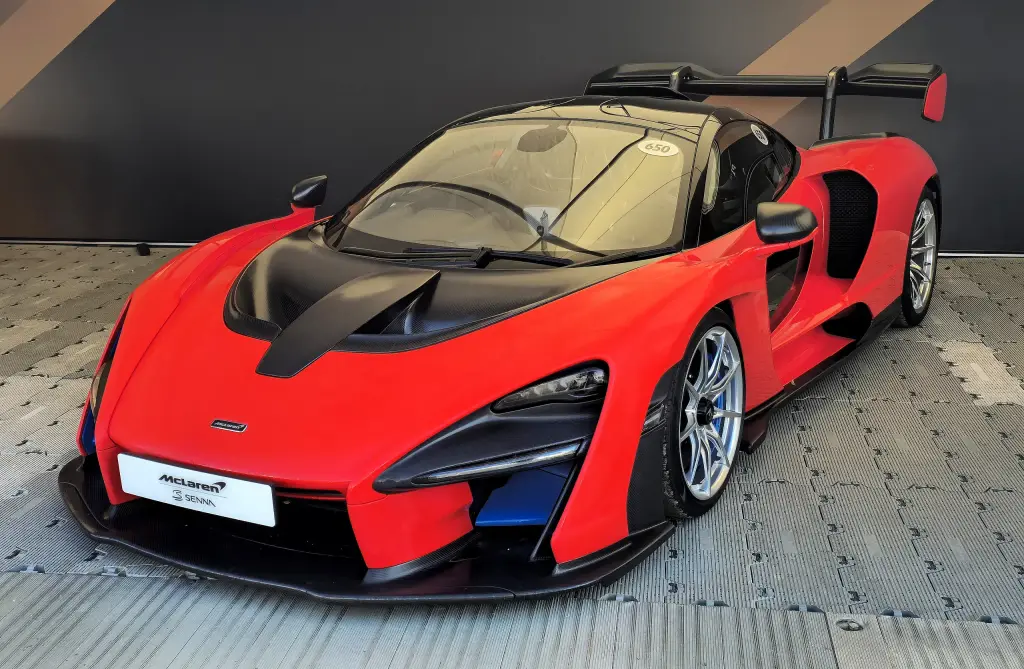
The McLaren Senna is a limited-production mid-engined sports car made by McLaren Automotive. It is the third addition to the McLaren Ultimate Series, joining the F1 and the P1, though not a direct successor to either. It was unveiled online on 10 December 2017, with the official unveiling at the 2018 Geneva Motor Show.
McLaren Senna at a glance
| Maker | McLaren Automotive, United Kingdom |
|---|---|
| Unveiled | 10 December 2017 online; Geneva 2018 |
| Named after | Ayrton Senna (1960–1994) |
| Engine | M840TR 4.0 L twin-turbo V8, from the 720S |
| Power | 588 kW (799 PS, 789 hp) at 7,250 rpm |
| Torque | 800 N·m (590 lb·ft) at 5,500 rpm |
| Gearbox | 7-speed dual-clutch, rear-wheel drive |
| Dry weight | 1,198 kg (2,641 lb) |
| Power-to-weight | 677 PS per tonne |
| Electric motor | none, unlike the P1 |
| Chassis | modified 720S carbon monocoque |
English Wikipedia is the only source used here, so the facts were not cross-checked against a second source; figures are the maker’s claims.
History of the McLaren Senna
The name
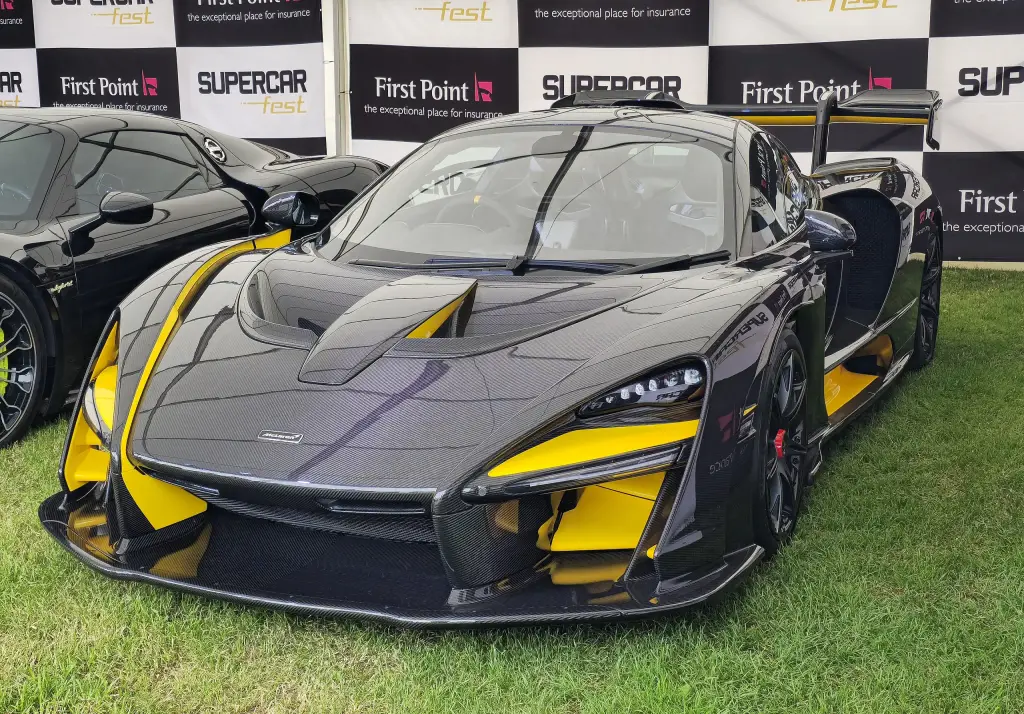
The car is named after the Brazilian Formula One driver Ayrton Senna, honouring his success with the McLaren Formula One team from 1988 to 1993: three world titles and 35 Grand Prix wins, and four consecutive constructors’ championships with McLaren. McLaren Automotive holds the rights to the Senna family name with the Instituto Ayrton Senna, and the name is exclusive to the car.
Built for lap times
McLaren’s main focus was faster lap times, with a lightweight design and aerodynamic elements. The Senna is largely based on the 720S, using a modified carbon monocoque and a modified version of its 3,994 cc V8 coded M840TR, which delivers 799 PS to the rear wheels through a 7-speed dual-clutch gearbox. Unlike the P1 it has no electric motor, in favour of a claimed dry weight of 1,198 kg. Aerodynamic elements include a large two-element adjustable rear wing, operated electronically, which also acts as an airbrake, a two-element diffuser, a Formula One-inspired roof scoop, front and side air intakes, rear air louvres and large front fenders.
Design and features
- Weight: 1,198 kg dry.
- Wing: active, doubling as an airbrake.
- Basis: the 720S monocoque and engine.
McLaren Senna versions
- Senna (2018).
- Senna GTR: track version shown in photographs; not described in the source read.
More McLaren cars are in our McLaren collection and more supercars in Exotic Cars.
Sources
- McLaren Senna, English Wikipedia: name, specifications, aerodynamics