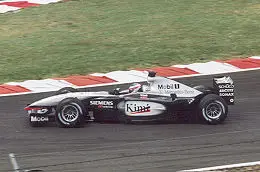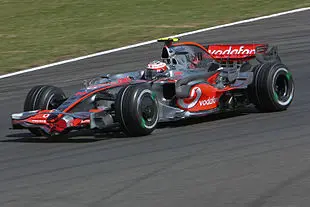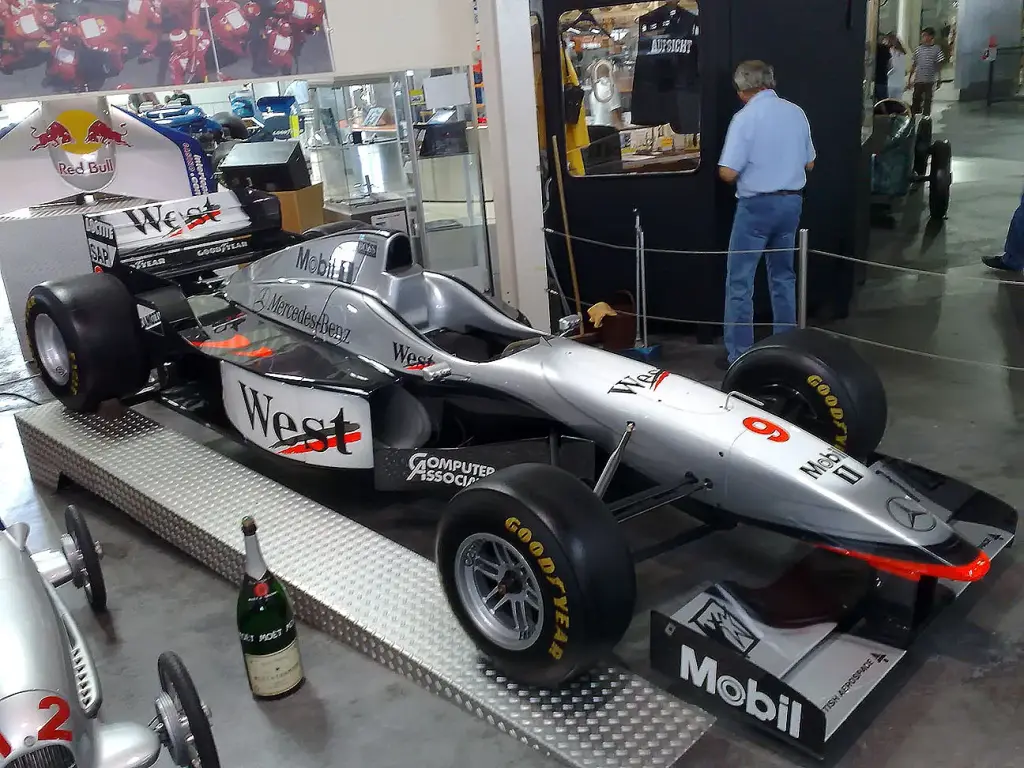
The McLaren MP4/12 was the Formula One car with which McLaren competed in the 1997 World Championship, driven by Mika Häkkinen and David Coulthard. It is remembered for a hidden brake steer system and for introducing the black and silver West livery.
McLaren MP4/12 at a glance
| Type | Formula One racing car |
|---|---|
| Season | 1997 |
| Designers | Steve Nichols, Neil Oatley, Henri Durand |
| Engine | Mercedes-Benz, designed by Mario Illien (Ilmor) |
| Drivers | Mika Häkkinen, David Coulthard |
| Championship | fourth with 63 points |
| Wins | Australia and Italy, both Coulthard’s |
| First win for Häkkinen | the season finale at Jerez |
| Secret device | brake steer, banned from 1998 |
| Livery | black and silver West, replacing Marlboro red and white |
based on one source (English Wikipedia).
History of the McLaren MP4/12
Externally the MP4/12 was a more streamlined and refined evolution of the previous year’s MP4/11, and its Mercedes-Benz engines came in the third year of the Anglo-German alliance. The chassis was designed by Steve Nichols, Neil Oatley and Henri Durand, with Mario Illien designing the bespoke Ilmor-Mercedes engine.
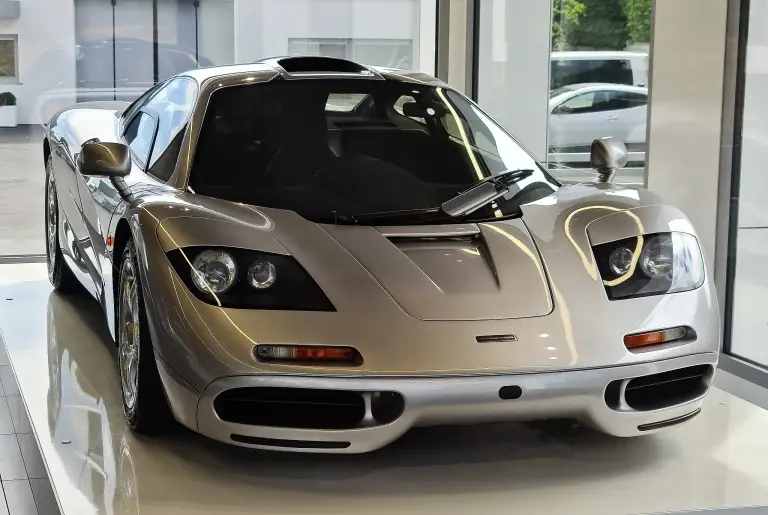
During the season the photographer Darren Heath noticed that the McLarens’ rear brakes were glowing red in an acceleration zone. Pictures of the inside of the cockpit showed that McLaren had installed a second brake pedal, which the driver could use to brake one rear wheel and so reduce understeer and wheelspin out of slow corners. The device was called brake steer, and Ferrari’s protests led to it being banned from the 1998 Brazilian Grand Prix. McLaren later gave a road car a similar designation, the MP4-12C, which also had a brake steer system.
The car was extremely promising and could have won at least seven races, but the engine in particular was unreliable. The FO110E unit was replaced by the FO110F from the French Grand Prix, yet trouble struck both. Coulthard won the first race in Australia, McLaren’s first win since losing Ayrton Senna and Mercedes’ first since the 1955 Italian Grand Prix, and added another at Monza. Häkkinen retired from three further races while leading, all with engine failures, including at the Nürburgring, where both cars stopped within a lap of each other and a comfortable one-two was lost. Coulthard also lost a certain win in Montreal to a clutch problem after a precautionary pit stop.
The team finally took a one-two at the season finale at Jerez, after the collision between Michael Schumacher and Jacques Villeneuve, and Häkkinen’s first Formula One win set him up for the 1998 title. McLaren finished fourth in the constructors’ championship with 63 points. During pre-season testing the cars ran in the traditional papaya orange before switching to the black and light silver livery that marked the new West title sponsorship, replacing the red and white Marlboro colours used since 1974; West logos were replaced by a double stars logo at the French, British and German Grands Prix.
Design and features
- Brake steer: a second pedal acting on one rear wheel to cut understeer, banned for 1998.
- Ilmor-Mercedes V10: a bespoke engine designed by Mario Illien, fast but fragile.
- Refined aerodynamics: a smoother evolution of the MP4/11’s shape.
- New livery: black and silver for West, ending the Marlboro red and white of 1974–1996.
McLaren MP4/12 versions
- MP4/12 with FO110E: the early-season engine specification.
- MP4/12 with FO110F: the revised engine from the French Grand Prix.
- Papaya test car: the pre-season livery before the West colours appeared.
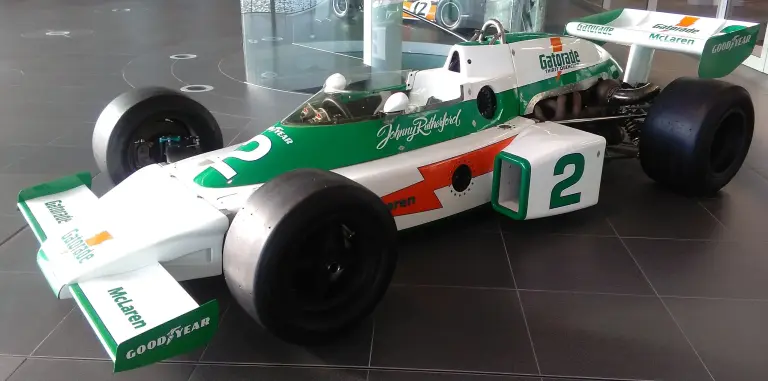
The MP4/12 followed the MP4/11 and came before the MP4-17; the road car that borrowed its name is the 12C, and the team’s first Honda title car was the MP4/4. More cars are in the McLaren collection.
Sources
- McLaren MP4/12, English Wikipedia: design, brake steer, 1997 season, livery