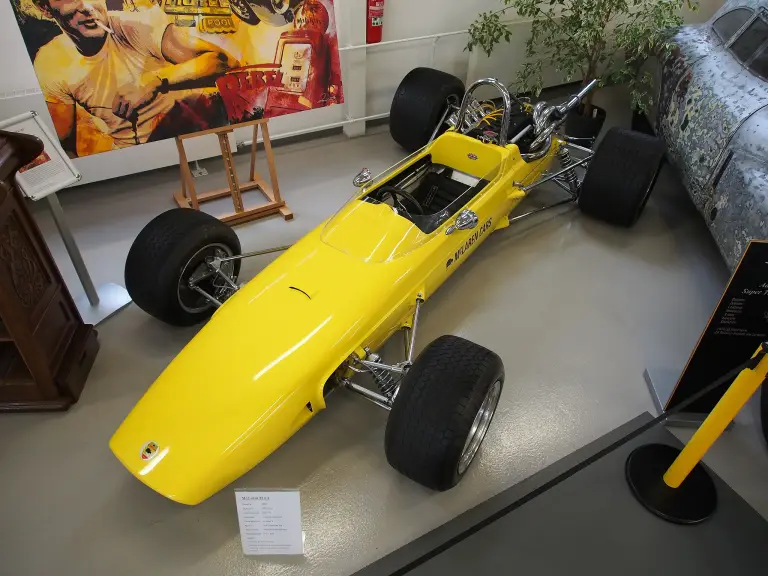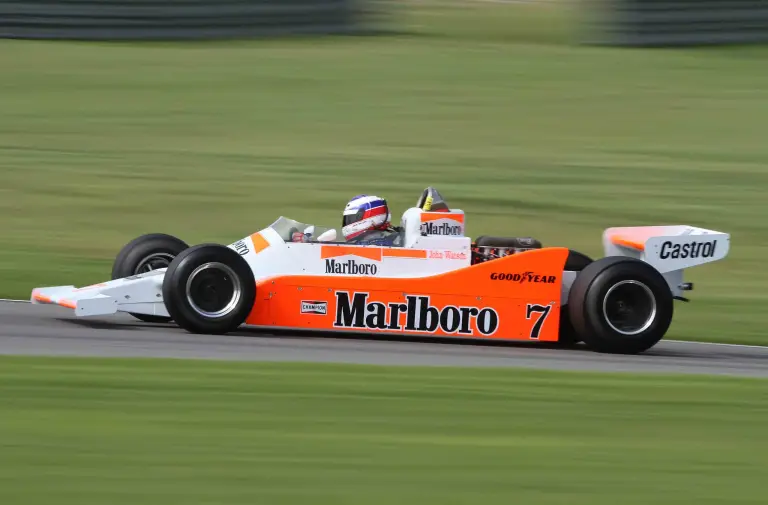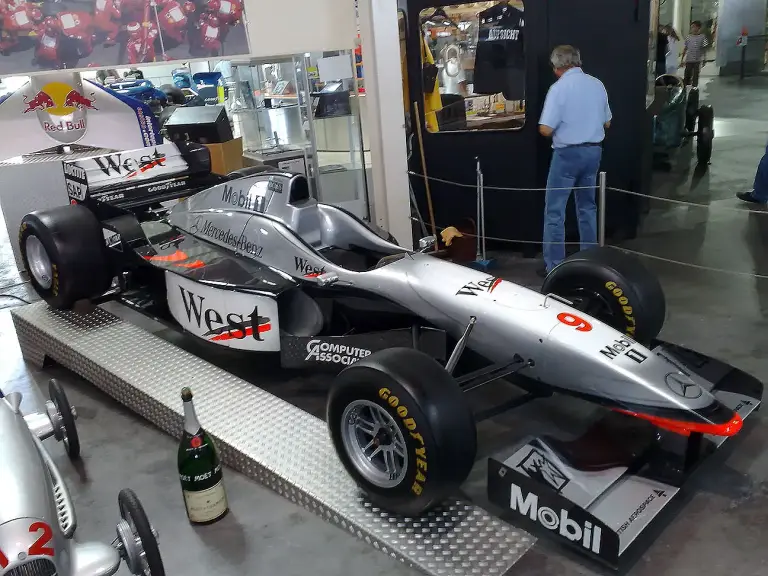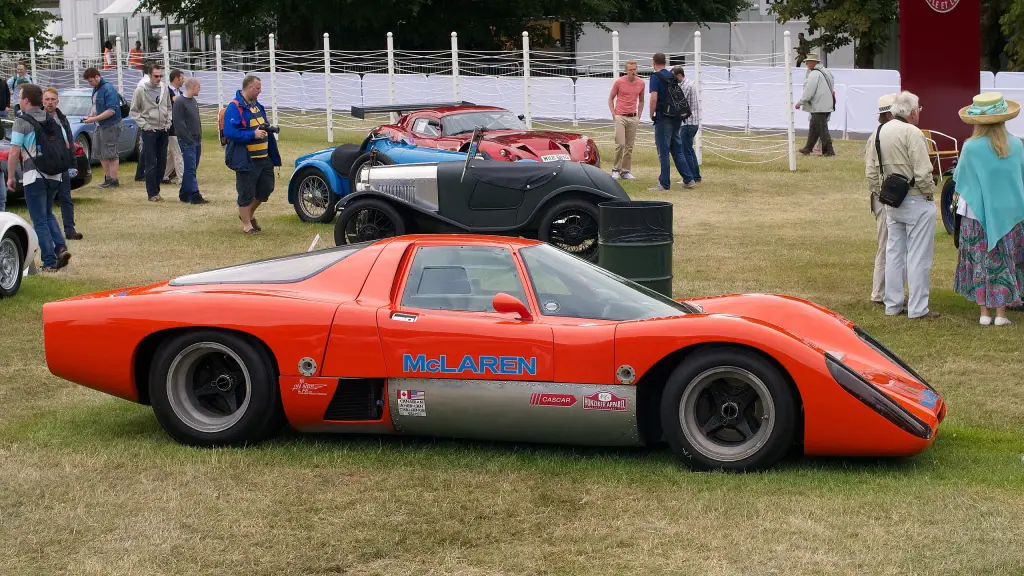
The McLaren M12 was an open-cockpit racing car developed by Bruce McLaren Motor Racing in 1969 solely to be sold to customers in the Can-Am series. It took its monocoque from the earlier M6 and its bodywork from the M8A, and every car was assembled by Trojan.
McLaren M12 at a glance
| Type | Group 7 Can-Am customer racing car |
|---|---|
| Year | 1969 |
| Builder | Trojan, for Bruce McLaren Motor Racing |
| Chassis | monocoque based on the early M6 |
| Bodywork | from the M8A |
| Engine | Chevrolet V8 as standard; some customers chose other makes |
| Early customers | Chaparral, John Surtees, George Eaton, Lothar Motschenbacher |
| Coupé version | one street-legal car built by Trojan for André Fournier |
| Origin | planned as a Le Mans contender before homologation failed |
based on one source (English Wikipedia).
History of the McLaren M12
According to George Eaton, who bought an M12, McLaren told him the cars had originally been meant for an assault on Le Mans. They were developed to take the M6GT coupé bodywork, and parts on the uprights even had M6GT cast into them. The FIA did not accept the M12 under the homologation rules, however, and with many monocoques already built McLaren changed the plan: the cars became roadsters to be sold to Can-Am customers.
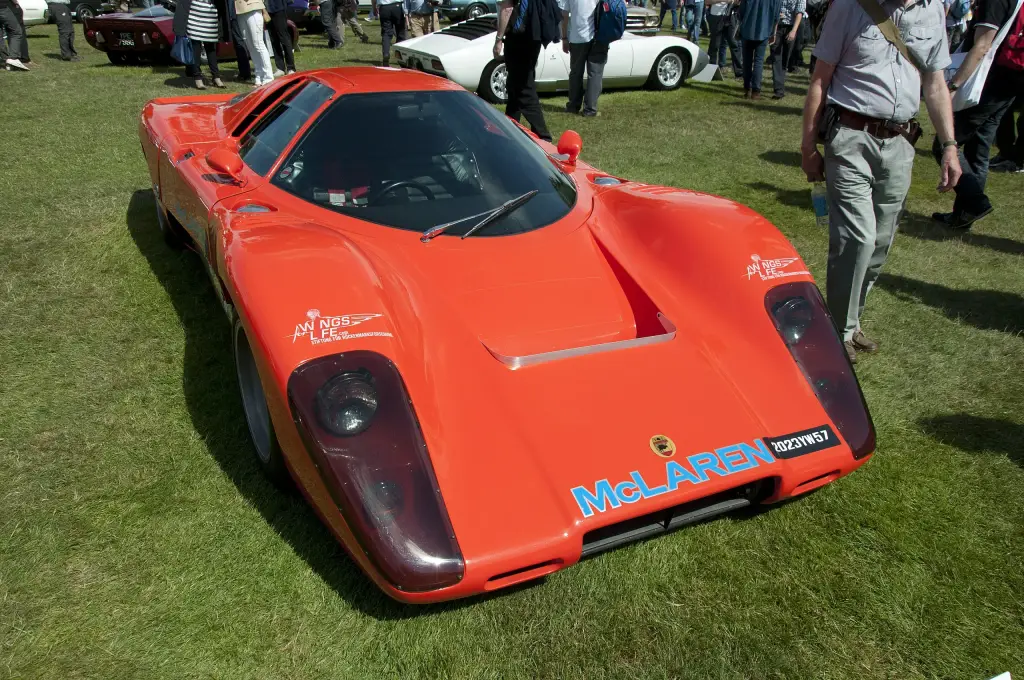
Mechanically the M12 was a mix of McLaren’s two previous efforts. The monocoque came from the early M6 series of 1967, while the aerodynamic bodywork came from the M8A that had won the 1968 Can-Am season. The engine bay was designed for a Chevrolet V8, although several customers fitted other engines. All the cars were built by Trojan rather than at McLaren’s racing headquarters.
The M12 was raced from the start of 1969. Lothar Motschenbacher entered one for himself as the American McLaren distributor, and John Surtees, unhappy with the visibility of Chaparral’s new 2H, had one bought for him by Jim Hall; Surtees led laps at Mosport and finished on the podium. Eaton took third at Edmonton and second at Texas. In Japan, Toyota imported an M12 and fitted its own 5.0-litre V8, but the car could not match the Nissans. Customer teams kept racing M12s into the 1970s in Can-Am and the new European Interserie, until newer M8-based cars replaced them.
Design and features
- Mixed parentage: M6 monocoque under M8A bodywork, combining proven parts from two Can-Am cars.
- Chevrolet V8: a standard engine bay for the small-block, with alternatives chosen by some owners.
- Trojan assembly: built by the same outside maker that produced the M10 in numbers.
- Customer focus: the first McLaren designed from the start for private teams rather than the works.
- Room to develop: owners added larger rear wings and other modifications as the Can-Am arms race went on.
McLaren M12 versions
- M12 roadster (1969): the standard customer Can-Am car.
- M12 Coupé: a single street-legal coupé developed by Trojan for the Canadian owner André Fournier.
- Hillclimb conversions: cars re-bodied by owners, such as Phil Scragg’s smaller M6 bodywork.
- Toyota-engined car: one chassis fitted with Toyota’s own 5.0-litre V8 in Japan.
The M12 was built from the M6 and M8 families, and it shared customer-racing duties with the M10. More cars are in the McLaren collection.
Video: Mclaren M12C, Ginetta G16, Lotus 51A at Prescott Hillclimb 2012
Video by YouTube on YouTube.
Sources
- McLaren M12, English Wikipedia: development, construction, racing history