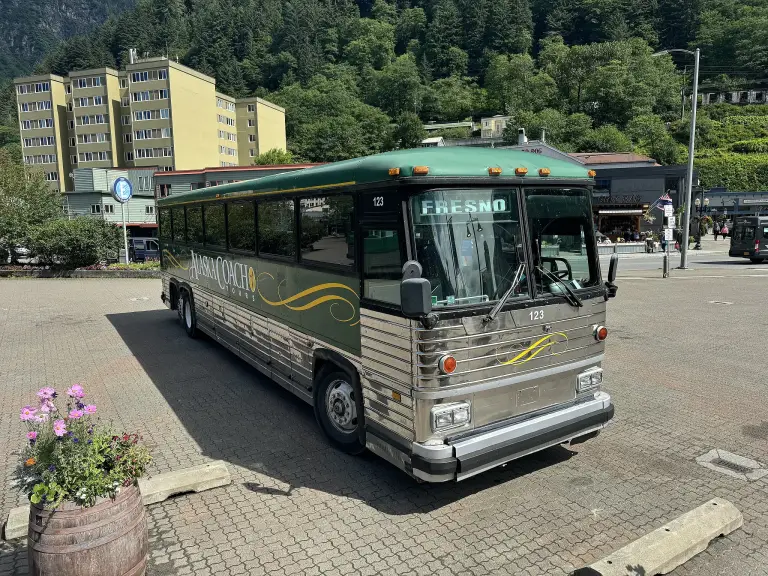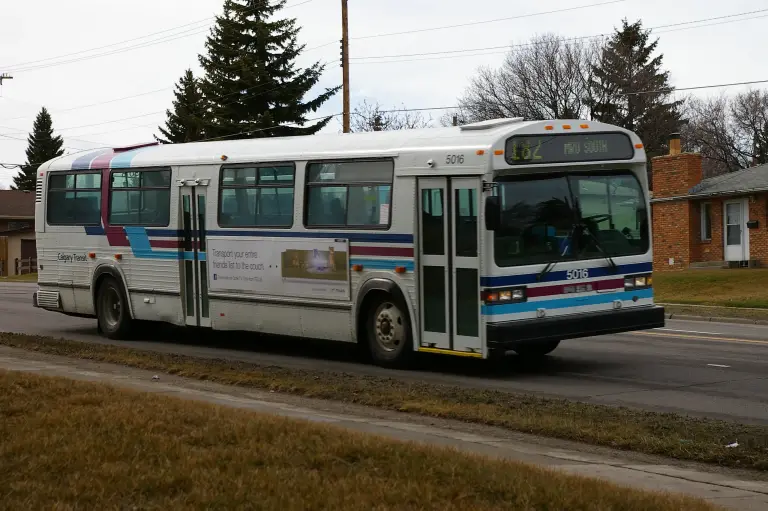
The number 102 in an MCI model name is the width of the coach in inches, exclusive of mirrors. The first mass-produced 102-inch MCI coaches appeared in 1986 as the 102-A2 and 102-A3, and every letter series that followed carried the same prefix until MCI changed its naming system after 2001.
MCI 102 at a glance
| 102 | width of the coach, 102 in (2.59 m), exclusive of mirrors |
|---|---|
| Letter | the series: A, B, C, D, E or G |
| L | long, nominally 45 ft (102-DL3, 102-EL3, 102-GL3) |
| Last digit | number of axles, 2 or 3 |
| Example | a 1997 wheelchair-lift, 45-foot, stainless-steel D coach was a 102-DLW3SS |
| 102-A2 / 102-A3 | 1986–1991, the first mass-produced 102-inch MCI coaches |
| 102-B3 | 1993–1994, affordable alternative to the C-series |
| 102-C3 | 1988–1993, its front end was carried into the D-series |
| 102-D3 | 1994–2005, renamed D4000 in 2001 |
| 102-DL3 | 1992–2005, the first 45 ft MCI coach, renamed D4500 in 2001 |
| 102-EL3 | 1998–2013, the Renaissance, renamed E4500 in 2001 |
| 102-G3 / 102-GL3 | 1998–2001, built for Greyhound and later called the G4100 |
There is no separate Wikipedia article on the 102-series: this page is based on the model tables of the English Wikipedia article on Motor Coach Industries, so it relies on one source.
History of the MCI 102
The first 102-inch coaches
MCI had built its MC series on a 96-inch body since the 1950s. The 102-A2 and 102-A3 of 1986 were the company’s first mass-produced coaches on the wider 102-inch body, offered with fluted stainless steel front and sides only. They were built on two or three axles, the last digit of the model name telling which, and a wheelchair-lift version was sold as the 102-AW3. The A-series was replaced in 1991 by the cheaper B-series, which was offered with a fluted stainless steel or a smooth paintable front end and sides; the 102-C3 followed in 1988 and stayed in production until 1993, and its front-end design was carried over into the D-series.
The workhorses
The 102A3, 102B3 and 102C3, together with the older MC-8 and MC-9, became the standard equipment of American interstate travel in the 1980s. They had metal frames and roof supports and metal panels on the sides, which made them extremely durable and reliable. After millions of miles in commercial service many were sold on for use by churches and other organisations, and MCI/TMC coaches were also popular as conversion shells for motorhomes.
After the letter series
In 2001 MCI renamed its coaches: the 102-D3 became the D4000 and the 102-DL3 became the D4500, while the 45-foot 102-DL3 had already been renamed D4500 in 2001 and the 102-EL3 of 1998 became the E4500. The 102-G3 and 102-GL3, built for Greyhound from 1998, became the G4100, of which only 25 were made. The width prefix disappeared from the names, and the 102-inch body remained the standard for every MCI coach that followed.
Design and features
- A name you can read: width, series letter, length and axle count in one designation.
- First wide-body MCI: the 102-A2 and 102-A3 of 1986 brought the 102-inch body to the range.
- Built to last: metal frames, roof supports and side panels kept the letter-series coaches in service for decades.
- Many bodies: fluted stainless steel or smooth paintable front ends and sides were both offered.
MCI 102 versions
- 102-A2 / 102-A3 (1986–1991): the original wide-body coaches, stainless steel only.
- 102-AW3: the A-series with a wheelchair lift.
- 102-B3 (1993–1994): the budget version of the C-series.
- 102-C3 (1988–1993): the last letter-series coach before the D-series.
- 102-D3 / 102-DL3 (1992–2005): renamed D4000 and D4500 in 2001.
- 102-EL3 and 102-G3 / GL3: the Renaissance and the Greyhound coaches of 1998.
The narrow version of the same letter-series body is described in MCI 96A3; the later coaches are in MCI D4500 and MCI Classic. More coaches are in the MCI collection.
Video: 1999 MCI 102-EL3 touring coach
Video on YouTube.
Sources
- Motor Coach Industries, English Wikipedia: model tables, production years, naming system