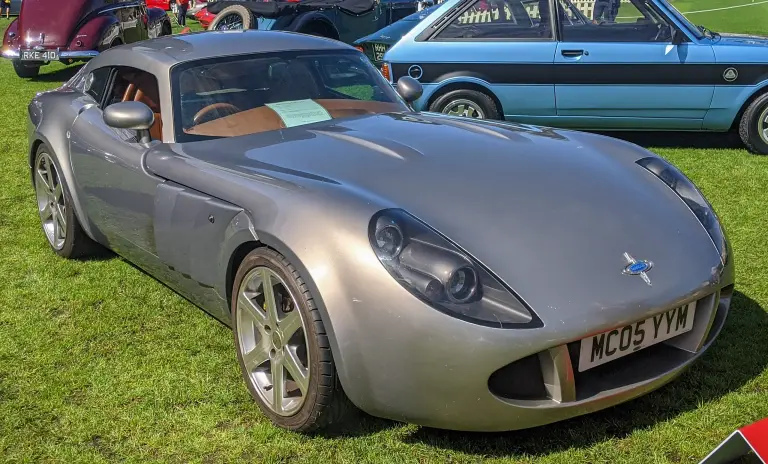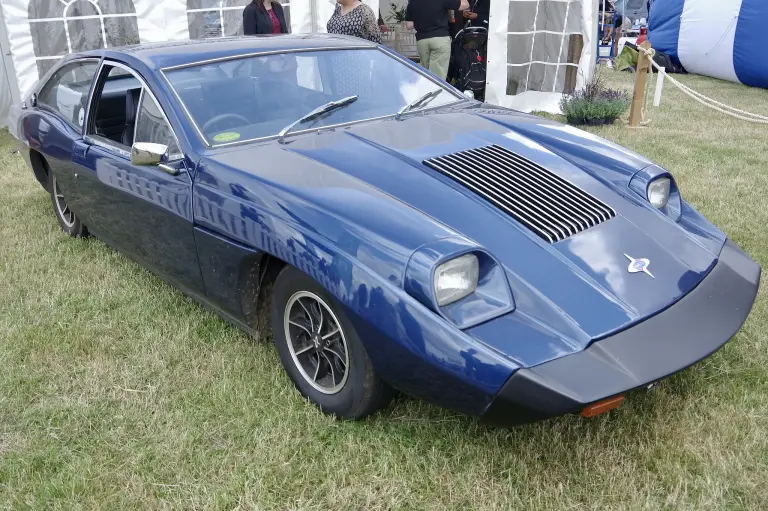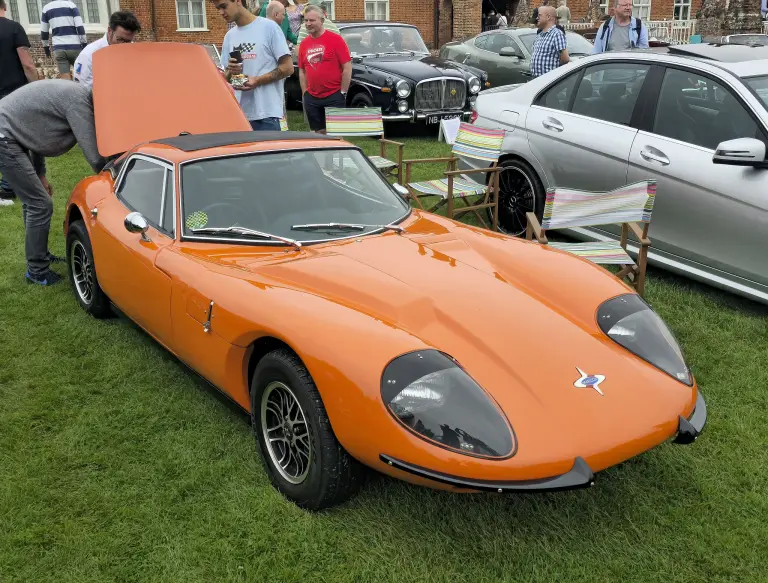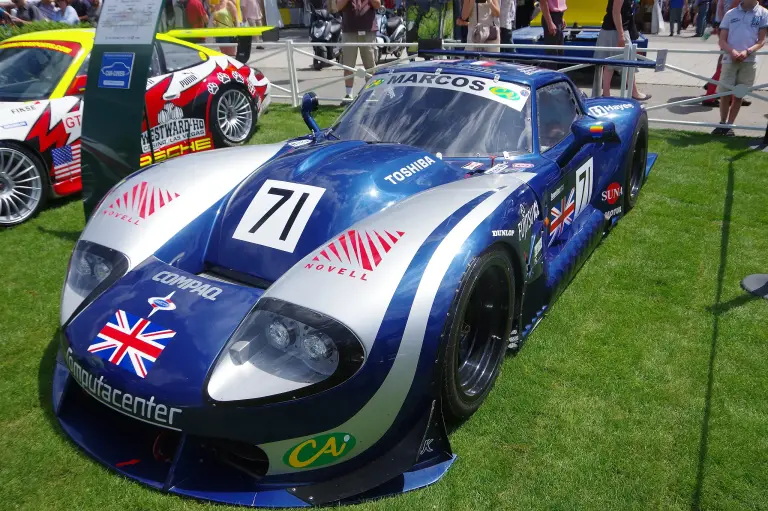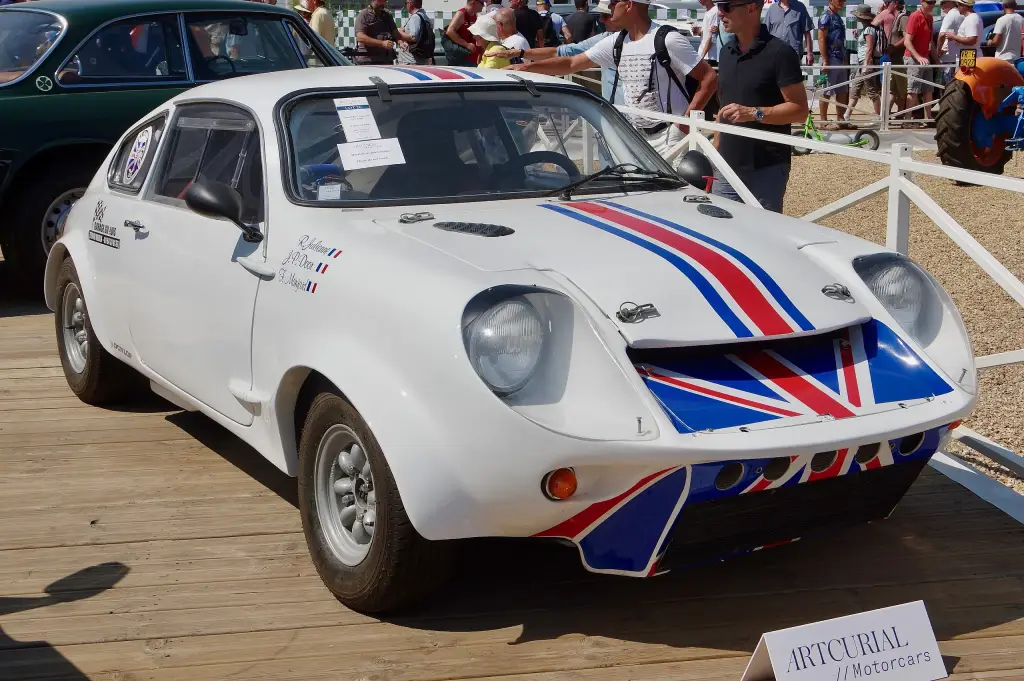
The Mini Marcos was a small glassfibre coupé sold as a kit with Mini running gear and subframes. Built in several periods between 1965 and 1996, it is remembered above all for finishing the 1966 24 Hours of Le Mans, the only British car to do so that year.
Mini Marcos at a glance
| Maker | Marcos; later D & H Fibreglass Techniques |
|---|---|
| Production | 1965–1970, 1974–1981, 1991–1996 |
| Type | kit car with Mini running gear |
| Body and chassis | glassfibre monocoque |
| Design origin | DART design by Dizzy Addicott |
| Marks | five versions in the original run |
| Le Mans 1966 | 15th overall, only British car to finish |
| Drivers, 1966 | Jean-Louis Marnat and Claude Ballot-Léna |
| Le Mans 1967 | works car out after 13 laps |
| Records | four British land speed class records up to 1600 cc |
| Later versions | Heritage Mk VI and GT |
This page is based on English Wikipedia only, so the facts could not be cross-checked against a second source.
History of the Mini Marcos
From DART to Mini Marcos
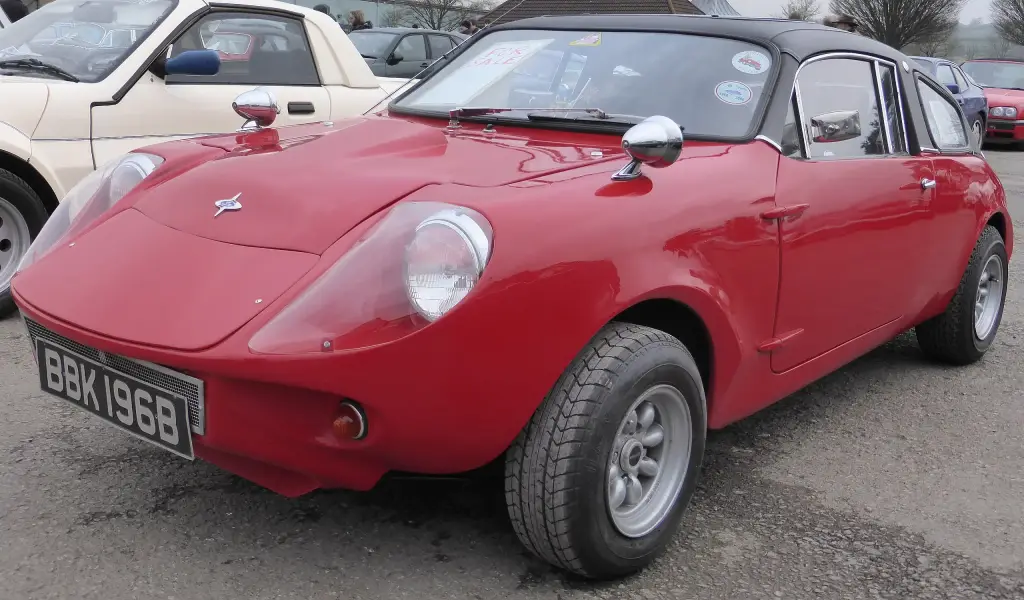
The Mini Marcos came from the DART design by Dizzy Addicott, who sold the project to Jeremy Delmar-Morgan; he marketed the Mini DART as the Mini Jem. Jem Marsh of Marcos separately developed the project into the Mk I Mini Marcos, and despite the similarity of the names the two cars had nothing to do with each other. In Sweden the Mini Marcos was sold by Elmhorn-Troberg Racing Service.
The car was sold as a kit using a glassfibre monocoque with running gear and subframes from a Mini. During its life it went through five versions: the Mark II brought sliding windows and a modified front number plate holder, an optional rear hatch appeared with the Mark III, and the Mark IV had a standard rear hatch, wind-up windows and somewhat longer and taller bodywork. The Midas succeeded the Mk IV while the car was being made by D & H Fibreglass Techniques in Oldham, but Marcos later revived the model as the Mark V.
Le Mans and records
The Mini Marcos was the only British car to finish the 1966 24 Hours of Le Mans, taking 15th place with Jean-Louis Marnat and Claude Ballot-Léna driving. The car was used for several more races and was finally stolen in Paris in October 1975; after a long search it was found again in December 2016. Marcos entered a works car for the 1967 race, but it retired after 13 laps. The model also set four British land speed class records for cars up to 1600 cc: the flying mile, half mile, half kilometre and kilometre.
After Marcos
Production ran from 1965 to 1970 by Marcos, from 1974 to 1981 by D & H Fibreglass Techniques and again from 1991 to 1996 by Marcos. After the company closed, the moulds were acquired by Rory McMath of Marcos Heritage Spares, who relaunched the car as the Heritage Mk VI and a racing GT version. A few copies were also built in Australia by Taylorspeed of Adelaide as the Taylorspeed Jem, ten cars in all.
Design and features
- Mini mechanicals: standard Mini subframes and running gear under a glassfibre body.
- Glassfibre monocoque: light and simple to build as a kit.
- Le Mans history: 15th overall in 1966, the only British car to finish.
- Land speed records: four British class records for cars up to 1600 cc.
Mini Marcos versions
- Mk I–Mk V (1965–1996): five versions, with sliding windows from the Mk II, an optional hatch from the Mk III and a standard hatch on the Mk IV.
- Mini Jem: the related but separate Delmar-Morgan car.
- Taylorspeed Jem: Australian copies, ten built.
- Heritage Mk VI and GT: later cars from Marcos Heritage Spares.
The Mini Marcos was the smallest car to come from the company that built the Marcos GT, and it shared the glassfibre approach of the later Mantis. More cars are in the Marcos collection.
Sources
- Mini Marcos, English Wikipedia: versions, Le Mans, records, production periods