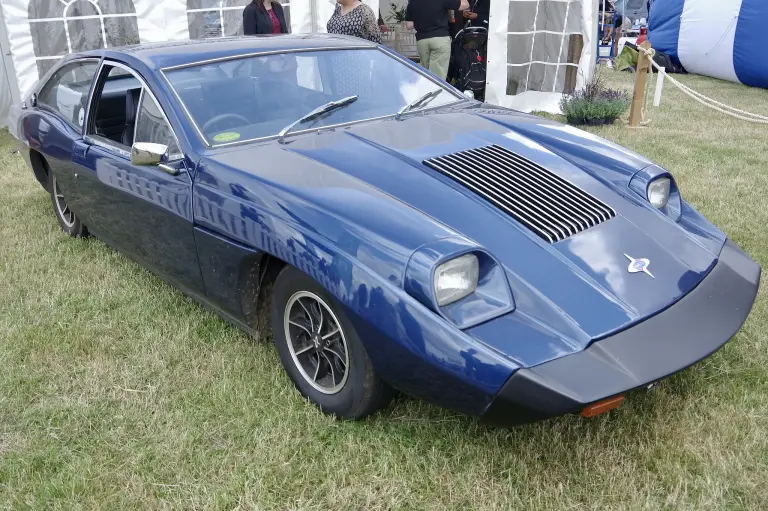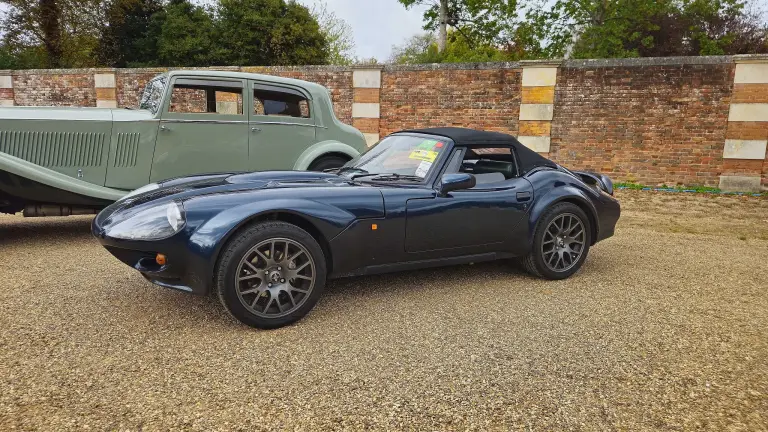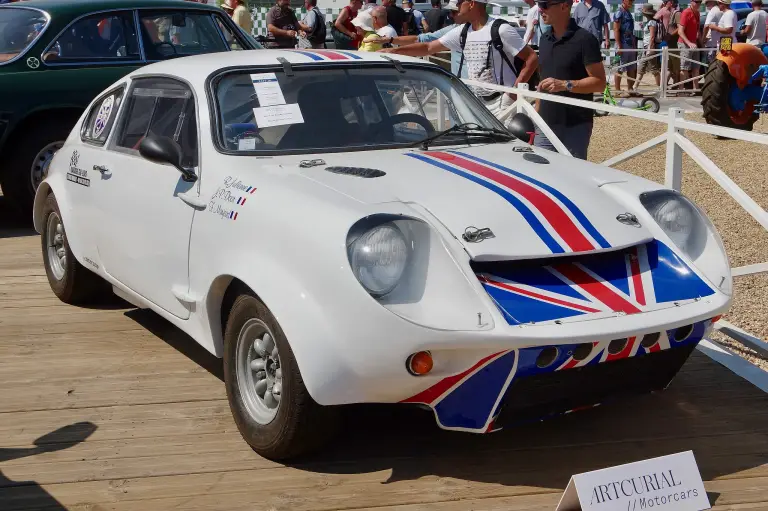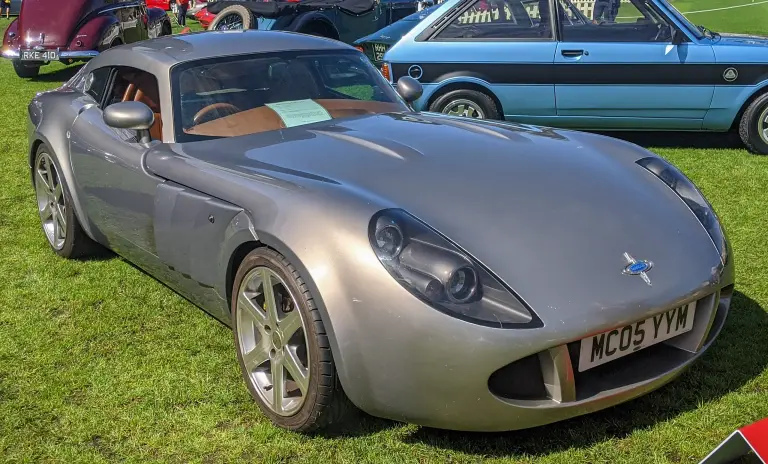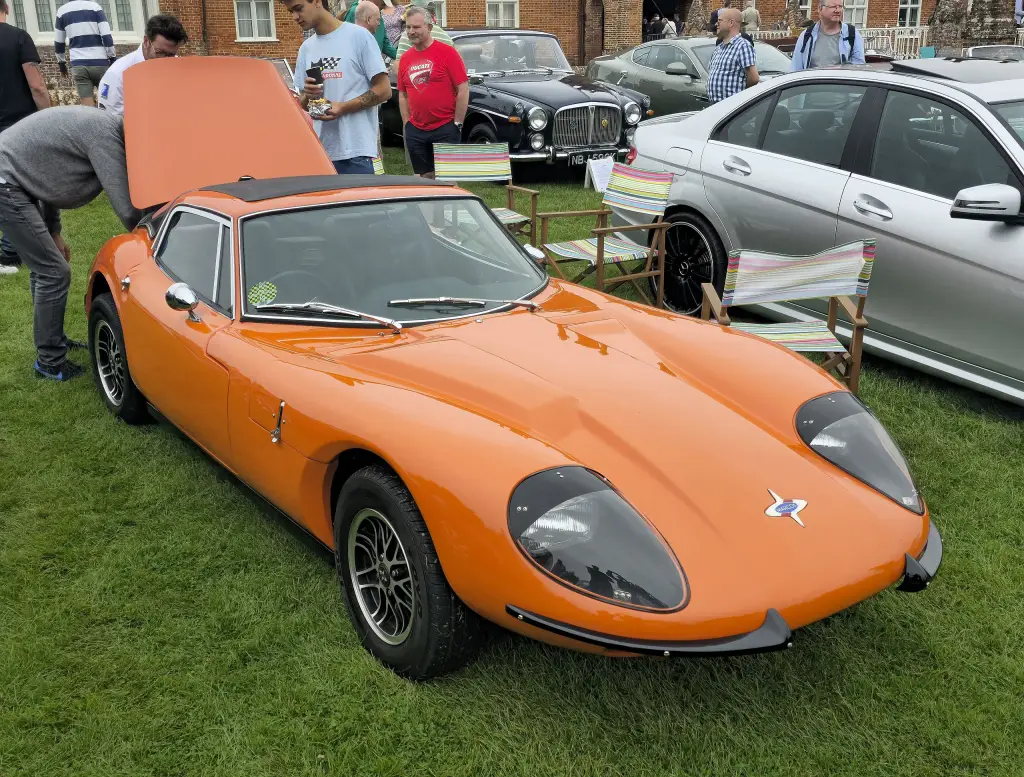
Marcos used the name GT for all of its cars until the Mantis arrived in 1970, but most often it means the extremely low glassfibre coupé designed by the Adams brothers. Introduced in 1964 as the Marcos 1800, it outlived the company’s first collapse and was still being developed into new forms in the late 1980s.
Marcos GT at a glance
| Maker | Marcos Engineering Ltd, Britain |
|---|---|
| Designers | Dennis and Peter Adams |
| Production | 1964–1972; small-scale component production from 1981 |
| First model | Marcos 1800, shown at the 1964 Racing Car Show |
| Chassis | plywood, glued from 386 pieces; steel from 1969 |
| Body | glassfibre |
| Engine, 1800 | Volvo B18, 1778 cc, 96 hp (72 kW) |
| Performance, 1800 | 116 mph (187 km/h); 0–60 mph in 8.2 seconds |
| Engine, 1500 | Ford Kent four, 85 hp (63 kW) |
| Weight, 1600 | 740 kg |
| Built, 1600 | 192 cars to early 1969 |
| Built, 1800 | 106 (some sources say 99) |
This page is based on English Wikipedia only, so the figures could not be cross-checked against a second source.
History of the Marcos GT
A plywood chassis and a Volvo engine
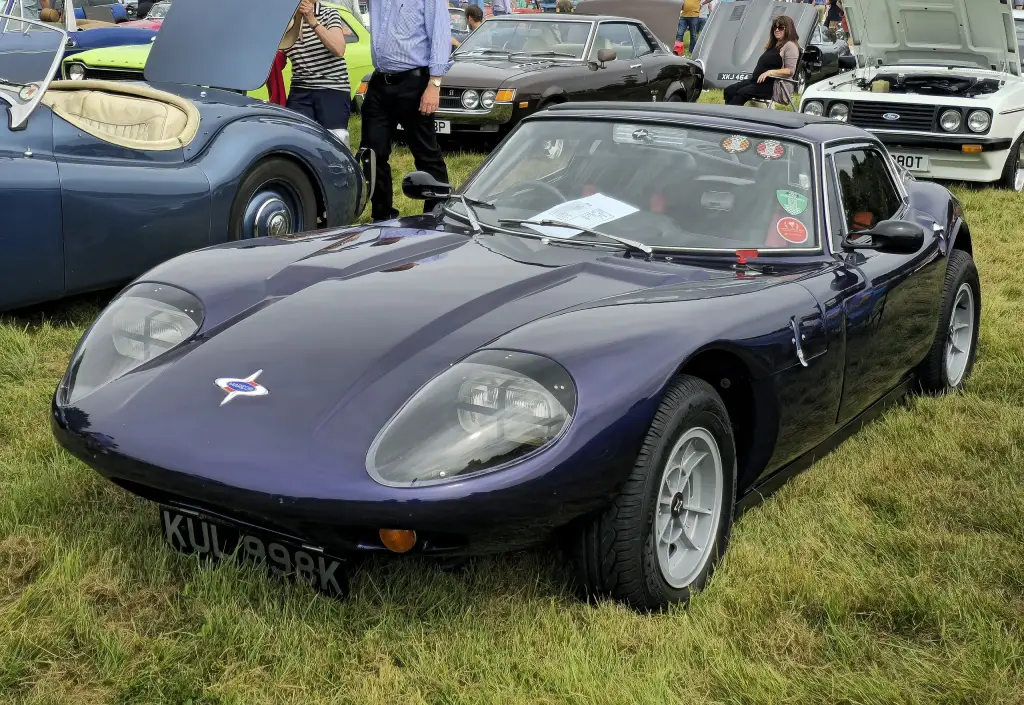
The Marcos 1800 GT appeared in 1964 with a glassfibre body, a chassis glued together from 386 separate plywood pieces, a cast-iron Volvo B18 engine of 1778 cc, overdrive gearbox and a De Dion rear axle. It caused a sensation at the 1964 Racing Car Show. The car was so low that the driver sat almost supine with the seats fixed lower than the floor; in compensation the whole pedal set could be moved fore and aft with a knob on the dashboard, and booster pillows were optional. The long tapered nose was hinged at the front and held by latches behind the front wheel wells.
The Volvo engine gave 96 hp, enough for 116 mph and a 0–60 mph time of 8.2 seconds. The car was successful in competition but expensive and sold slowly: after the first 33 cars the De Dion axle gave way to a live Ford unit, and the price was cut from £1500 to £1340. After 106 cars (some sources say 99) it was replaced by the cheaper Ford-engined 1500 in 1966.
Ford engines and the steel chassis
The 1500 used a pushrod Ford Kent engine, and the complex original dashboard was replaced by a flat polished wood unit and later by a wood-effect one. To hide the common Ford unit, Marcos fitted its own rocker covers and switched from Weber to Stromberg carburettors. A Lawrencetune 1650 cc version followed in 1967 with 32 built, bigger disc brakes and a Webasto sunroof, but it proved less than reliable.
Both were replaced in late 1967 by the Ford Crossflow-engined 1600, the most popular model so far with 192 cars built until early 1969. A 2 litre with the Ford Essex V4 appeared at the January 1969 London Show alongside a V6 at the top of the range. In June 1969 the plywood chassis gave way to a square-section steel one, which shortened production and cut costs; steel-framed cars had a lower sill panel, reshaped rear bumpers and some interior differences and usually carried the V6.
Return and the Mantula
The GT was out of production from 1972 until 1981, when small-scale component car production restarted. The original design continued until 1989 or 1990, developed into the altered Mantula form and then into more powerful and aggressively styled cars, ending with the LM600 of 1994. Original 1800s and other 1960s and 1970s Marcos cars are still competitive in FIA and HSCC historic racing.
Design and features
- Extreme driving position: fixed seats mounted lower than the floor, with an adjustable pedal set instead of a movable seat.
- Plywood chassis: light, stiff and cheap to tool for, glued from hundreds of pieces before the change to steel in 1969.
- Hinged nose: the entire front section lifted forward for access, held down by latches behind the wheel wells.
- Competition record: the GT was designed with racing in mind and remains eligible for historic series.
Marcos GT versions
- 1800 (1964–1966): Volvo B18 engine, De Dion rear axle on the first 33 cars, then a live Ford axle.
- 1500 (1966): Ford Kent engine, cheaper trim, much better sales.
- 1650 GT (1967): overbored Lawrencetune engine, 32 built.
- 1600 (1967–1969): Ford Crossflow engine, 740 kg, 192 built.
- 2 litre (1969): Ford Essex V4, later usually swapped for a V6.
- Mantula form (from 1981): the same basic design developed for small-scale production.
The GT was the starting point for the later Mantis and Mantara, and its cheapest spin-off was the Mini Marcos. More cars are in the Marcos collection.
Sources
- Marcos GT, English Wikipedia: history, engines, production numbers