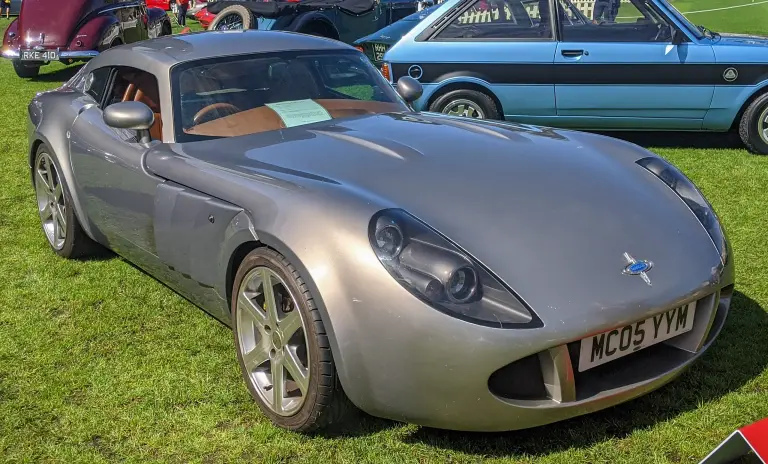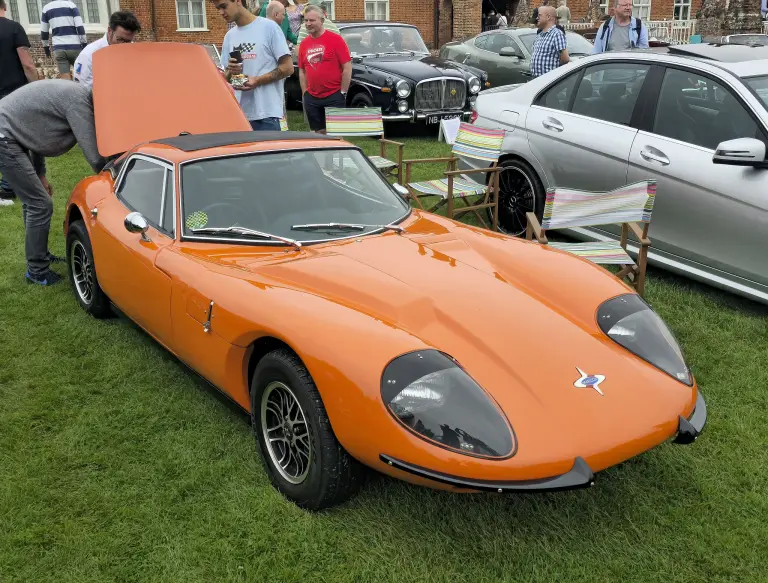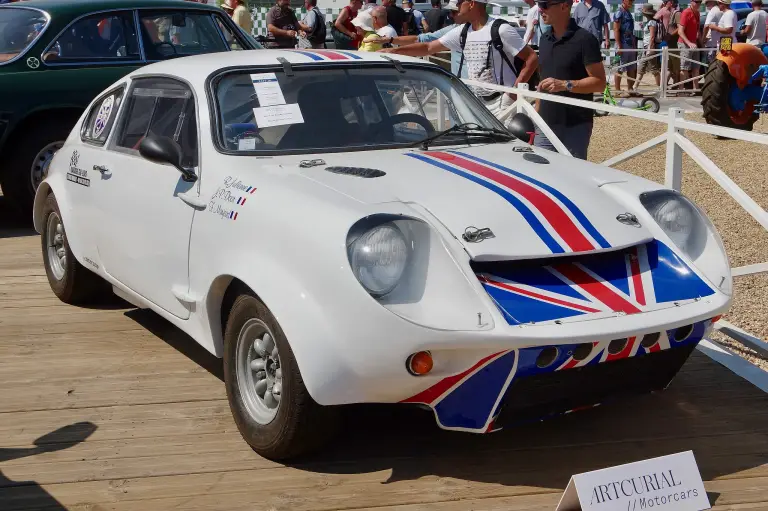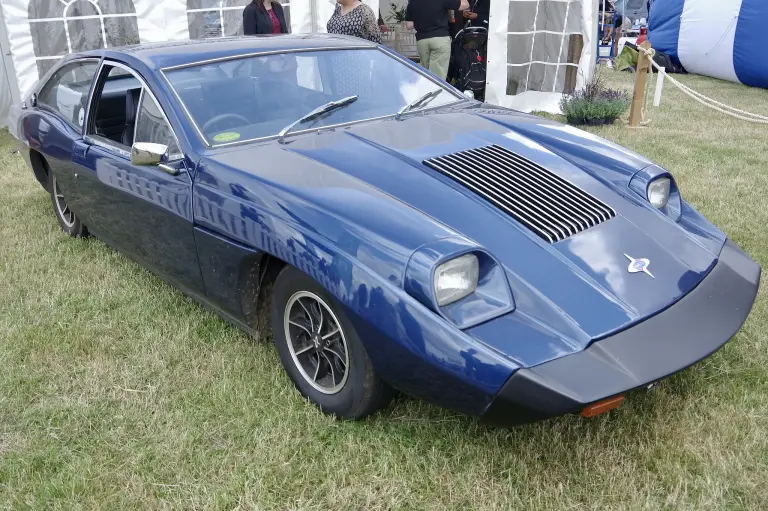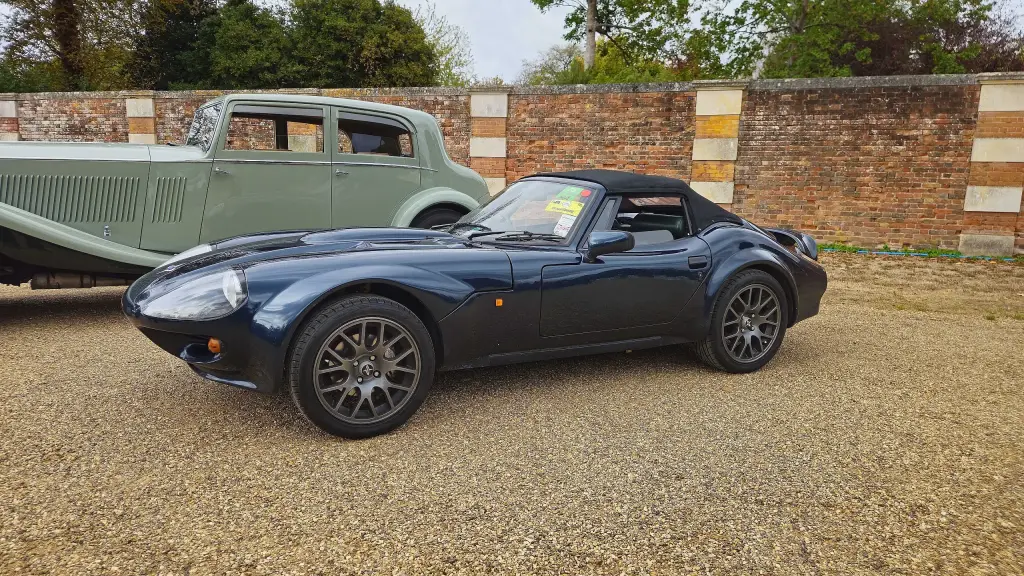
The Marcos Mantara was introduced in 1992, when Marcos left the kit car business and began building every car in its own factory. Powered by a Rover V8 and fitted with MacPherson strut front suspension for the first time, it stayed in production until 1999 and formed the basis of the LM racing cars.
Marcos Mantara at a glance
| Maker | Marcos, Britain |
|---|---|
| Production | 1992–1999 |
| Body | glassfibre coupé, also built as a Spyder cabriolet |
| Engine, standard | 3.9-litre Rover V8, 190 hp (142 kW) at 4750 rpm |
| Torque | 234 lb·ft (317 N·m) at 3200 rpm |
| Optional engine | 4.6-litre Rover V8, quoted at 230 hp (172 kW) |
| 0–60 mph | 5.4 seconds (3.9-litre) |
| Top speed | 140 mph (225 km/h) |
| Front suspension | MacPherson struts, replacing the Triumph layout |
| Power steering | available for the first time |
| GTS engine | 2-litre Rover Tomcat, up to 200 bhp turbo |
| Later details | Ford Mondeo rear lights from about 1996 |
This page is based on English Wikipedia, whose Mantara article also covers the LM400 and LM500 versions; the Mantula is mentioned there only as the predecessor.
History of the Marcos Mantara
A factory-built Marcos
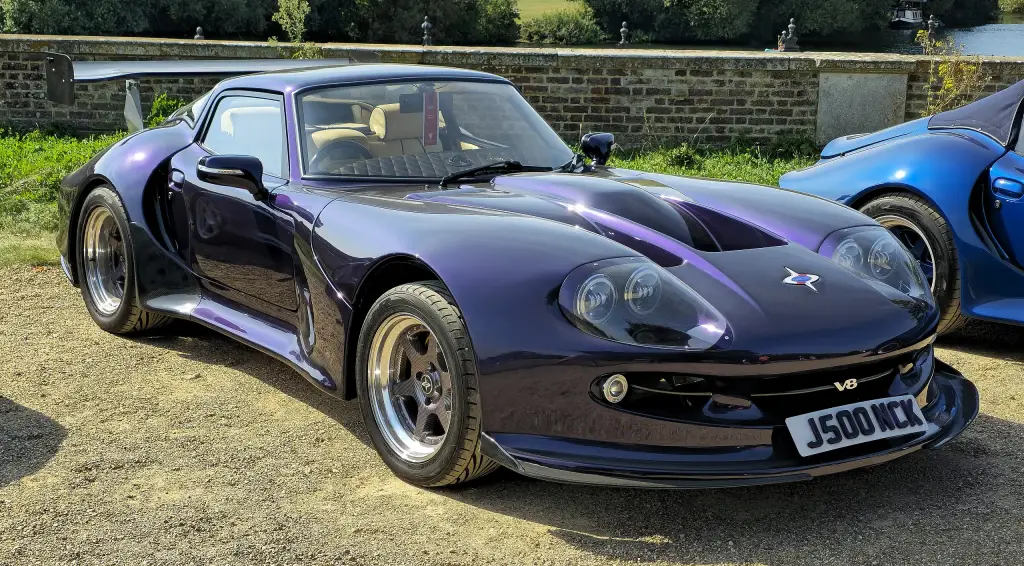
In 1992 Marcos left the kit car business and launched the Mantara, sold through dealers in limited numbers with every car factory built. The main change from the Mantula was the adoption of MacPherson strut front suspension in place of the old Triumph suspension and its trunnions. The new layout gave a wider front track, a different bonnet and flared front wheel arches, while the rear arches and rear lights were restyled to make the car look more modern. Power steering was offered for the first time.
Rover V8 power
The standard engine was the 3.9-litre fuel-injected Rover V8, with a 4.6-litre Rover V8 as an option. The 3.9-litre unit produced 190 hp at 4750 rpm and 234 lb·ft of torque at 3200 rpm; Marcos claimed a 0–60 mph time of 5.4 seconds and a top speed of 140 mph. Cars from early 1993 shared more parts with earlier generations, including tail lights, fuel filler cap and side indicators, while from about 1996 the Ford Mondeo rear light cluster and side repeaters were used together with a flush aerodynamic fuel filler cap.
The GTS and the racing cars
The Marcos GTS was a Mantara powered by the 2-litre Rover Tomcat engine, built at the request of the Italian distributor Martes Spider Cars, in turbo form with up to 200 bhp. The GTS had a smoother bonnet with flared-in headlamps and a deeper spoiler, a front end later used on the Mantaray; a handful of late Mantara V8s were built with the same bonnet. The Mantara also provided the basis for the LM400 and LM500 racing cars and, in turn, for the LM600.
Design and features
- MacPherson strut front suspension: the biggest technical change from the Mantula, giving a wider track and a revised front end.
- Rover V8: a 3.9-litre engine as standard, with a larger 4.6-litre unit on request.
- Factory production: the end of kit car assembly and the start of dealer sales.
- GTS front end: smoother bonnet and flared-in headlamps for the Italian-market 2-litre version.
Marcos Mantara versions
- Mantara (1992–1999): the standard 3.9-litre V8 coupé.
- Mantara 4.6: the larger Rover V8 option.
- Spyder cabriolet: open version of the Mantara.
- GTS: 2-litre Rover Tomcat engine, up to 200 bhp in turbo form, with a smoother bonnet.
- LM400 and LM500: racing versions that led to the LM600.
The Mantara succeeded the Marcos GT line and was the basis of the LM600 race car. The later TSO replaced it at the top of the range. More cars are in the Marcos collection.
Video: Marcos Mantara Bj.1994 "Ein Porträt"
Video on YouTube.
Sources
- Marcos Mantara, English Wikipedia: suspension, engines, GTS, equipment changes