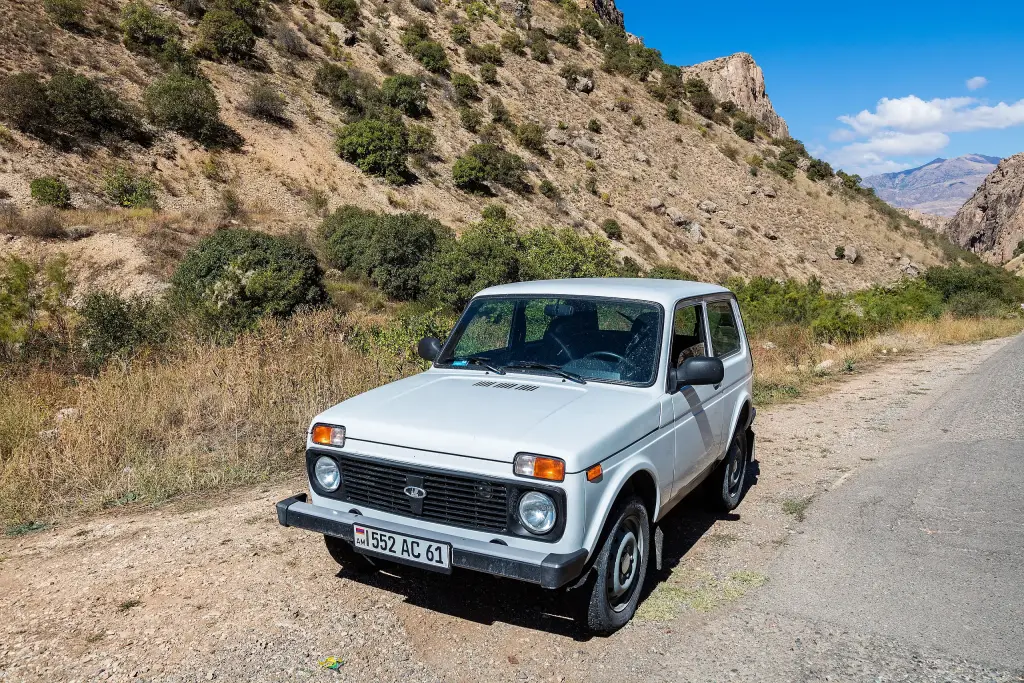
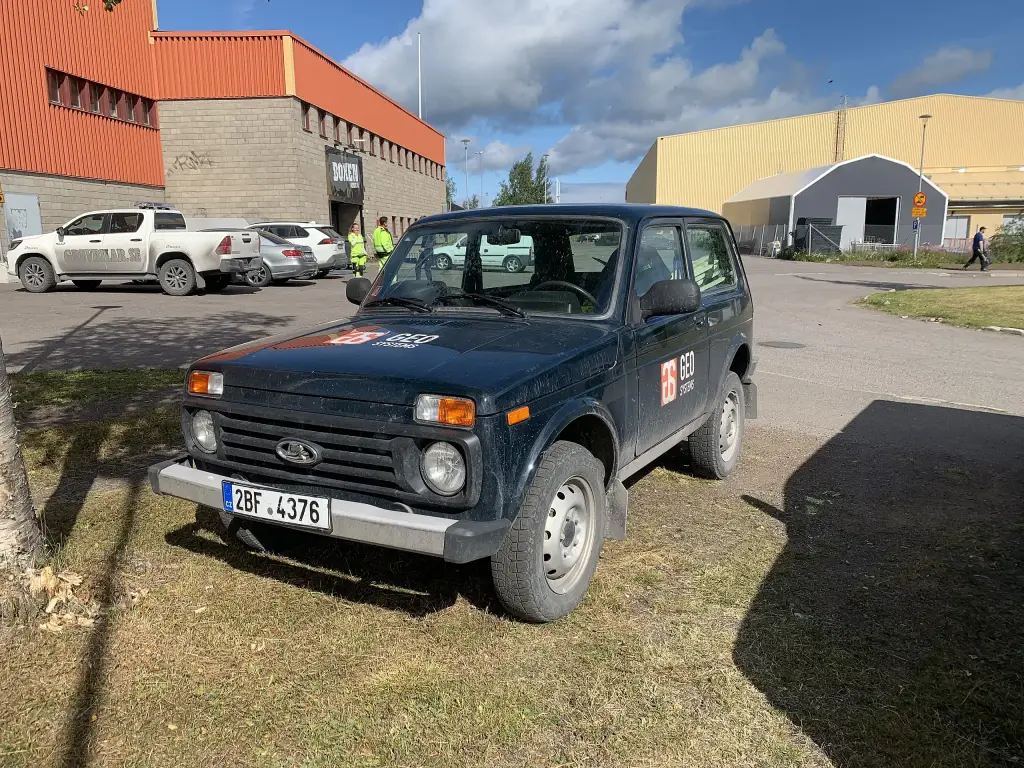
The Lada Niva, later sold as the Lada 4×4 and now as the Niva Legend, is a series of small four-wheel-drive off-road cars that AvtoVAZ has produced since 1977. It was the world’s first mass-produced off-road vehicle with a unibody construction, and it has remained in continuous production in its original form.
Lada Niva at a glance
| Maker | AvtoVAZ, Tolyatti, Russia |
|---|---|
| Production | since 1977 |
| Also known as | VAZ-2121, Lada 4×4, Lada Niva Legend |
| Bodies | three-door, five-door wagon, pick-up |
| Drive | permanent four-wheel drive with transfer case and centre differential lock |
| Wheelbase | 2.2 m (three-door) |
| Dimensions | 3.74 × 1.68 m |
| Ground clearance | about 265 mm |
| Tyres | 175/80 R16 |
| Weight | just over one tonne |
| Sold by end of 2020 | about 650,000 worldwide |
Based on one source: the English Wikipedia article on the Lada Niva.
History of the Lada Niva
Development began in 1971, after the 24th Congress of the CPSU, when Premier Alexei Kosygin gave the designers at VAZ and AZLK the task of creating a car suitable for rural areas. The usual Zhiguli, Moskvitch and Zaporozhets were of little use in the isolated parts of the USSR. A team at VAZ led by Vladimir Solovyev began competing with AZLK on a civilised four-wheel-drive vehicle, partly inspired by the IZh-14 prototype of 1974.
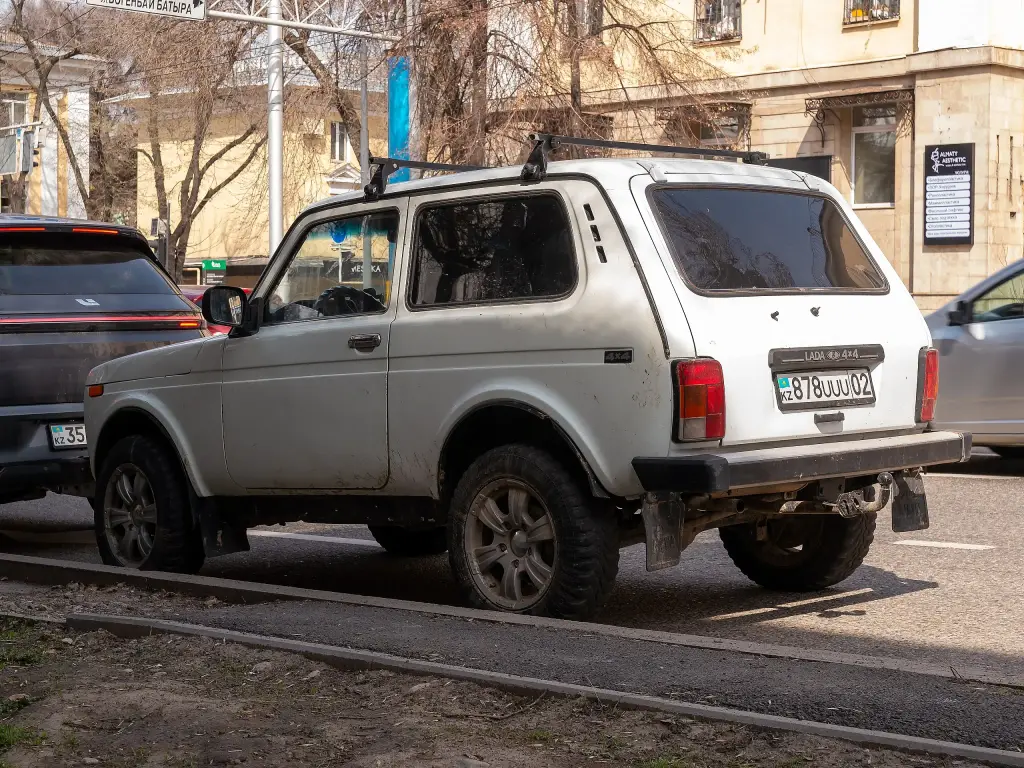
The Niva was VAZ’s first model not based on a Fiat, although many of its mechanicals came from the Fiat 124- and 125-based Zhiguli, mostly the VAZ-2103 and 2106. The body, four-wheel-drive system and front suspension were designed by VAZ. The first prototype of 1971, designated E-2121 and nicknamed krokodil for its distinctive front, was rejected as too utilitarian, so doors and a hardtop were added. That version, the 2E-2121, debuted in 1973 with a modern hatchback body inspired by the VAZ-1101 and styled by Valery Pavlovitch. The influence of the Fiat 127 shows in the clamshell bonnet and the rear three-quarter section.
Prototypes and testing
The 1974 prototype, the VAZ-2121M, was derived from the VAZ-2103 and used its 1,452 cc engine, chrome bumpers, lights, instruments, seats and steering wheel. Two samples were then modified with a 1,478 cc UZAM-412 engine from the Moskvich 1500, but testing showed it was incompatible with the new car, and the older engine was reused. The 2121M was ready for mass production in 1975, but the arrival of the VAZ-2106 delayed the project while another prototype was developed in 1976; that became the sixth and final, production version.
Before production the Niva was tested for years by a team led by Vadim Kotlyarov in the Ural Mountains, Siberia, the deserts of the Kazakh SSR and the Pamir Mountains, where it was compared with the UAZ-469, the Land Rover Series and the Range Rover Classic. Its off-road ability came from permanent four-wheel drive with a transfer case and central differential lock, a short 2.2 m wheelbase, a weight of just over a tonne, independent front suspension, compact dimensions of 3.74 by 1.68 m, about 265 mm of ground clearance and large but narrow 175/80-R16 Voltyre VLI-5 tyres. In the 1973 and 1974 trials it climbed a 58 percent slope and crossed 60 cm of water and 100 cm of mud and snow. Solovyev died the following year and was replaced by engineer Pyotr Prusov.
Names
Niva is the Russian word for a cornfield, and the name was also formed as an acronym from the initials of the chief designers’ children: Pyotr Prusov’s two daughters and Vladimir Solovyev’s two sons. The car was formerly called the Lada 4×4 or VAZ-2121 at home; the name changed after the brand was transferred to General Motors, though AvtoVAZ kept the rights to the Cyrillic Niva. It was marketed as the Lada Sport in Iceland, the Lada Taiga in Austria and the Lada Cossack in the United Kingdom. In 2014 it was sold in Russia as the LADA 4×4, and since 2021 as the Lada Niva Legend.
Design and features
- Unibody construction: the first mass-produced off-roader built as a single body-and-frame unit.
- Permanent four-wheel drive: a transfer case and a lockable centre differential.
- Compact and light: a 2.2 m wheelbase, 3.74 m length and just over a tonne.
- Longevity: continuous production since 1977, with about 650,000 sold by the end of 2020.
Lada Niva versions
- VAZ-2121 three-door: the original Niva of 1977.
- VAZ-2131 five-door: a wagon on a 50 cm longer wheelbase, added in the 1990s.
- Pick-up: an extra-long-wheelbase commercial version.
- Lada 4×4: the Russian-market name used from 2014.
- Niva Legend: the name adopted in 2021 for the original model.
- Export names: Lada Sport in Iceland, Lada Taiga in Austria and Lada Cossack in Britain.
The Niva was joined in the range by the Lada Niva Travel, a different car based on the VAZ-2123, and its mechanicals were used for the Lada Nadezhda. More models are in the Lada collection.
Video: Der Lada Niva im Test
Video by stern on YouTube.
Sources
- Lada Niva, English Wikipedia: history, prototypes, testing, names