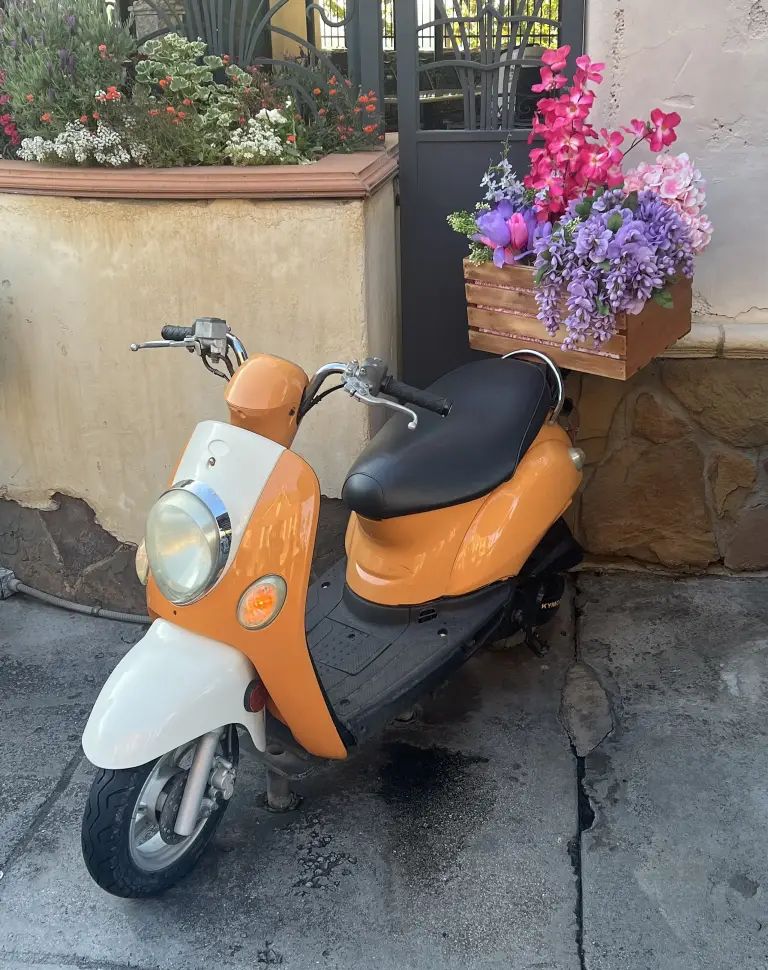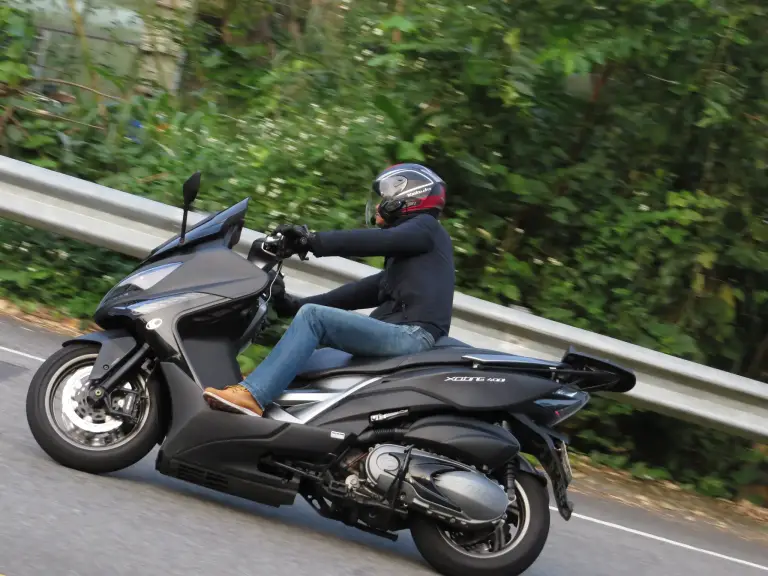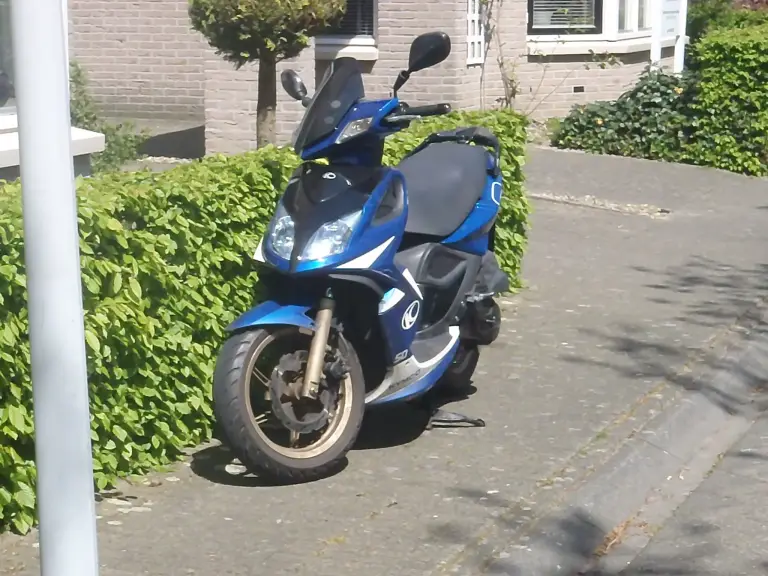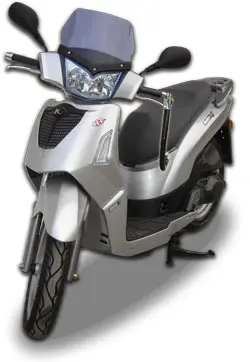
The Kymco People is a two-wheeled scooter from the Taiwanese manufacturer Kymco, introduced at the Munich Intermot show in 1998 and sold in Europe from the first months of 1999. It was the company’s first compact “high wheels” scooter aimed at European buyers, designed by Massimo Zaniboni of the Italian style centre Arkema Studio.
Kymco People at a glance
| Maker | Kymco, Taiwan |
|---|---|
| Designer | Massimo Zaniboni, Arkema Studio |
| Presented | Intermot, Munich, 1998 |
| On sale in Europe | early 1999 |
| Produced until | 2017 |
| Engines | 50 cc two-stroke, 125 and 150 cc four-stroke |
| Cooling | forced air |
| Starting | electric and kick starter |
| Rivals | Aprilia Scarabeo, Piaggio Liberty, Malaguti Ciak, Honda SH |
| Other name | Kymco Looker in some Asian markets |
| Anniversary version | 2008, ten years of the model |
History of the Kymco People
First generation (1998)
Designed by Massimo Zaniboni, director of the Italian style centre Arkema Studio, the People was Kymco’s first compact scooter with high wheels intended primarily for the European market, where it competed with the Aprilia Scarabeo, Piaggio Liberty, Malaguti Ciak and Honda SH. It was presented at the Munich Intermot in 1998 and put on sale in the main European markets from the first months of 1999. It was equipped with three engines: a two-stroke of 50 cc or four-strokes of 125 and 150 cc, with forced-air cooling and both electric and kick starting. The available colours were black, silver, anthracite, blue, grey, orange and red. In some Asian markets the same scooter was sold as the Kymco Looker.
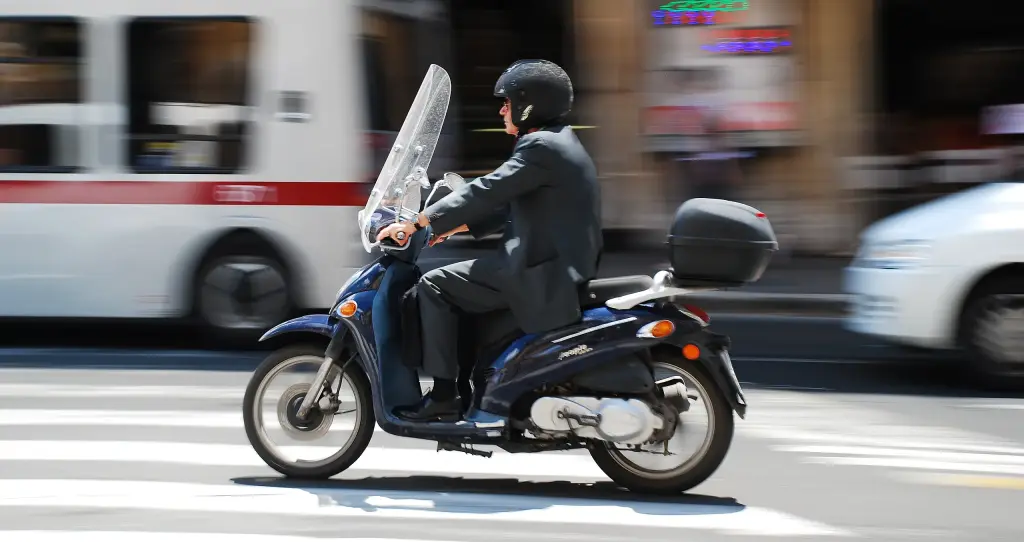
In 2008 Kymco presented the Anniversary version to celebrate ten years of the model. In 2012 the company presented its successor, the People One, but the original People stayed in production until 2017 because it continued to sell well, especially in Europe.
People 250 (2002–2008)
The People 250 was shown in prototype form at the Munich show in 2001 and later at the EICMA show in Milan, and went into production in the early months of 2002 as the top model of the range. It had its own “vintage” design and a specific chassis and frame to carry the larger engine: a steel tube frame, a fork with 37 mm stanchions and 115 mm of travel, a pair of rear shock absorbers adjustable for spring preload with 105 mm of travel, and 110/70 front and 140/70 rear tyres on 16-inch five-spoke wheels. The engine was a liquid-cooled 251 cc four-stroke single producing 19.6 hp at 7,250 rpm and 19.6 Nm at 6,500 rpm, homologated to Euro 2. A light restyling in spring 2004 brought a new grille with chrome slats, a better-padded seat, redesigned and now adjustable radiator air vents, new steering bearings and a different fork calibration. The 250 left production in 2008.
People range
Over the years the People name covered several models: the more refined and expensive People S was presented in 2005, the People GT arrived in 2010 as a more expensive top-of-the-range scooter positioned above the People S, and the People One of 2012 became the direct heir of the original 1998 model as a cheap entry to the range.
Design and features
- High wheels for Europe: the People was Kymco’s first compact high-wheel scooter aimed at European buyers.
- Italian design: styling by Massimo Zaniboni of Arkema Studio.
- Three engines: 50 cc two-stroke, 125 and 150 cc four-stroke.
- Anniversary edition: a 2008 version marked ten years of the model.
- People 250: a 251 cc liquid-cooled single with 19.6 hp and 16-inch wheels.
Kymco People versions
- People 50: two-stroke entry model.
- People 125 and 150: four-stroke versions for European buyers.
- People 250: liquid-cooled top model built from 2002 to 2008.
- People S: more refined version from 2005.
- People GT: top-of-the-range model from 2010.
- People One: cheap successor from 2012.
The People was followed by the Like and the small Agility in Kymco’s European range. More models are in the Kymco collection.
Sources
- Kymco People, English Wikipedia: design, launch, engines, 250, range
- Kymco People, Italian Wikipedia: production years, Looker name