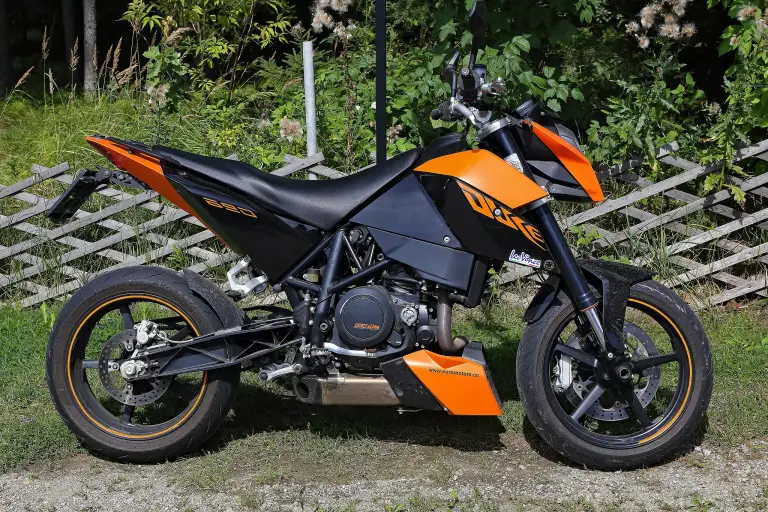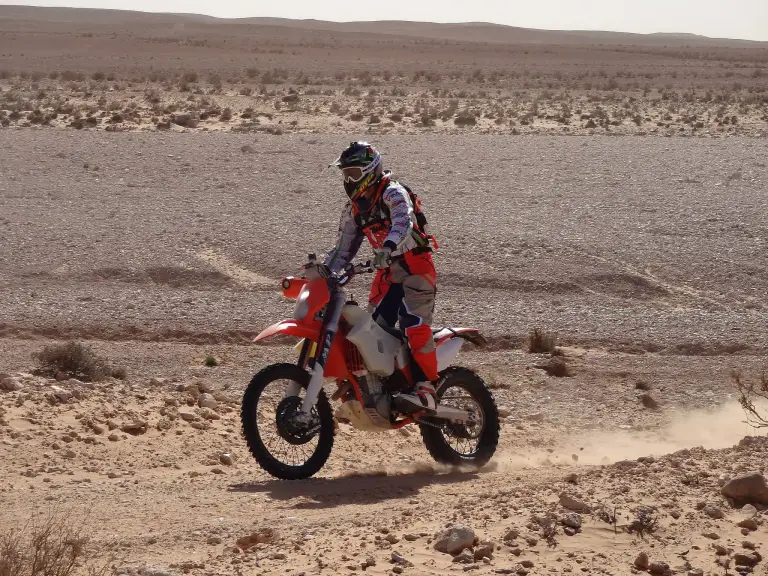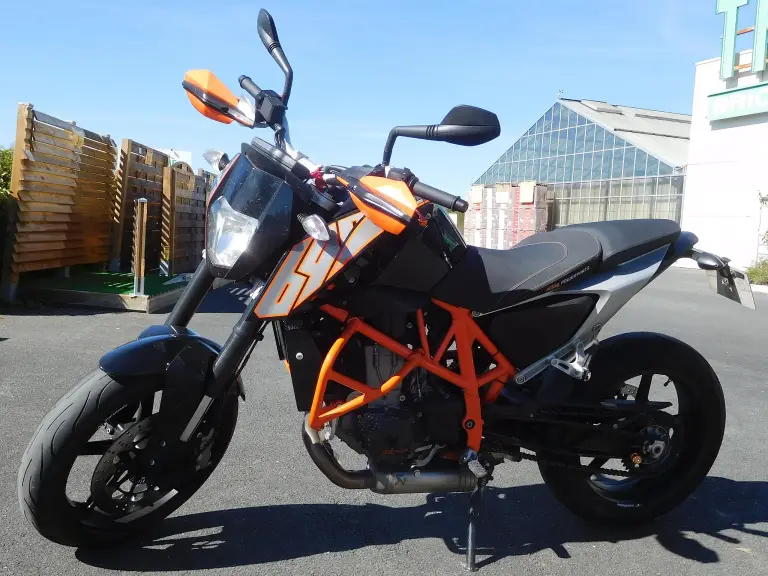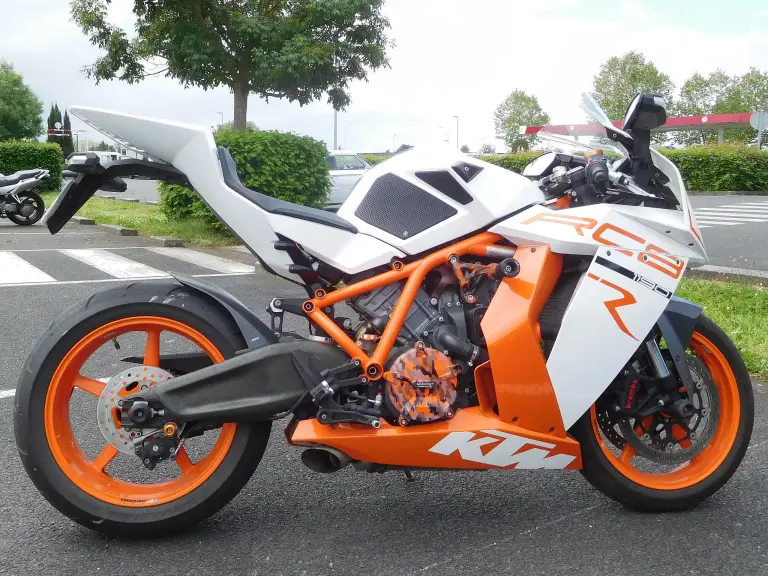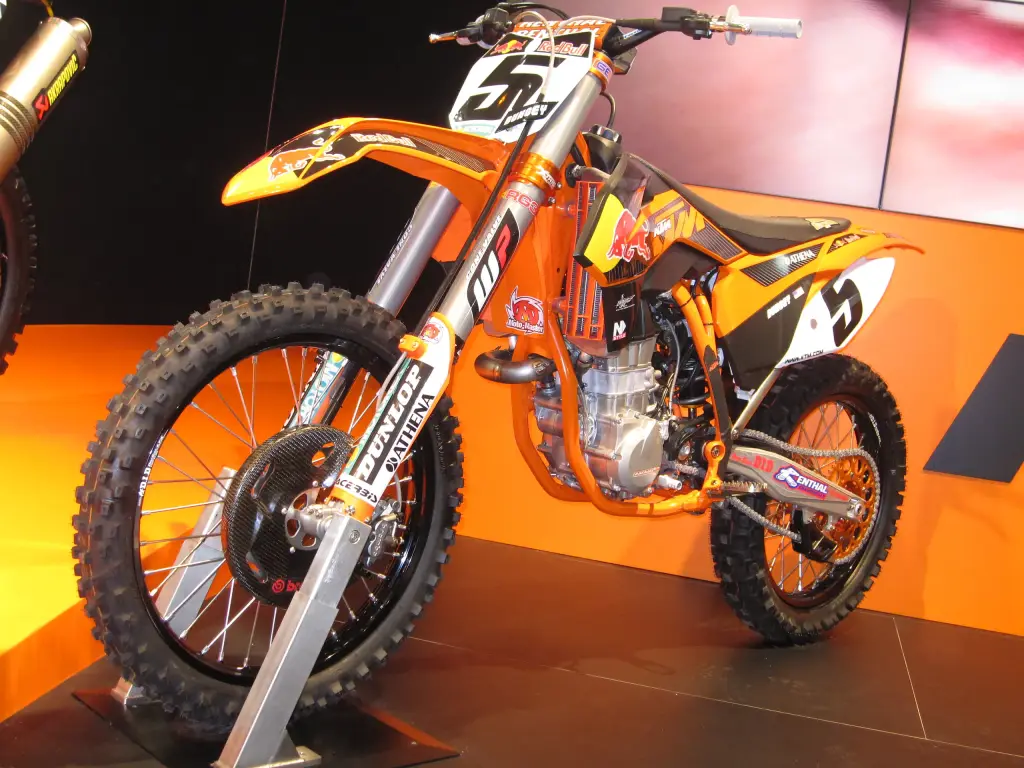
The KTM 500 series is a range of four-stroke enduro and dual-sport off-road motorcycles made by KTM. Its models are essentially the 400 and 450 EXCs with a longer stroke to achieve larger displacements: the 520, 525, 530 and 500 all use the same 510.4 cm3 engine, given different model numbers to distinguish them.
KTM 500 at a glance
| Maker | KTM, Austria |
|---|---|
| Type | four-stroke enduro and dual-sport motorcycles |
| Models | 520, 525, 530, 500, 500 EXC |
| Shared engine | 510.4 cm3 across the 520, 525, 530 and 500 |
| Origin | 400 and 450 EXCs with a longer stroke |
| International EXC | small headlight, speedometer, tail light, softer PDS rear suspension |
| US street legal | EXC from 2007 |
| 500 EXC name | from 2012, rebadged from the 530 EXC-R |
| 2012 engine | Keihin fuel injection, 2.49 kg lighter |
| 2012 clutch | DDS with a 250 Nm Belleville spring |
| 2012 frame | 30% more lateral stiffness |
| 2014 update | bodywork from the SX-F range, 280 Nm Belleville spring |
| 2017 range | 250 cc version joins the 350 and 500 EXC-F |
based on one source
History of the KTM 500
Origins of the series
The KTM 500 series consists of four-stroke enduro and dual-sport off-road motorcycles that are essentially the 400 and 450 EXCs with changes to the stroke to achieve larger displacements. The 520, 525, 530 and 500 are in fact all 510.4 cm3 motors, given different model numbers to distinguish them. Like the other KTM enduro offerings they vary in set-up and components, and the international EXC versions have a small headlight, speedometer, tail light and somewhat softer linkless PDS rear suspension. 2007 was the first year the EXC was deemed street legal in the United States, and as of 2008 the US version of the EXC, with the new XC-4 motor, continued to be sold in street-legal trim.
2012: the 500 EXC
In 2012 the US 50-state street-legal 530 EXC-R was rebadged the 500 EXC, and the model received a significant update. Both the power unit and transmission were redesigned from the ground up, and the bike gained the latest Keihin engine management system with electronic fuel injection, able to compensate for altitude and temperature changes. Despite the change to fuel injection the motor was 2.49 kg lighter, more compact and had less reciprocating mass. A new cylinder head featured redesigned intake and exhaust ports with lightweight titanium valves on the intake side, a 15% lighter forged piston, nitride-coated piston rings, a redesigned combustion chamber with a new water jacket and a new crankshaft with an ultra-light Pankl connecting rod.
Chassis of the 2012 model
The balancer shaft was redesigned to be more compact and also drove the water pump. New valve chain guides and a spring-loaded mechanical chain tensioner with a ratchet stop were fitted, and the engine adopted a common oil circuit with two oil pumps, a pressure pump for the engine and a suction pump drawing oil from the crankcase to lubricate the transmission and clutch. Cooling was improved by routing the radiator hoses through the frame and by an auxiliary fan, and the larger 196 W stator (up from 130 W) was oil-jet cooled. The engine case, now die-cast rather than sand-cast, was 1.8 kg lighter and more impact resistant. A new DDS (damped diaphragm steel) clutch used a billet steel basket and a 250 Nm Belleville spring washer instead of conical springs, with Brembo master and slave cylinders. The frame was completely revamped with a 30% increase in lateral stiffness, and a 300 g lighter swingarm carried a more central PDS mount, while a 7 mm longer WP PDS shock and 48 mm WP Open Cartridge forks with SKF seals completed the chassis. The wheels used black Giant rims with CNC-machined hubs and Metzeler Six Days Extreme tyres.
2013-2017
In 2013 the 500 EXC received only minor changes: new Maxxis tyres developed for KTM with increased longevity, and newly styled graphics. The 2014 model brought all-new bodywork inspired by the SX-F range, with a front fender 50% stiffer than before and free of ribbing so it collected less mud, a new headlight and surround, larger two-component handguards, a redesigned airbox and air filter latch, firmer and thicker seat foam, a frame 300 g lighter, a stronger 280 Nm Belleville spring and a Brembo front master cylinder with a 9 mm piston for a more progressive brake feel. In mid-2016 the 2017 bikes were introduced and a 250 cc version was added, joining the 350 and 500 EXC-F.
Design and features
- One engine, many names: the 520, 525, 530 and 500 all displace 510.4 cm3.
- Fuel injection from 2012: Keihin engine management compensating for altitude and temperature.
- DDS clutch: diaphragm-spring design with a Belleville washer, 250 Nm then 280 Nm.
- Stiffer frame: 30% more lateral stiffness in 2012.
KTM 500 versions
- 520 and 525: earlier versions of the 510.4 cm3 engine.
- 530 EXC-R: the US 50-state street-legal model rebadged in 2012.
- 500 EXC (2012 on): fuel injection, new frame, DDS clutch.
- 500 EXC-F: part of the 2017 range alongside the 350 and a new 250.
The smaller four-strokes are the 450 and the 250; the two-stroke alternative is the 300. More models are in the KTM collection.
Sources
- KTM 500 series, English Wikipedia: engine, 2012 update, 2013-2017 changes