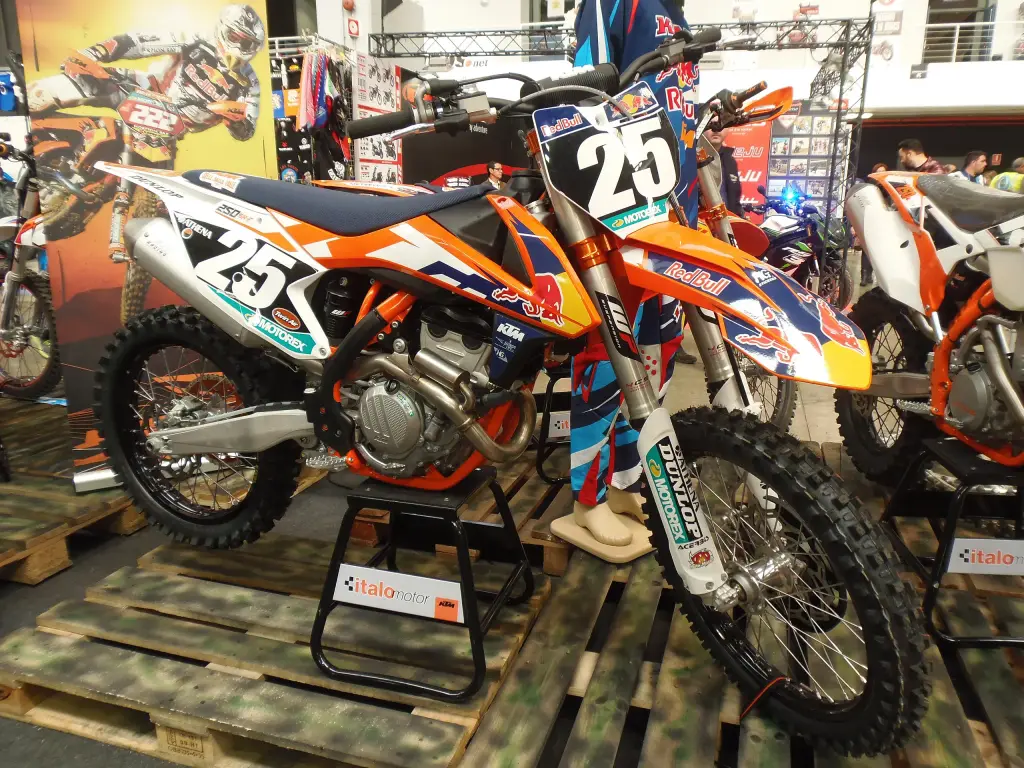
The KTM 250 is an air-cooled two-stroke motorcycle, best known as the off-road machine supplied to the Austrian Bundesheer under the designations KTM 250 KRAD ÖBH and KTM GL KRAD 250. The 250 cc engine also formed the basis of KTM’s long-running 300 enduro range.
KTM 250 at a glance
| Maker | KTM, Austria |
|---|---|
| Users | Austrian Bundesheer; also the forces of Norway |
| Type | off-road military motorcycle |
| Engine | air-cooled single-cylinder two-stroke |
| Power | 19.5 kW (27 PS) |
| Fuel tank | 20.7 litres |
| Range | about 300 km |
| Gearbox | hand or foot shift |
| Front brake | single-disc |
| Rear brake | drum |
| Maximum weight | 300 kg |
| Special equipment | removable ski runners |
The military KTM 250 is described only in the German Wikipedia; the link to the 300 comes from the English article on the KTM 300.
History of the KTM 250
The military KTM 250
The KTM 250 was a cross-country motorcycle of the Austrian armed forces, known in service as KTM 250 KRAD ÖBH or KTM GL KRAD 250 and also used by the Norwegian forces. It was employed as a messenger, courier and convoy escort machine across all branches of the service.
Technical details
Power came from an air-cooled single-cylinder two-stroke producing 19.5 kW (27 PS). Its most unusual feature was a pair of mountable ski runners for riding on snow and ice; with the 20 kg runners fitted the machine grew to 1,250 mm in width. The 20.7-litre tank gave a range of about 300 km. The gearbox could be supplied with either hand or foot shifting, the front wheel was slowed by a single-disc brake and the rear by a drum brake. For transport the machine could carry tank and saddle bags, and its permissible maximum weight was 300 kg.
The 250 as the basis of the 300
In off-road competition the 250 cc two-stroke was the starting point for KTM’s three-litre-class enduro. The original 300 GS Enduro of 1984 grew out of experience with the 250 cc Penton Hare Scrambler and other air-cooled KTM two-stroke enduros. When the rules of the International Six Days Enduro allowed any machine larger than 250 cc in the open class from 1986, KTM experimented with a water-cooled over-250 machine: the firm essentially bored its 250 out to 273 cc and called it a 300. That first version was discontinued in 1987, but the name returned with the 300 EXC of 1990 and has been in production ever since.
Design and features
- Military specification: built for messenger, courier and convoy escort duties.
- Ski runners: 20 kg runners widened the machine to 1,250 mm for snow and ice.
- Long range: a 20.7-litre tank gave about 300 km between refuelling.
- Choice of shift: the gearbox could be had with hand or foot operation.
KTM 250 versions
- KTM 250 KRAD ÖBH: the Austrian army designation.
- KTM GL KRAD 250: the alternative service designation.
- 250 cc enduro two-stroke: the competition engine bored out to 273 cc for the first 300 of 1984.
The descendant of the 250 two-stroke is the KTM 300; other models are in the KTM collection, among them the 450 and the 500.
Sources
- KTM 250, German Wikipedia: military use and technical details
- KTM 300, English Wikipedia: the 250 as the basis of the 300