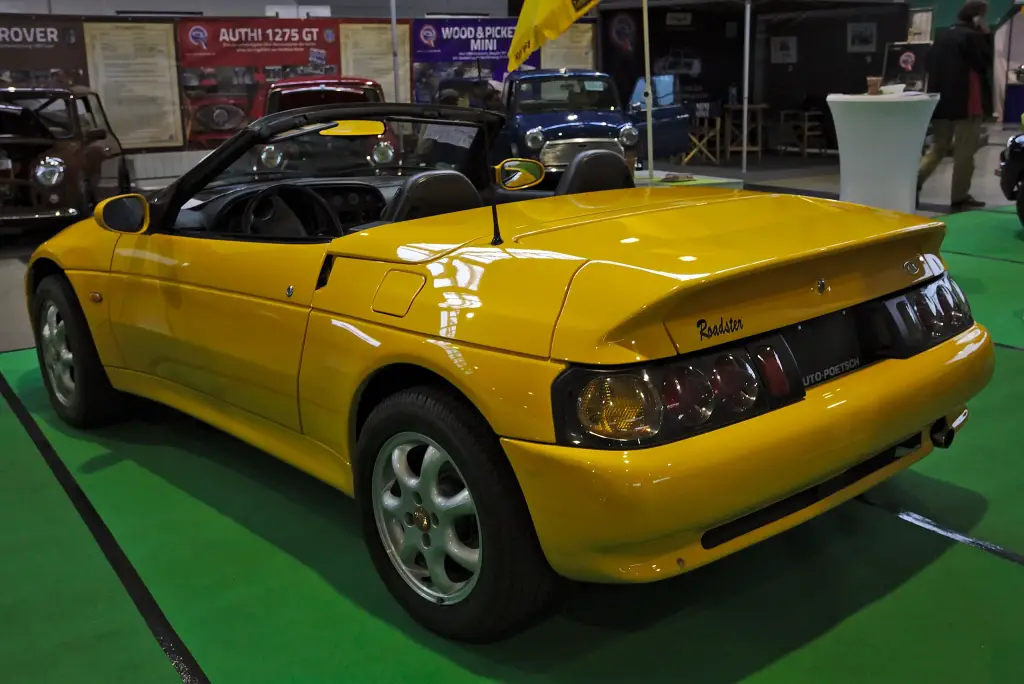
The Kia Elan was a two-seat roadster that Kia launched in July 1996 after buying the rights to the Lotus Elan. Lotus designed the car and Kia rebuilt it for its own engine and production line, but it was never a commercial success and it disappeared in 1999, three years after launch.
Kia Elan at a glance
| Maker | Kia, built by Kia Motor at Ansan |
|---|---|
| Production | July 1996–1999 |
| Design | Lotus Elan, rights bought by Kia in 1993 |
| Engine | 1,793 cc TS-DOHC four, 151 PS |
| Torque | 19.0 kg-m |
| Top speed | 220 km/h |
| 0–100 km/h | about 7.4 seconds |
| Drive | front-wheel drive, five-speed manual only |
| Roof | manual folding |
| Price at launch | 27.5 million won |
| Built | 1,055, of which 235 exported |
Based mainly on the Korean Wikipedia article; the Lotus Elan article gives the origin of the design.
History of the Kia Elan
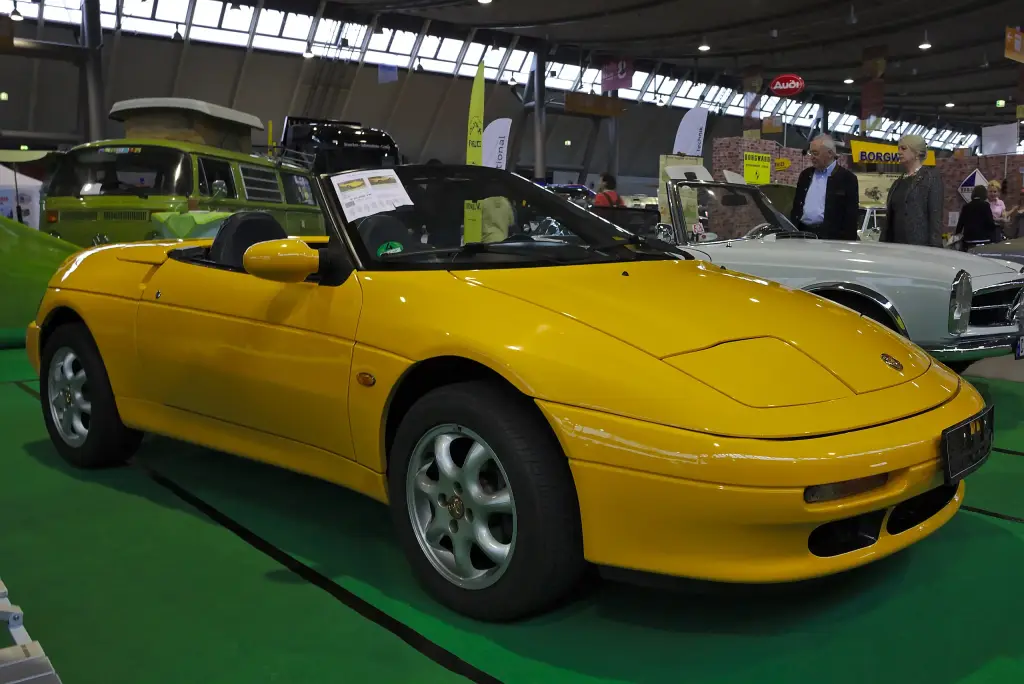
The Elan was designed in Britain: Lotus built the first generation in the 1960s and the second in 1989. Lotus ran into financial trouble in the 1990s, and Kia, which was looking for a sports car to raise the value of its brand, bought the rights to the Elan in 1993. Kia spent about three years re-engineering the car so that it could be assembled on a normal conveyor line instead of the small-batch backyard-builder method Lotus had used, and localised about 85 per cent of the parts, including the engine and the ride height.
Engineering
The Kia version used Kia’s own 1,793 cc TS-DOHC engine with 151 PS and 19.0 kg-m of torque, a five-speed manual gearbox and front-wheel drive; no automatic was offered. Top speed was 220 km/h and 0–100 km/h took about 7.4 seconds. The car kept the Lotus backbone frame, inspired by the shape of a fish skeleton, which spreads weight accurately between the two sides and gives torsional rigidity in fast direction changes. Its body was made of VMRP, a moulded reinforced plastic that weighs less than steel but absorbs about three times more energy per unit of weight, can be repaired in sections and takes colours that metal cannot.
Production
The car was not built by Kia itself but by its subsidiary Kia Motor, formerly Seohae Industries, at a plant in Ansan, Gyeonggi Province. It went on sale in July 1996 at 27.5 million won. Each car cost between 30 and 40 million won to build, so Kia lost money on every one.
The 1997 financial crisis and the car’s own lack of profitability ended the project. The Elan was discontinued in 1999 with no successor, after 1,055 cars, 235 of them exported; about 553 were still registered in Korea in 2015. The Forte Koup of 2009 filled the gap in the range, but as a coupé it was not a true replacement for the convertible. Kia keeps an Elan in its R&D heritage collection.
Design and features
- Lotus design: the Elan body and chassis came from Lotus, re-engineered for Korean production.
- Kia engine: a 1,793 cc unit of 151 PS, driving the front wheels through a five-speed manual.
- Backbone frame: a light, stiff chassis that gave the car its cornering ability.
- Plastic body: VMRP panels, lighter than steel and repairable in sections.
Kia Elan versions
- Elan M100 (1996–1999): the only version, a two-seat roadster with a manual roof.
- Export cars: 235 of the 1,055 built were sold outside Korea.
The Elan was Kia’s only sports car until the GT Concept and later the Stinger, and it sat above the Sephia in price. More Kia models are in the Kia collection.
Sources
- Kia Elan, Korean Wikipedia: development, engine, chassis, production, prices, survivors
- Lotus Elan, English Wikipedia: origin of the design
- Kia Credos, English Wikipedia: context of Kia’s range in the 1990s