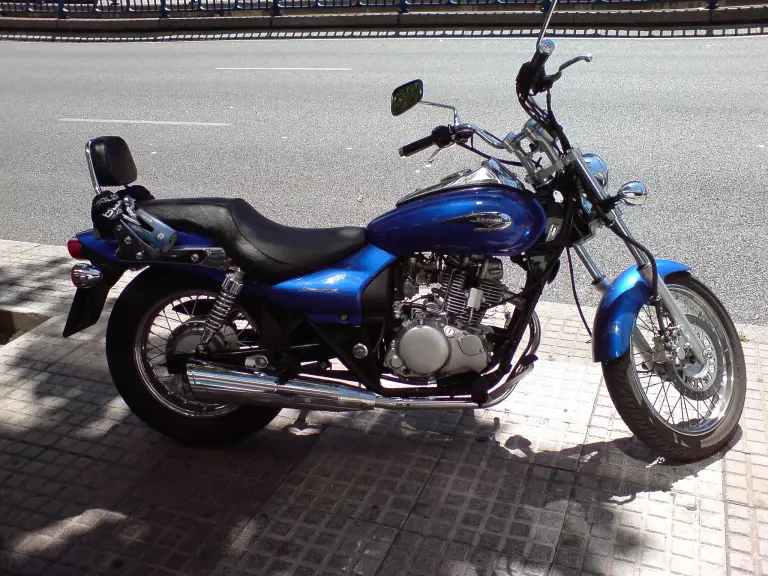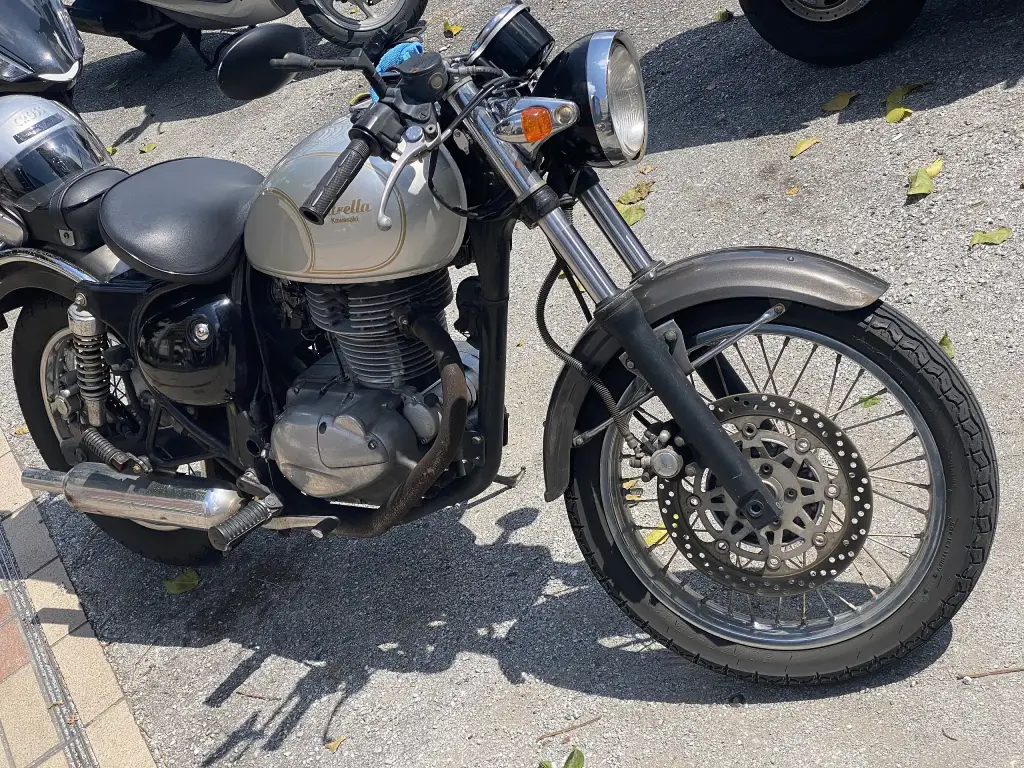
The Kawasaki Estrella, called the W250 since 2017, is a 249 cc retro standard motorcycle that Kawasaki has made since 1992. It was sold only in Europe and Asia, and since 2012 it has been available only in Japan.
Kawasaki Estrella at a glance
| Maker | Kawasaki |
|---|---|
| Produced | since 1992 |
| Also called | W250 since 2017 |
| Engine | 249 cc air-cooled four-stroke single |
| Valves | two per cylinder, single overhead camshaft |
| Class | retro standard, café racer style |
| Markets | Europe and Asia; Japan only since 2012 |
| Germany | sold 1994–1999 as BJ250A and BJ250C |
| Design reference | Kawasaki SG 250 of 1964 |
| Two-seater reference | BSA Gold Star Clubman DBD34 |
| Starter | electric |
| Brakes | disc front and rear |
The English article is short; the German one supplies the German market details and the Italian one the engine description.
History of the Kawasaki Estrella
The Estrella is a small retro machine that Kawasaki has built since 1992 as a smaller-engine member of the W series. Initially it was offered in the Asian and European markets, and from 2012 it has been sold only in Japan. It is popular as a basis for modification and customisation because of its affordable price and classic café racer style.
Design roots
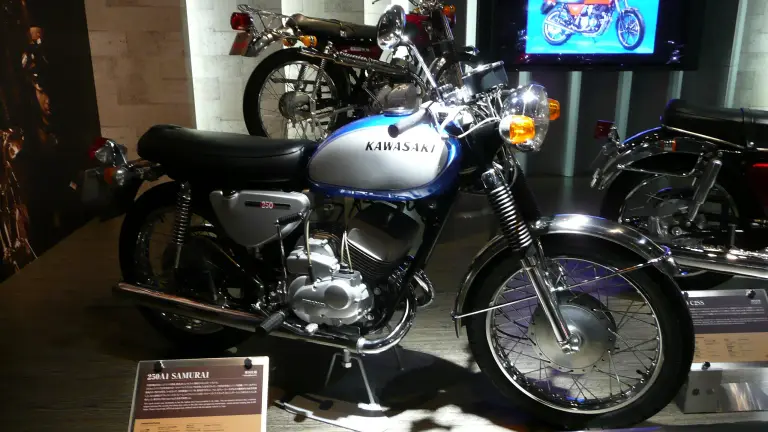
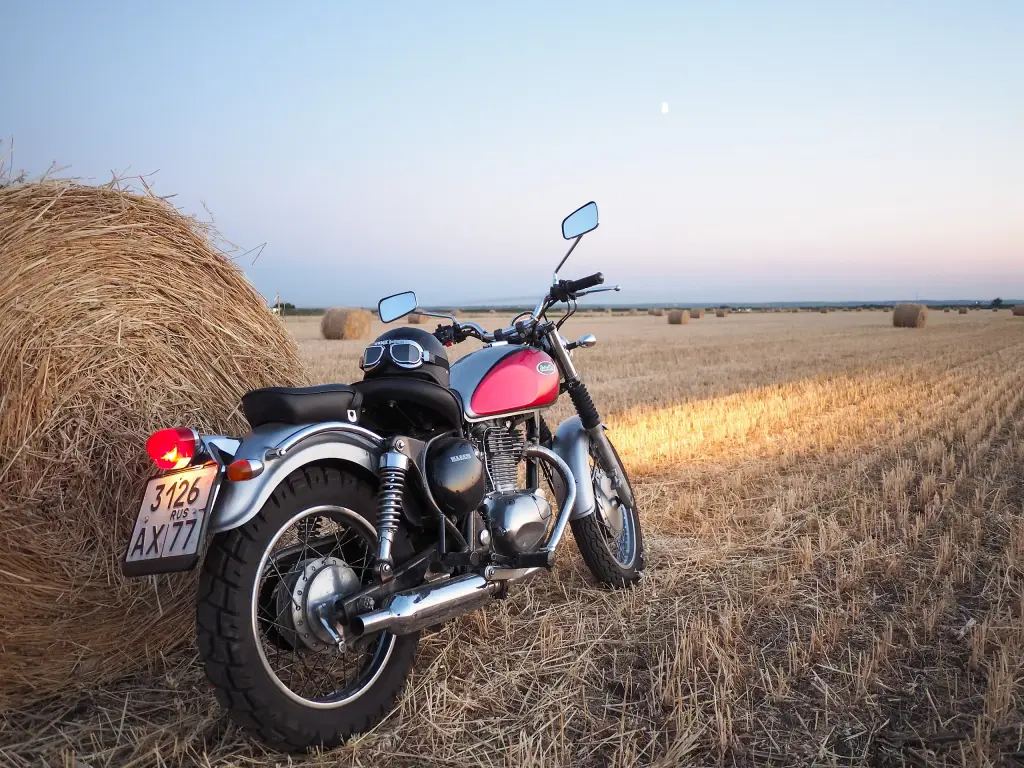
The single-seat Estrella closely follows the lines of the 1964 Kawasaki SG 250, a motorcycle based on a 250 cc engine from Meguro, the company Kawasaki took over and which also built copies of British BSA engines. The two-seat version recalls the BSA Gold Star Clubman DBD34 of the 1960s.
In Germany
The Estrella was marketed in Germany from 1994 to 1999 in two forms. The 1994–1995 BJ250A had a solo saddle, green, white and black paint, a green-painted lamp and mudguards, rear shock absorbers with reservoirs, 95 mm of suspension travel, a 770 mm seat height and a permitted gross weight of 265 kg. From 1996 the BJ250C had a dual seat, red and black paint, a black lamp, chromed mudguards, shocks without reservoirs, 75 mm of travel, a 745 mm seat height and a gross weight of 316 kg.
Modern underneath
Despite the classic look the Estrella used current technology: an electric starter instead of a kickstarter, transistor ignition and disc brakes at both ends. The model has changed little since production began, apart from adjustments required by legislation; the Italian Wikipedia records a deeper restyling in 2014.
Design and features
- Retro styling: the tank, seat and lamp follow the 1964 SG 250 and, in two-seat form, the BSA Gold Star Clubman.
- Modern electrics: electric starting and transistor ignition, unusual for a machine styled as a 1960s bike.
- Disc brakes both ends: a practical improvement over the drum brakes the style suggests.
- Customisation base: a low price and simple construction made the Estrella a favourite for café racer conversions.
Kawasaki Estrella versions
- BJ250A (1994–1995, Germany): single seat, green and white, shocks with reservoirs.
- BJ250C (1996–1999, Germany): dual seat, red and black, chromed mudguards.
- 2014 restyling: the deepest update of the model’s life.
- W250 (2017 onwards): the Estrella renamed as part of the W series.
The Estrella is the small member of Kawasaki’s retro family; the modern middleweight roadster line is covered by the Z750. More Kawasaki models are in the Kawasaki collection.
Video: Kawasaki Estrella Vorstellung
Video by _Mo_ on YouTube.
Sources
- Kawasaki Estrella, English Wikipedia: production, markets, design roots
- Kawasaki Estrella, German Wikipedia: German models, colours, dimensions, equipment
- Kawasaki Estrella, Italian Wikipedia: engine layout, 2014 restyling