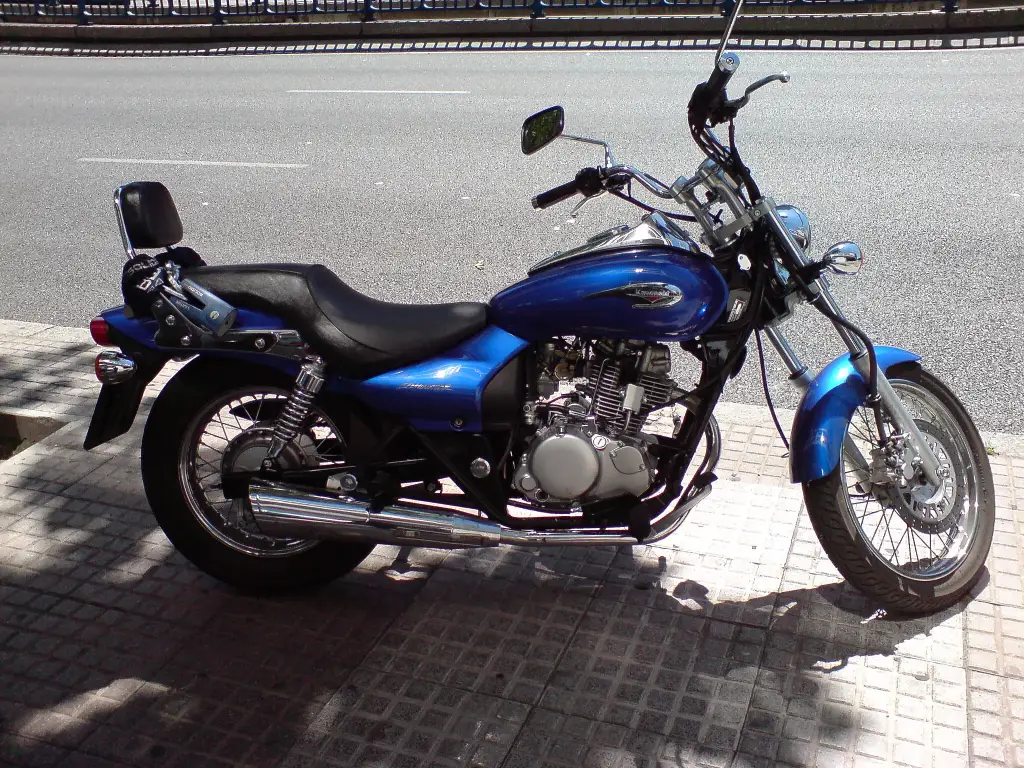
Kawasaki first used the Eliminator name in 1985 on the ZL900 A1, one of the first sport cruisers: a sport bike engine in a cruiser frame. Since then the name has covered models from 124 cc to 997 cc, and it returned in 2023 on a new 398 cc parallel twin.
Kawasaki Eliminator at a glance
| Maker | Kawasaki |
|---|---|
| First model | ZL900 A1, 1985 |
| Idea | sport bike engine in a cruiser frame |
| ZL900 engine | 908 cc inline-four from the GPZ900R |
| ZL1000 | larger engine shared with the ZG1000 Concours |
| ZL models | ZL900, ZL1000, ZL750, ZL600, ZL400 |
| Small models | VN250, EL250, EL175, EL125 |
| ZL900 production | 1985–1986, Lincoln, Nebraska |
| EL250 production | 1988–1997 |
| Revival | Eliminator 400 and 500, 2023 |
Based on one source, the English Wikipedia article on the Eliminator.
History of the Kawasaki Eliminator
The Eliminator was Kawasaki’s answer to the custom boom of the mid-1980s, and it went further than most rivals by using a full sport bike engine. The ZL900 of 1985 took the 908 cc inline-four from the GPZ900R and dropped it into a cruiser frame, with smaller 32 mm carburettors instead of 34 mm, different timing and milder camshafts to trade top-end power for low- and mid-range torque. It was designed to evoke the Z1 drag bikes, with a bobbed rear fender, short-travel fork, a large rear tyre, fat chromed mufflers, a small tank and low straight handlebars. At the time it was the only bike in its class with an inline-four rather than a V4, and it was built in Lincoln, Nebraska, for the American market.
The ZL family
The ZL1000 followed as an evolution of the ZL900, with a larger engine shared with the ZG1000 Concours and 34 mm carburettors. Its styling was more conservative, with a longer rear fender and a much larger tank; only about 2,500 were made for 1987 and 1988, and in 1987 it was sold only in Britain, Australia and the United States, with 100 hp versions for Germany, France and Sweden. The ZL750 of 1986–1989 was a milder version of its bigger brothers, while the ZL600 (1986–1997) used a modified Ninja 600 engine and the ZL400 (1986–1994) took its powerplant from the GPZ400R. All the ZL versions had shaft drive.
Small cruisers
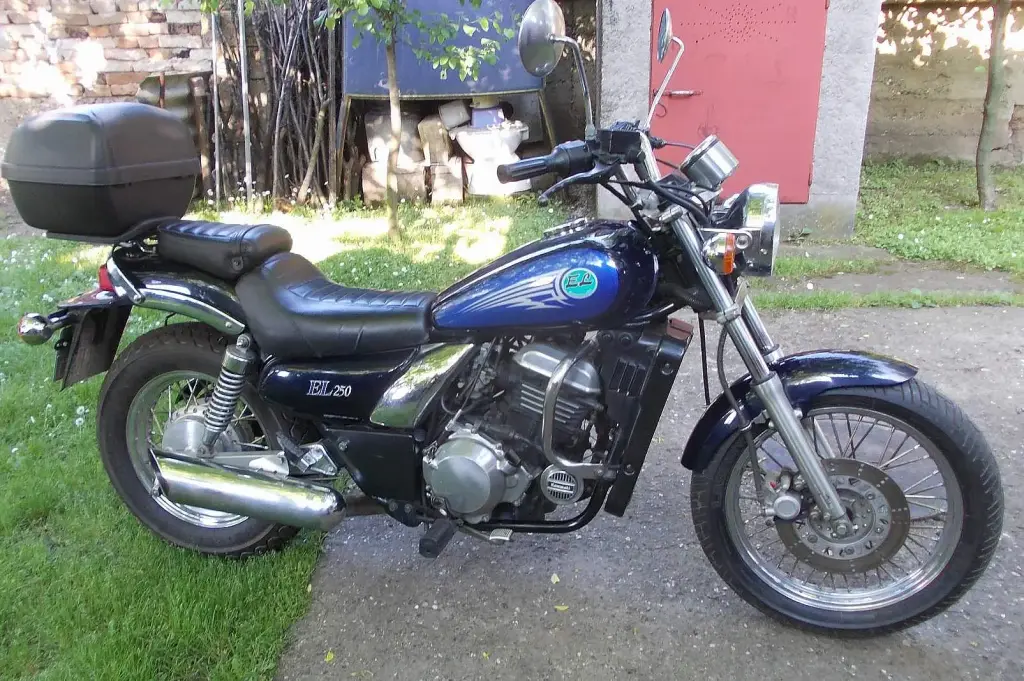
From 1998 Kawasaki also used the name on small entry-level cruisers. The VN250 started production in 1998, the EL250 ran from 1988 to 1997 before the VN250 replaced it, and the EL175 was built and sold in India by Bajaj as the Kawasaki Bajaj Eliminator, with an export version called the BN175. The Eliminator 125, also known as the BN125, was Kawasaki’s entry-level cruiser, used by the Motorcycle Safety Foundation in beginner courses, and was discontinued in Britain in mid-2007.
2023 revival
Kawasaki brought the Eliminator back at the 2023 Osaka Motorcycle Show with a 398 cc parallel twin derived from the Ninja 400 and Z400. That model was sold in Japan, and an Eliminator 500 followed with a 451 cc version of the same engine, using a longer stroke; the 451 cc unit was later shared with the Ninja 500 and Z500.
Design and features
- Sport-cruiser formula: a high-revving multi-cylinder engine in a low cruiser chassis, a layout few rivals offered in 1985.
- Retuned engine: smaller carburettors, different timing and milder cams moved power from the top end to the middle.
- Drag-bike styling: bobbed rear fender, short fork travel, wide rear tyre and low bars on the ZL900.
- Shaft drive: used across the ZL range for low maintenance.
- Wide model span: from the 124 cc Eliminator 125 to the 997 cc ZL1000.
Kawasaki Eliminator versions
- ZL900 (1985–1986): the original, with the GPZ900R engine.
- ZL1000 (1987–1988): larger engine, more conservative styling, about 2,500 built.
- ZL750, ZL600, ZL400: smaller versions using engines from other Kawasaki models.
- EL250, EL175, EL125: entry-level cruisers, the EL125 used by riding schools.
- Eliminator 400 and 500 (2023): the modern revival with a 398 or 451 cc parallel twin.
The ZL900 used the engine of the GPZ series, and Kawasaki’s other cruisers are covered under the Vulcan. More models are in the Kawasaki collection.
Video: Starting & Showing 2005 Kawasaki Eliminator 125
Video by Adam Edward Industries® on YouTube.
Sources
- Kawasaki Eliminator, English Wikipedia: ZL models, EL models, 2023 revival