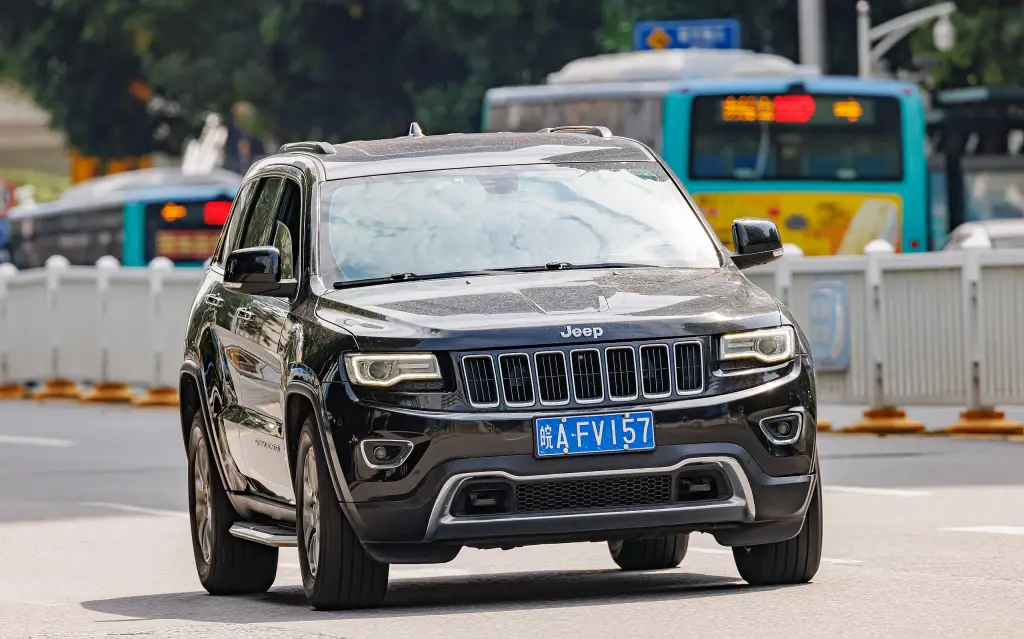
The Jeep Grand Cherokee is a range of mid-size sport utility vehicles, sold since 1992. It has used a unibody chassis from the start, when most SUVs were still built body-on-frame. The first car, the ZJ, went on sale in April 1992 as a 1993 model and became the flagship of the Jeep range.
Jeep Grand Cherokee at a glance
| Maker | Jeep (Chrysler, later Stellantis) |
|---|---|
| First generation | ZJ, 1992–1998 |
| Construction | unibody, at a time when most SUVs used a separate frame |
| Project name | XJC, developed from 1983 by American Motors |
| Debuted | 1992 North American International Auto Show |
| On sale | April 1992, as a 1993 model |
| Built in | Jefferson North, Detroit; Magna Steyr, Austria, for Europe |
| ZJ engines | 4.0 L six, 190 hp; 5.2 L V8 optional; 5.9 L in 1998 |
| ZJ trims | base/SE, Laredo, Limited; Orvis and TSI later |
| Gearboxes | four-speed automatic; five-speed manual to 1994 |
| Refrigerant | first full-scale US car production with HFC-134a |
The English Wikipedia article covers every generation; this page describes the development and the first ZJ generation.
History of the Jeep Grand Cherokee
From AMC’s XJC to Chrysler’s Jeep
The Grand Cherokee’s story starts in 1983, when American Motors was looking for a successor to the Jeep Cherokee. Three outside designers — Larry Shinoda, Alain Clenet and Giorgetto Giugiaro — were contracted to build clay models of the replacement, known as the XJC, alongside AMC’s own studio; the 1989 Jeep Concept 1 show car showed where the design was heading. While developing the car AMC created a system of centralised drawings and documents that cut engineering changes, a process later known as product lifecycle management; after Chrysler bought AMC in 1987 it spread the system through the whole company. The Grand Cherokee became the first Chrysler-badged Jeep, though chief executive Lee Iacocca delayed its launch in favour of the redesigned Chrysler minivans, so it arrived in late 1992 as a competitor to the Ford Explorer. Unlike the body-on-frame Explorer, it used monocoque construction. A Dodge-badged version was designed as a precaution in case Jeep dealers could not handle the volume.
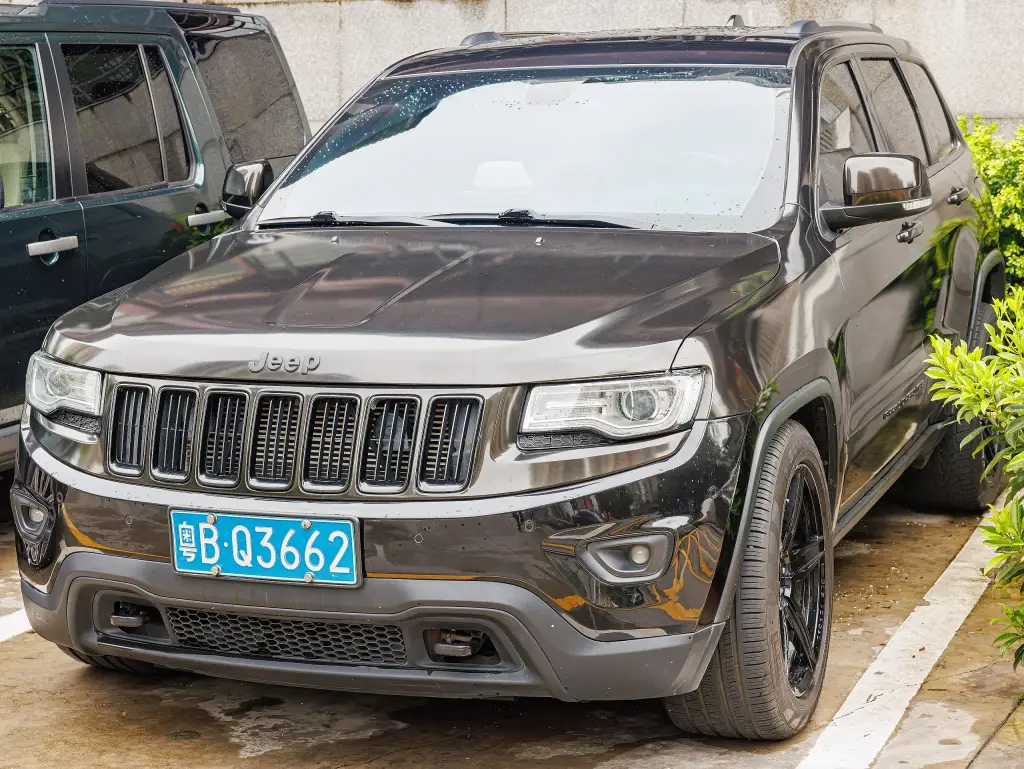
The ZJ arrives
The Grand Cherokee made its debut at the 1992 North American International Auto Show in Detroit. Chrysler president Robert Lutz drove Detroit’s mayor Coleman Young from the Jefferson North plant to Cobo Hall, up the steps and through a plate-glass window to show off the car, and sales of the 1993 model began in April 1992. Production started at the purpose-built Jefferson North plant in Detroit, and European cars were assembled in Austria by Magna Steyr. The model was credited with helping to revive Chrysler’s fortunes by moving it into the growing market for high-margin SUVs, and it was the first full-scale car production in the United States to use HFC-134a refrigerant.
The first-generation range
The ZJ came in three trims at first: base, which became SE in 1994, the mid-range Laredo and the premium Limited, with Orvis and TSI added later. The base car had full instrumentation, cloth trim, a driver’s airbag, anti-lock brakes and a five-speed manual, but not power windows or locks; it sold poorly and was eventually dropped. The Laredo added power windows, locks, cruise control, a leather-wrapped wheel and grey lower-body panelling. The Limited had body-coloured panelling, leather, heated mirrors, power front seats, keyless entry, woodgrain trim, a compass, digital climate control and a Jensen stereo, with heated seats available by 1996. At launch there was one powertrain, the 4.0 litre AMC-derived straight-six of 190 hp, which became the volume engine; the 5.2 litre V8 was optional and a 5.9 litre arrived in 1998. The four-speed automatic was standard from the later 1993 cars, and the five-speed manual was dropped after 1994, though European cars kept it with the diesel that was never sold in North America.
Design and features
- Unibody construction: lighter and stiffer than the body-on-frame SUVs of 1992.
- Product lifecycle management: AMC’s central database cut engineering changes and was adopted across Chrysler.
- Trim ladder: SE, Laredo and Limited set the pattern for later generations.
- Engine choice: the 4.0 straight-six as volume engine, with V8s for more power.
- HFC-134a: the first full-scale American car production with the new refrigerant.
Jeep Grand Cherokee versions
- Grand Cherokee ZJ (1993–1998): the first generation.
- SE: the base trim, formerly plain base, dropped for lack of demand.
- Laredo: the mid-range car with grey lower panelling.
- Limited: the luxury trim with leather and woodgrain.
- Orvis and TSI (1995–1998): later special trims.
- 5.9 Limited (1998): the V8-engined end of the ZJ line.
The Grand Cherokee sits above the Cherokee it was developed from and the Liberty, and shares its platform ideas with the Wagoneer. More models are in the Jeep collection.
Video: The Mighty Jeep Grand Cherokee HEMI
Video by Aussie Four Wheelers on YouTube.
Sources
- Jeep Grand Cherokee, English Wikipedia: development, launch, ZJ range, engines