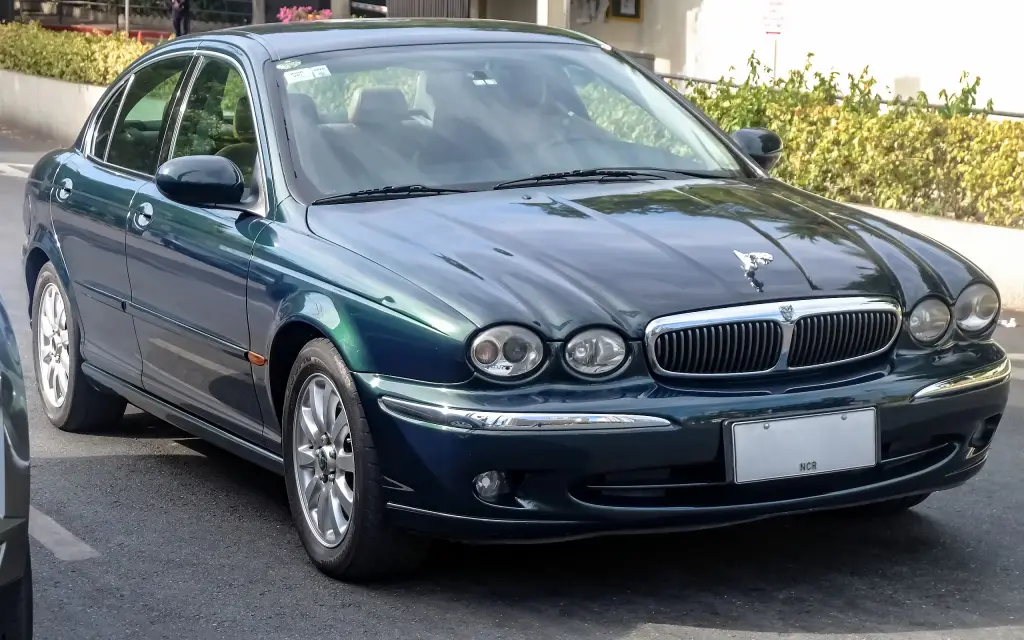
The Jaguar X-Type is a compact executive car manufactured and marketed by Jaguar Cars from 2001 to 2009 in a single generation. Internally designated X400, it was built as a four-door saloon and a five-door estate, becoming Jaguar’s first series-production estate car, its first front-wheel-drive car and its first with a diesel or a four-cylinder engine.
Jaguar X-Type at a glance
| Production | 2001–2009 |
|---|---|
| Code | X400 |
| Built at | Halewood, near Liverpool |
| Bodies | four-door saloon, five-door estate from 2004 |
| Platform | modified Ford CD132, shared with the Mondeo |
| Drive | front-wheel drive or all-wheel drive |
| Petrol engines | 2.1, 2.5 and 3.0-litre V6 |
| Diesel engines | 2.0 and 2.2-litre four-cylinder |
| Gearboxes | five-speed manual or automatic, six-speed automatic on later diesels |
| Built | about 350,000 |
History of the Jaguar X-Type
Why it existed
The X-Type was developed while Jaguar belonged to Ford’s Premier Automotive Group and marked the marque’s entry into the compact executive class dominated by the BMW 3 Series and Mercedes-Benz C-Class. The programme was meant to double Jaguar’s worldwide sales, requiring more engineering resources, factory capacity and marketing; at launch Autocar called the X-Type the most important Jaguar ever. With annual projections of 100,000 sales, it recorded production of about 350,000 over eight years.
Under the skin
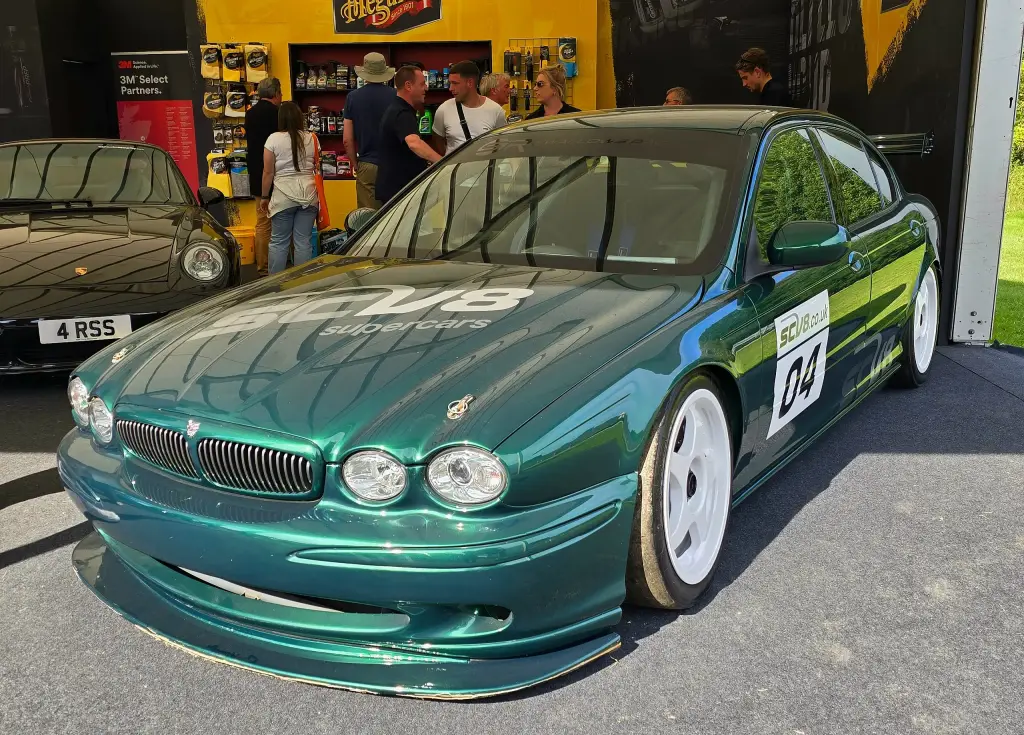
Ford and Jaguar had no directly competitive rear-drive platform, so the X-Type used a modified version of the front-drive Ford CD132 platform shared with the contemporary Mondeo, adding all-wheel drive marketed as Jaguar Traction 4 and engineering the steering and suspension to minimise torque steer. Initially every car was all-wheel drive, with a centre differential and a viscous coupling splitting torque 60 per cent to the rear and 40 per cent to the front and able to transfer it fully either way; for 2004 the viscous coupling was deleted. About 19% of the X-Type’s origins were shared with the Mondeo, much of it hidden components such as HVAC units, and the relationship became a point of criticism.
Engines and bodies
The range began with 2.5 and 3.0-litre AJ-V6 petrol engines, joined in 2002 by a 2.1-litre V6 front-wheel-drive entry model; all three came with five-speed manual or automatic gearboxes. In 2003 Jaguar added front-wheel drive and its first four-cylinder diesels, based on the Ford Duratorq ZSD unit from the Mondeo and Transit. The saloon launched in 2001 and the estate followed in January 2004, with production of both ending in July 2009 at the renovated Halewood plant. The estate had a drag coefficient of 0.32 in standard form and 0.33 in Sport trim. It was the last Jaguar styled under Geoff Lawson’s supervision, with Wayne Burgess and Simon Butterworth as principal designers, and the grille was revised for 2004 and 2006.
Equipment
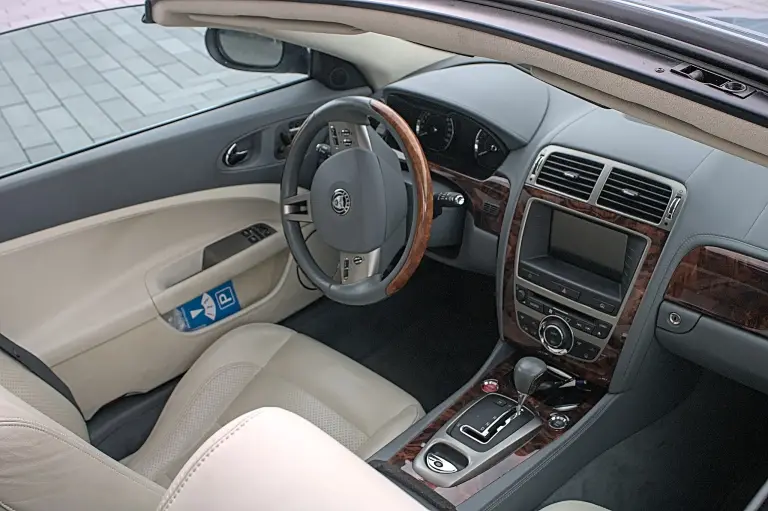
At launch the X-Type came with automatic climate control, leather upholstery, an eight-way power driver’s seat, 70/30 split folding rear seats, Sapele wood trim, a tilt-and-telescope steering wheel, a six-speaker 120-watt stereo, a power sunroof and 16-inch alloy wheels; later versions added carbon fibre dash panels and Alcantara. All the wood was genuine, made from veneers at Browns Lane’s Veneer Manufacturing Centre.
Design and features
- First of several: Jaguar’s first estate, front-wheel-drive car and diesel.
- Jaguar Traction 4: all-wheel drive with a 60/40 rear/front torque split at first.
- V6 and diesel range: 2.1 to 3.0-litre petrol V6s and 2.0 or 2.2-litre diesels.
- Compact executive size: aimed squarely at the BMW 3 Series.
- Genuine veneers: wood trim made at Jaguar’s own veneer centre.
Jaguar X-Type versions
- Saloon (2001–2009): the original four-door body.
- Estate (2004–2009): Jaguar’s first series-production estate.
- 2.1 V6 (2002 on): front-wheel-drive entry model.
- Diesel (2003 on): 2.0 and later 2.2-litre four-cylinder engines.
- All-wheel drive: standard at launch, with the viscous coupling dropped for 2004.
The X-Type was Jaguar’s first compact executive car since the Jaguar Mark 2, and its diesel engine came from the same family used in the Jaguar S-Type. More cars are in the Jaguar collection.
Sources
- Jaguar X-Type, English Wikipedia: platform, engines, bodies, equipment