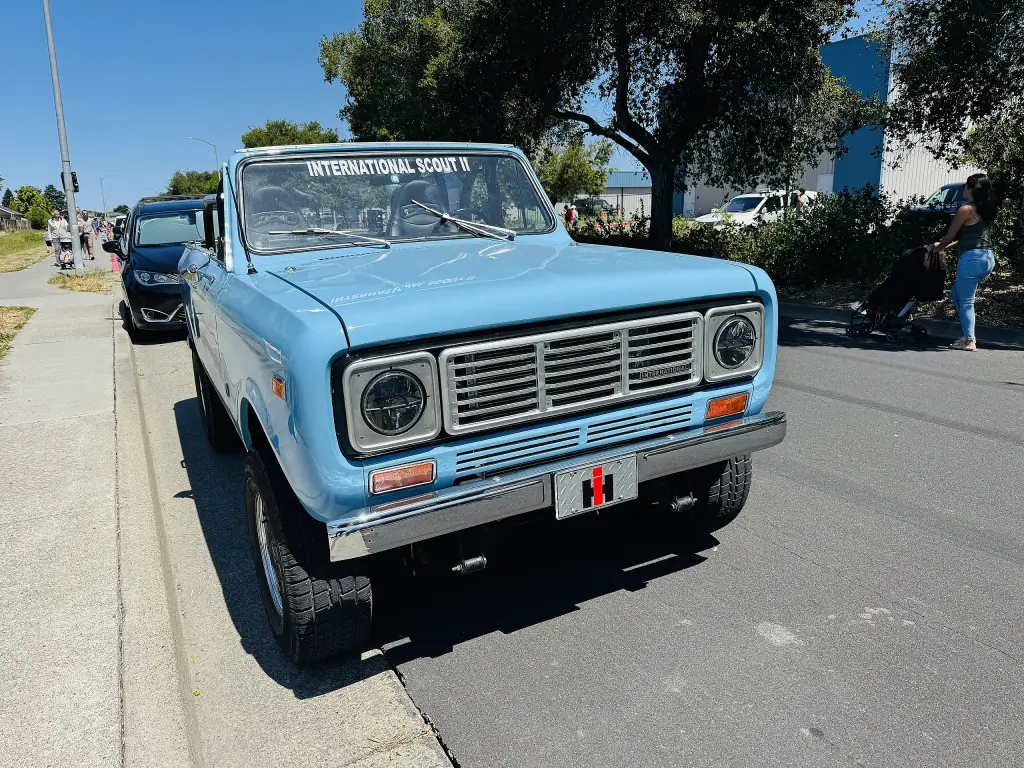
The International Scout was an off-road vehicle produced by International Harvester from 1961 to 1980. Designed as a competitor to the Jeep CJ, it was the forerunner of more refined SUVs such as the Ford Bronco, Chevrolet Blazer and Jeep Cherokee, and 532,674 were built at Fort Wayne, Indiana.
International Scout at a glance
| Maker | International Harvester, Fort Wayne, Indiana |
|---|---|
| Production | 1961–1980 |
| Built | 532,674 |
| Concept | open-top two-door truck, offered as a wagon, half-cab pickup or soft-top |
| Scout 80 | 1960–1965, the original model |
| Scout 800 | 1966–1971, same design with electric wipers and newer engines |
| Scout II | 1971–1980, 100-inch wheelbase, removable soft or hard top |
| Scout II Terra | 1976–1980, pickup on a 118-inch wheelbase |
| Scout II Traveler | 1976–1980, 118-inch wheelbase with an optional third row |
| Super Scout II | 1977–1979, fabric doors, roll bar and soft top |
| End of production | 21 October 1980 |
Based on one source (English Wikipedia).
History of the International Scout
Replacing the horse
International Harvester had been building trucks since 1907 and had sold the truck-based Travelall people carrier since 1953. In the late 1950s it began work on a rival to the two-door Jeep CJ, then almost the only four-wheel-drive recreational vehicle on the market. Chief designer Ted Ornas recalled that the engineering manager simply asked the team to “design something to replace the horse”. Early ideas with flat sides did not appeal to the executive committee, and the programme nearly died until Ornas sketched a contoured body designed for plastic tooling. Goodyear built a vacuum-formed scale model, but its costing was too high and the body was switched to steel; a full-sized clay model was completed in late 1959 and approved that November. The whole programme took 24 months, a remarkable pace for a company with no suitable engine or manufacturing line of its own. The Scout 80 went on sale for the 1961 model year, having debuted in late 1960.
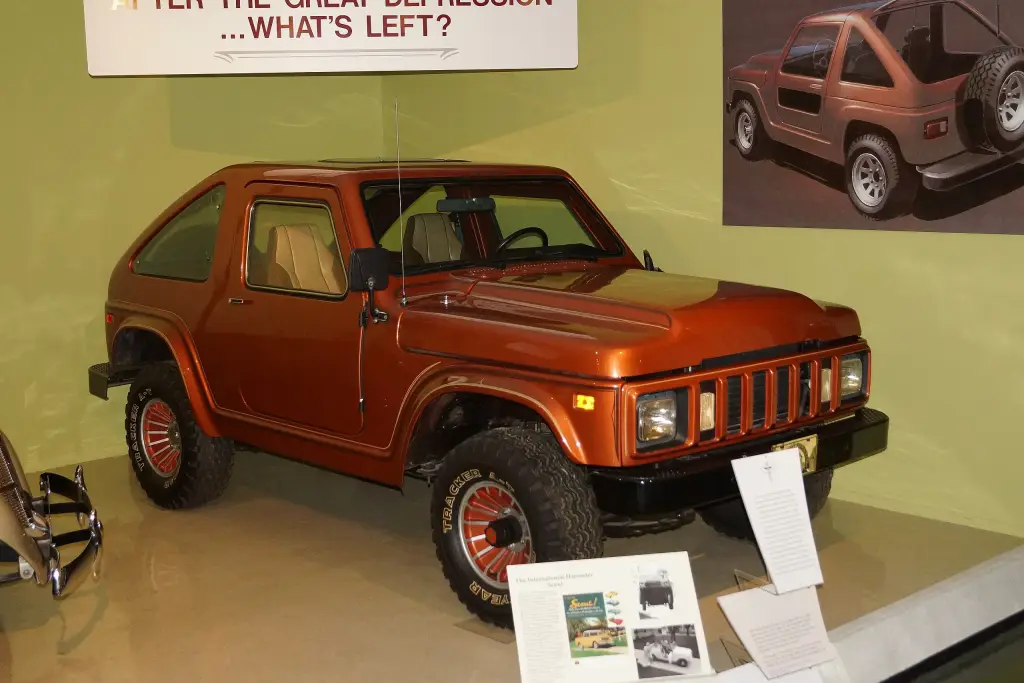
Scout II and the derivatives
The first Scout was replaced by a concept begun in 1964 and approved for production in mid-1965, which arrived as the Scout 800. The Scout II followed in 1971 with a 100-inch wheelbase and a removable soft or hard top; its basic sheet metal stayed unchanged until production stopped. From it came the Scout II Terra pickup and the Scout II Traveler estate on a 118-inch wheelbase, the Traveler offering an optional third row of seats, and the Super Scout II of 1977 to 1979 with removable fabric doors, a roll bar and a soft top, which International marketed as the SSII. The Scout was sold with the line “Anything less is just a car”.
The end
Production stopped on 21 October 1980 after twenty years and 532,674 vehicles. The Scout, introduced as a commercial utility pickup in 1960, set the stage for the four-wheel-drive recreational vehicles of the 1970s, 1980s and 1990s. After it went out of production International concentrated on medium- and heavy-duty commercial trucks.
Design and features
- Jeep rival: designed from the start to take on the Jeep CJ.
- Many bodies: wagon, half-cab pickup and soft-top convertible from one basic vehicle.
- Two wheelbases: 100 inches for the Scout II and 118 inches for the Terra and Traveler.
- Long life: the basic Scout II sheet metal lasted from 1971 to 1980.
- Big seller: 532,674 Scouts in twenty years.
International Scout versions
- Scout 80 (1960–1965): the original model.
- Scout 800 (1966–1971): same design with electric wipers and newer engines.
- Scout 810 (1971): early Scout II badging.
- Scout II (1971–1980): 100-inch wheelbase with removable top.
- Scout II Terra and Traveler (1976–1980): pickup and estate on a 118-inch wheelbase.
- Super Scout II (1977–1979): fabric doors, roll bar and soft top.
The Scout followed the International Travelall and shared the Fort Wayne plant with International’s light trucks, which are covered with the C series. More vehicles are in the International collection.
Sources
- International Scout, English Wikipedia: development, models, production