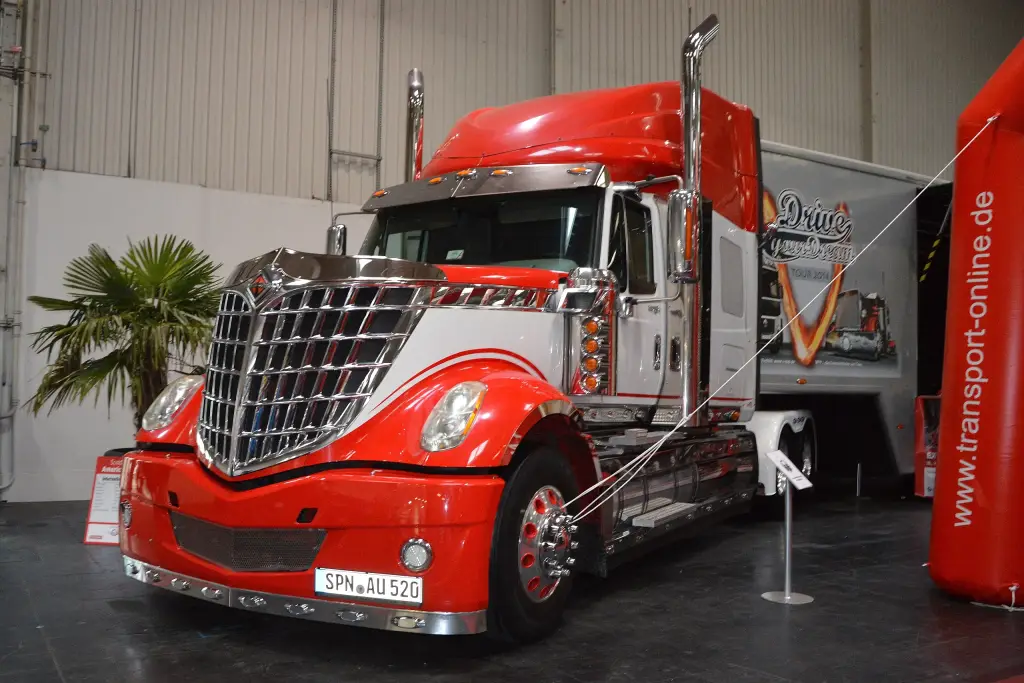
The International LoneStar was a conventional-cab highway tractor built by Navistar from the 2009 to the 2024 model years. Its extended hood and chrome-heavy styling recalled International’s 1930s trucks, yet it was the most aerodynamic version of the company’s flagship line, and 7,077 were built before production ended in December 2023.
International LoneStar at a glance
| Maker | Navistar International |
|---|---|
| Model years | 2009–2024 |
| Type | conventional-cab semitractor, highway truck |
| Position | flagship model, above the International LT (formerly ProStar) |
| Unveiled | 2008 Chicago Auto Show |
| BBC | 132 inches |
| Cab styles | day cab, 56-inch sleeper (low and high roof), 73-inch sleeper (high and extended roof) |
| Engines | MaxxForce 13 12.4-litre at 410–500 hp; Cummins ISX15 14.9-litre at 525–600 hp |
| Transmissions | Eaton-Fuller manual and automated manual |
| Assembly | Chatham, Ontario; later Springfield, Ohio and Escobedo, Mexico |
| Final truck | number 7,077, December 2023 |
Based on one source (English Wikipedia). The original record carried a music video, so the article has no video.
History of the International LoneStar
An advanced classic
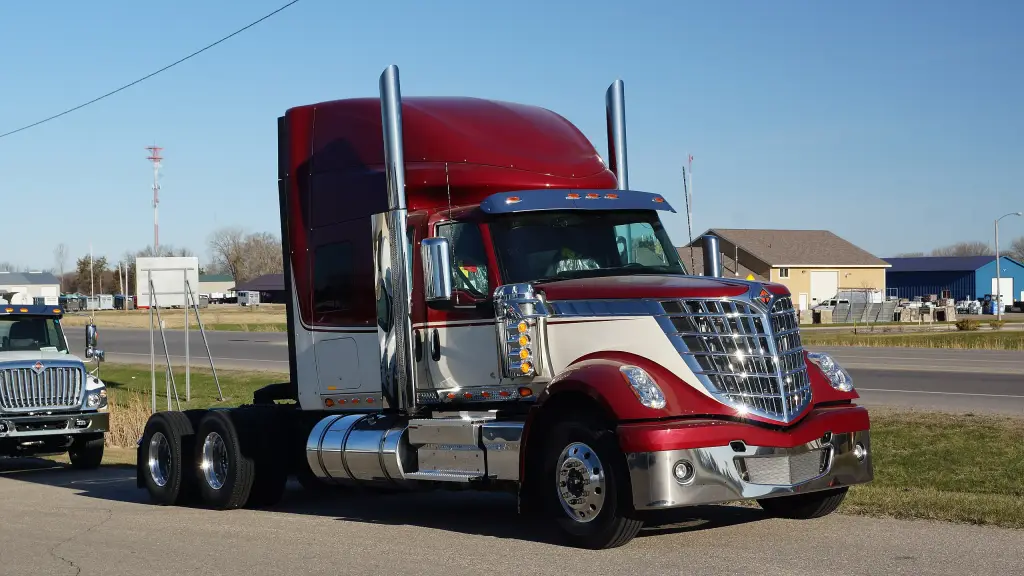
The LoneStar was unveiled at the 2008 Chicago Auto Show, the largest road vehicle ever introduced at that event, and went on sale for the 2009 model year. Navistar described it as an “Advanced Classic”, combining design elements of older vehicles with modern technology and aerodynamics; the main influence was the late-1930s International Harvester D series. Like the classic International 9900ix, it was a long extended-hood conventional with a large grille and bumper, external air filter containers and vertical exhausts, all trimmed in chrome. Despite its name the truck has no connection with Texas, whose nickname is the Lone Star State. It was the last model of the NGV family to reach production and was developed in only 24 months, going straight from computer and clay models to production without traditional prototypes. Navistar claimed fuel economy up to 15 per cent better than the 9000 series.
Design and equipment
The LoneStar shared its cab structure with the ProStar but had a set-forward front axle and a 132-inch bumper-to-back-of-cab length, five inches longer than a Peterbilt 379. It came as a day cab, a 56-inch sleeper with low or high roof, and a 73-inch sleeper with high or extended roof. At launch two engines were offered: Navistar’s MaxxForce 13, a 12.4-litre inline-six of 410 to 500 horsepower, and the Cummins ISX15, a 14.9-litre six of 525 to 600 horsepower, both with Eaton-Fuller manual or automated manual gearboxes. The interior used premium materials: the lower bunk of the wood-floored sleeper could be a sofa bed, and both front seats swivelled to turn the cab into a workspace. For the 2009 model year Navistar built 250 Harley-Davidson Special Edition trucks with their own grille, bumper, motorcycle-derived headlights, 24.5-inch wheels with Harley emblems and black and silver paint with orange stripes.
Later years
After the MaxxForce 13 was discontinued the Cummins ISX15 became the only engine for 2015 and was renamed X15 for 2016. From launch, all LoneStars were assembled at Chatham, Ontario; when that plant closed in 2009 production moved to Springfield, Ohio and Escobedo, Mexico, and in 2013 right-hand-drive versions were assembled in Tauranga, New Zealand, the only market outside North America. For 2018 the truck received the second-generation NGV interior with a reconfigurable digital display and a redesigned shifter, remounted mirrors and single-piece side windows, and it was the last International to keep the “-Star” name. The 7,077th and final LoneStar was built in December 2023 and delivered to a Canadian carrier that had helped develop the truck.
Design and features
- Advanced Classic styling: a long hood, big chrome grille and external air cleaners inspired by the 1930s D series.
- Aerodynamics: up to 15 per cent better fuel economy than the 9000 series, according to Navistar.
- Long BBC: a 132-inch bumper-to-back-of-cab length, five inches more than a Peterbilt 379.
- Premium interior: wood floor, sofa bed and swivelling seats in the sleeper.
- Harley-Davidson edition: 250 trucks for 2009 with their own trim and paint.
International LoneStar versions
- Day cab: the short-haul version.
- 56-inch sleeper: low-roof and high-roof versions.
- 73-inch sleeper: high-roof and extended-roof versions.
- Harley-Davidson Special Edition (2009): 250 trucks with special grille, wheels and paint.
- 2018 update: second-generation NGV interior and single-piece side windows.
The LoneStar sat above the ProStar and shared its cab with it, and it succeeded the 9000 series as International’s flagship. More trucks are in the International collection.
Sources
- International LoneStar, English Wikipedia: development, design, engines, production