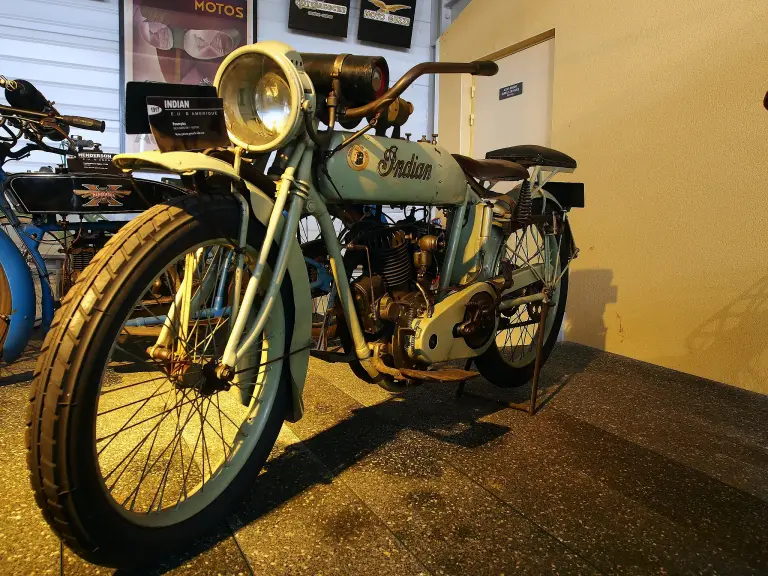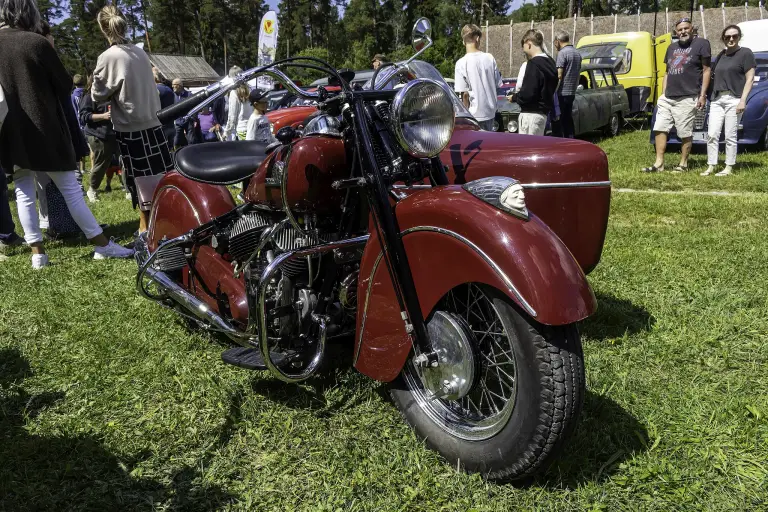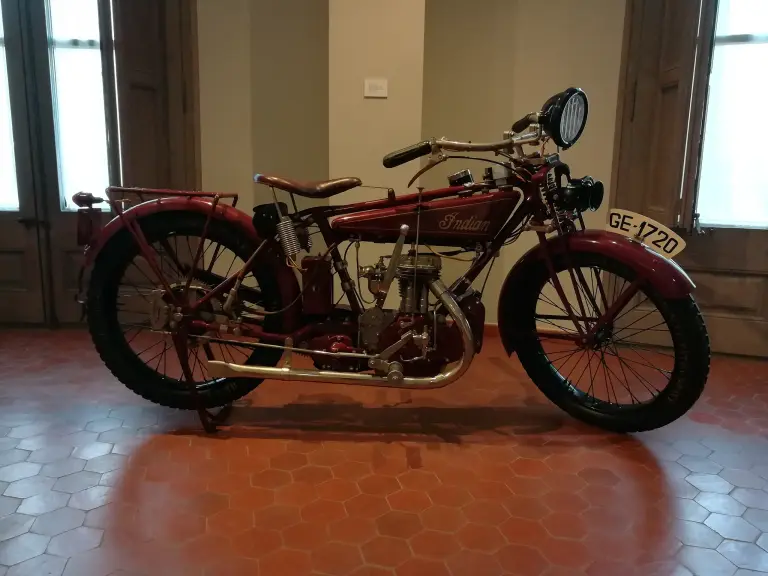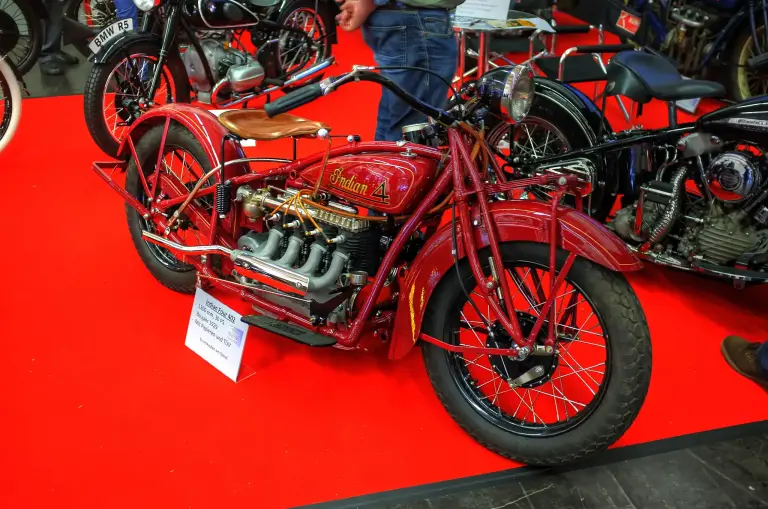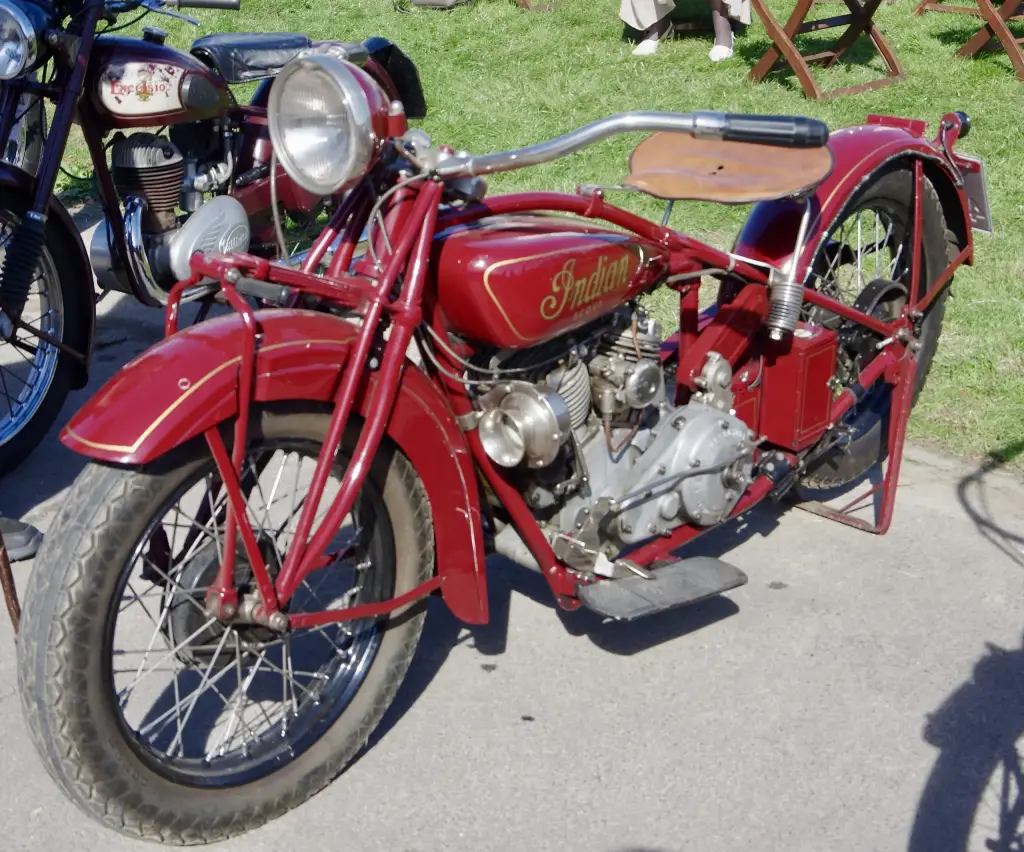
The Indian Scout was built by the Indian Motocycle Company from 1920 to 1949 and rivalled the Chief as the company’s most important model. Designed by Charles B. Franklin, it was the lighter, sportier Indian, and its 101 version of 1928–1931 has been called the best motorcycle Indian ever made.
Indian Scout at a glance
| Maker | Indian Motocycle Company, Springfield |
|---|---|
| Production | 1920–1949 |
| Designer | Charles B. Franklin |
| Engine | sidevalve V-twin |
| Displacement | 606 cc (37 cu in), 745 cc (45 cu in) from 1927 |
| Primary drive | geared, with the gearbox bolted to the engine |
| 101 Scout | 1928–1931 |
| Standard Scout | 1932–1937 |
| Thirty-Fifty | 1932–1941, later the Junior Scout |
| Sport Scout | 1934–1942 |
| Military 741B | more than 30,000 built |
This page is based on English Wikipedia only, so the figures could not be cross-checked against a second source.
History of the Indian Scout
The first Scouts, 1920–1927
Designed by Charles B. Franklin, the Scout was introduced in October 1919 as a 1920 model. It had a sidevalve V-twin with its transmission bolted to the engine casing, allowing a geared primary drive — the only American V-twin to use this maintenance-free system. The engine began at 606 cc and grew to 745 cc in 1927 in response to the popularity of the Excelsior Super X, and a front brake was added in early 1928.
101 Scout, 1928–1931
In mid 1928 the Scout Series 101 replaced the original. Also designed by Franklin, it had a new frame with more fork rake, a longer wheelbase and a lower seat, and its wheelbase, steering head angle and rear sub-frame were adopted from the Indian 401 that was under development at the same time. The 101 came with a 45 cubic inch engine, though a 37 cubic inch unit from the original Scout could be had and was rarely advertised. It was noted for its handling and was popular with racers, hillclimbers and trick riders.
The Depression pushed Indian to the brink of bankruptcy and the company was bought by the DuPont family. For 1931 production was rationalised around a new frame to be shared by the whole 1932 range of Scout, Chief and Four, and the 101 was dropped because its unique chassis cost as much to make as the 74 cubic inch Chief and left little profit. It is still used in wall of death stunt shows.
Standard Scout and Thirty-Fifty
The 1932 Standard Scout used the new shared frame and was heavier and bulkier than the 101, and less successful; it lasted until 1937. In 1933, to appease sporting riders upset by the 101’s replacement, Indian introduced the Motoplane, a Scout engine in the frame of the discontinued Prince single. It was also sold as the Pony Scout with the engine reduced to 30.50 cubic inches, and that less powerful version survived, later renamed the Junior Scout; both were known as the Thirty-Fifty.
Military Scouts
The 741B was a military version of the Thirty-Fifty and the most common Indian used in the Second World War, mainly by British and Commonwealth forces, with around 5,000 sent to the Soviet Union under Lend-Lease; Indian sold more than 30,000. The 640-B, a military Sport Scout, was tested by the US Army and used on bases at home, about 2,500 being built.
Sport Scout and the end
The negative reaction to the Standard Scout and the failure of the Motoplane led to the Sport Scout of 1934, with a light frame, girder forks, better carburation and alloy cylinder heads. Its two-piece frame was heavier than the Prince-derived one but stronger, and the bike was still 15 pounds heavier than the 101 Scout. A specially tuned Sport Scout won the first Daytona 200 in 1937. Full-skirt fenders, a lower seat and more fork rake came in 1940, plunger rear suspension in 1941.
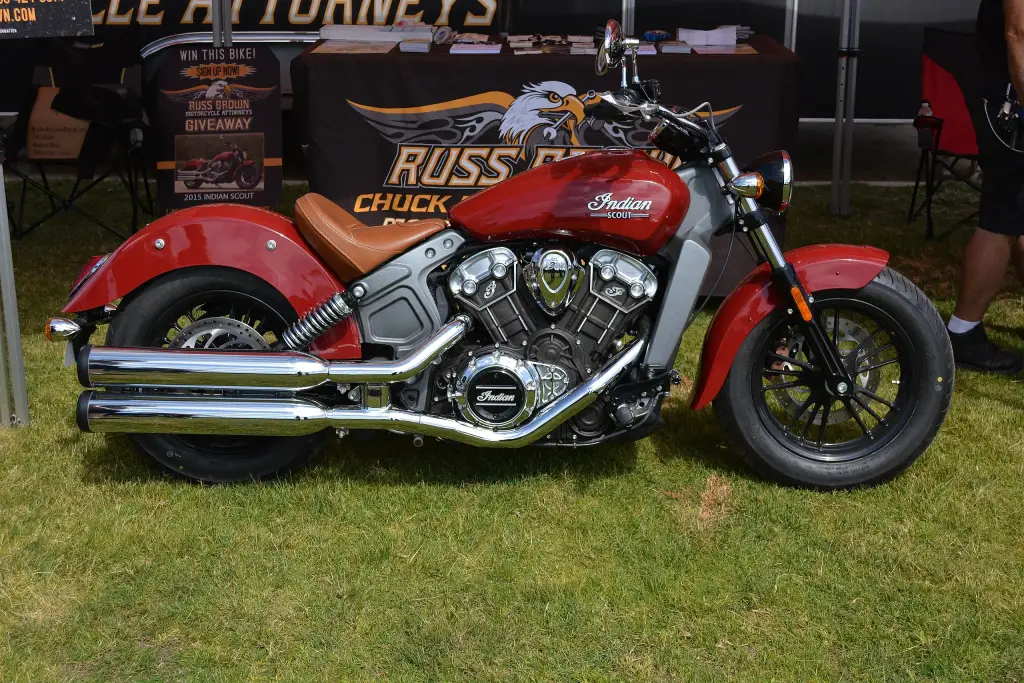
Apart from fifty examples of the 648 racing version, the Scout was not continued after the war: in 1949 the name went to an overhead-valve straight twin, enlarged and renamed the Warrior in 1950. Between 2001 and 2003 the Indian Motorcycle Company of America in Gilroy, California, built a Scout of its own.
Design and features
- Geared primary drive: the gearbox bolted to the engine made the Scout the only American V-twin with this system.
- Handling: the 101 Scout’s geometry made it a favourite of racers and stunt riders.
- Military service: the 741B was the most numerous Indian of the Second World War.
- Racing success: a tuned Sport Scout won the first Daytona 200 in 1937.
Indian Scout versions
- Scout (1920–1927): the original 606 cc model, 745 cc from 1927.
- 101 Scout (1928–1931): new frame, longer wheelbase, the most celebrated version.
- Standard Scout (1932–1937): the heavier model on the shared frame.
- Thirty-Fifty (1932–1941): Motoplane, Pony Scout and Junior Scout with the smaller engine.
- 741B: military Thirty-Fifty, more than 30,000 built.
- Sport Scout (1934–1942): light frame, girder forks, alloy heads.
The Scout was the sporting stablemate of the Chief, and its engine layout came from the Powerplus; the Prince frame later served the Pony Scout. More Indian motorcycles are in the Indian collection.
Video: 2015 Indian Scout First Ride – MotoUSA
Video by Motorcycle USA on YouTube.
Sources
- Indian Scout (motorcycle), English Wikipedia: all model generations, military versions, racing