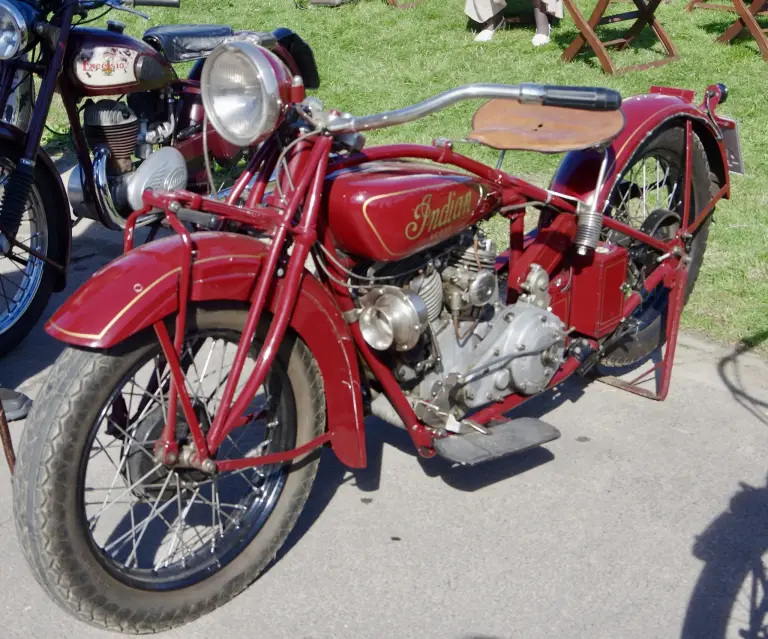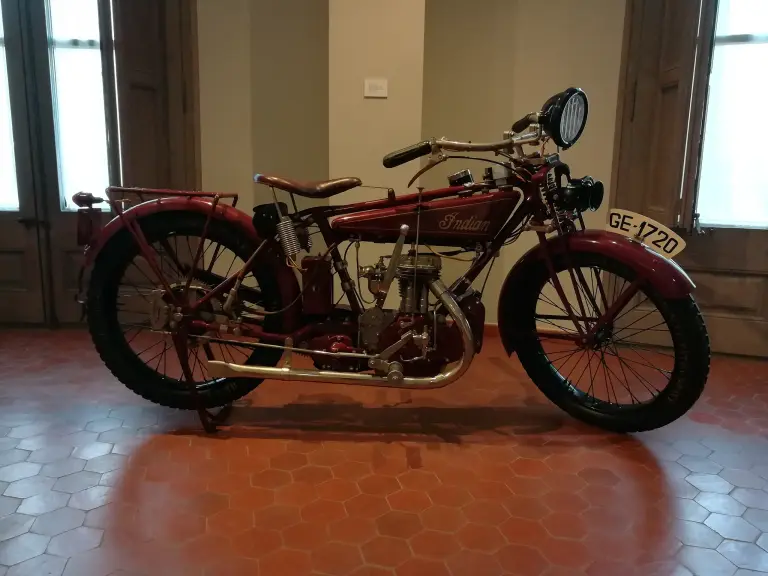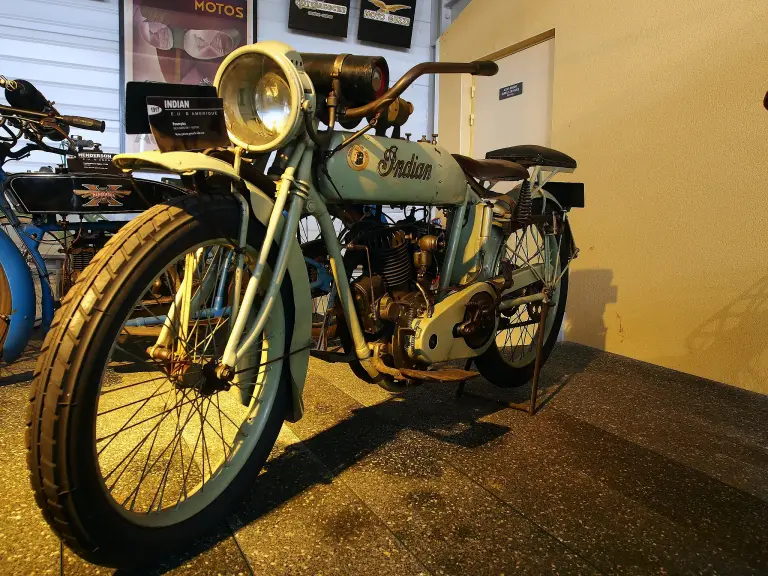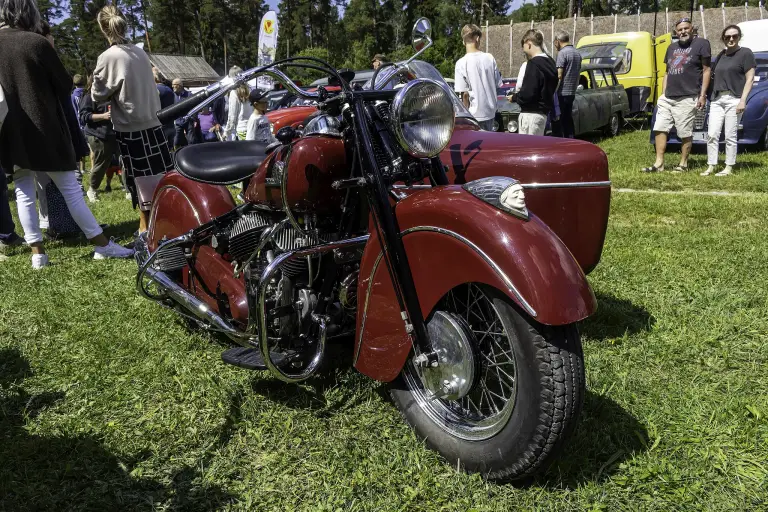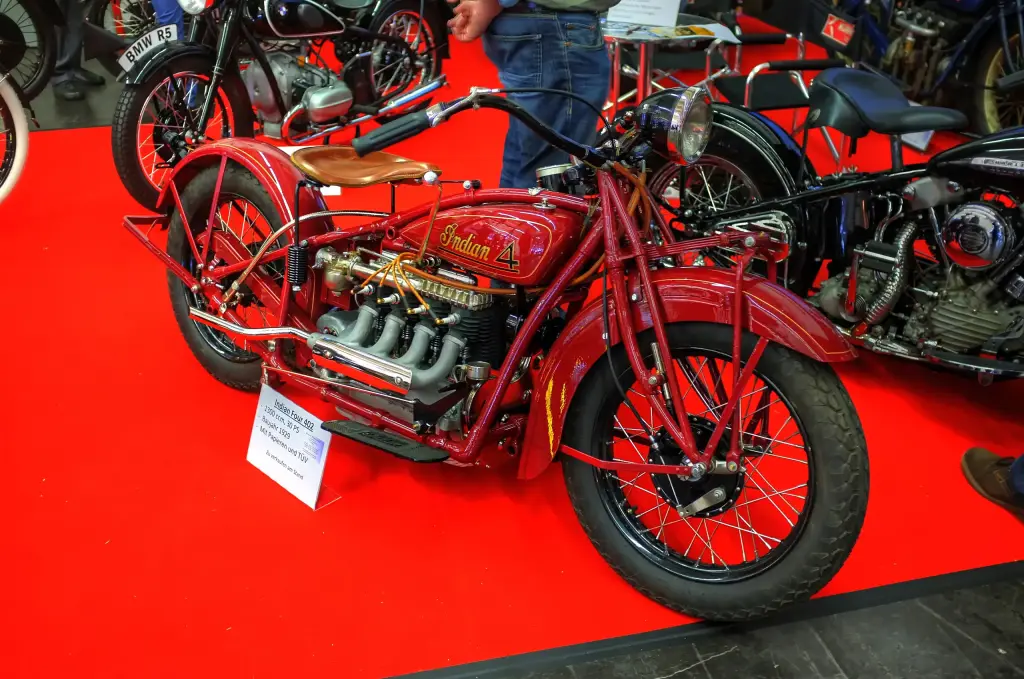
The Indian Four was the company’s four-cylinder luxury motorcycle, built from 1928 to 1942. It came from the Ace Motor Corporation, which Indian bought in 1927, and survived the Great Depression as the most expensive and most refined machine in the range.
Indian Four at a glance
| Maker | Indian Motocycle Company, Springfield |
|---|---|
| Production | 1928–1942 |
| Origin | Ace motorcycle, bought by Indian in 1927 |
| Designer of the 401 | Arthur O. Lemon, former Ace chief engineer |
| Engine | four-cylinder, inlet-over-exhaust cylinder heads |
| Front suspension | Indian trailing-link forks with quarter-elliptic leaf spring |
| Frame, 1929 | twin-downtube frame based on the 101 Scout |
| Crankshaft, 1929 | five bearings instead of the Ace’s three |
| Rear suspension | plunger springs from 1940 |
| Wheels | 18 inch until 1941, then 16 inch with balloon tyres |
History of the Indian Four
From Ace to Indian
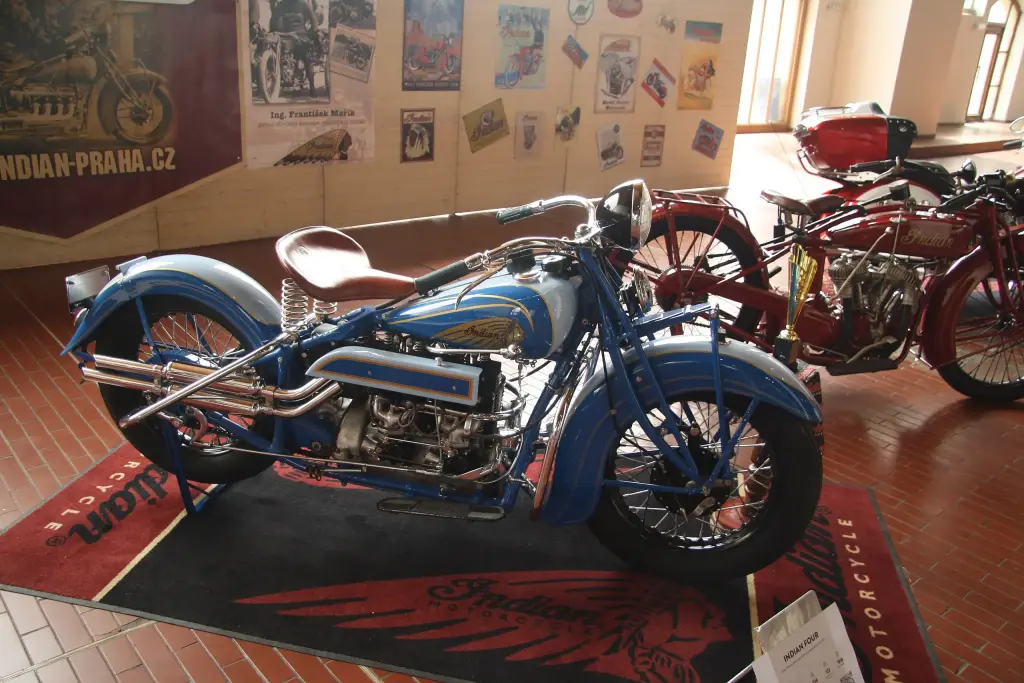
Indian bought the name, rights and production facilities of the Ace Motor Corporation in 1927 and moved production to Springfield, selling the machine for one year as the Indian Ace. In 1928 the Ace was replaced by the Indian 401, a development by Arthur O. Lemon, the former Ace chief engineer who joined Indian with the purchase. The Ace’s leading-link forks and central coil spring gave way to Indian’s trailing-link forks and a quarter-elliptic leaf spring.
Refining the Four
By 1929 the Indian 402 had a stronger twin-downtube frame based on that of the 101 Scout, and a sturdier five-bearing crankshaft in place of the Ace’s three-bearing unit. Despite the low demand for luxury motorcycles during the Depression, Indian not only kept the Four in production but continued to develop it.
The upside-down engine
One of the least popular versions was the 1936–1937 model with its “upside down” engine. Earlier and later Fours had inlet-over-exhaust heads, with the inlet valves overhead and the exhaust valves at the side; the 1936–1937 engine reversed the layout as an EOI design. In theory this improved fuel vaporisation and the engine was more powerful, but the cylinder head and the rider’s inseam became very hot, and the exhaust valvetrain needed frequent adjustment. Sales fell, twin carburettors added in 1937 did not revive interest, and the original layout returned in 1938.
The last years
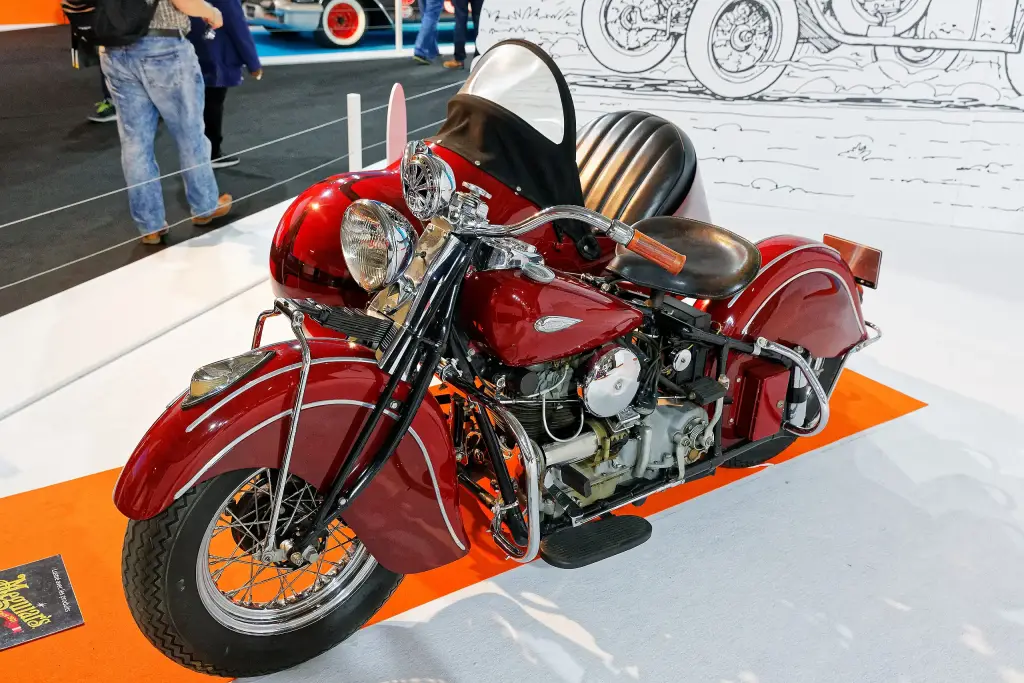
For 1940 the frame gained plunger rear suspension and all Indian models were restyled with large decorative fenders. In 1941 the 18-inch wheels were replaced by 16-inch wheels with balloon tyres. The Four was discontinued with the rest of civilian production in 1942 and did not return after the war.
Legacy
The 1940 four-cylinder model was honoured with a 39-cent United States postage stamp in August 2006, part of a four-panel set called American Motorcycles, and a 1941 model is in the Smithsonian motorcycle collection at the National Museum of American History. In 1999 Alan Forbes, a businessman in Edinburgh, began hand-building the Indian Dakota 4 as a homage, with an air-cooled two-valve four-cylinder engine of 1,845 cc; he could use the name because he held the rights to the Indian brand in the United Kingdom.
Design and features
- Four cylinders: a smoother, more expensive engine than the V-twins around it.
- Ace engineering: Arthur Lemon’s design, reworked with Indian forks and frame.
- Five-bearing crank: the 1929 402 was tougher than the original Ace.
- Comfort for its time: plunger rear suspension from 1940 and balloon tyres from 1941.
Indian Four versions
- Indian Ace (1927–1928): the Ace sold under the Indian name for one year.
- Indian 401 (1928): Lemon’s rework with Indian forks and spring.
- Indian 402 (1929): new frame and five-bearing crankshaft.
- 1936–1937 Four: the unpopular upside-down EOI engine.
- 1940–1942 Four: plunger rear suspension and the restyled fenders.
The Four was the luxury stablemate of the Chief and the Scout. More Indian motorcycles are in the Indian collection.
Video: 1933 Indian Motorcycle – Jay Leno’s Garage
Video by Jay Leno’s Garage on YouTube.
Sources
- Indian Four, English Wikipedia: history, engines, legacy
- Dakota Four, Motorcyclist Online: the Dakota 4 homage