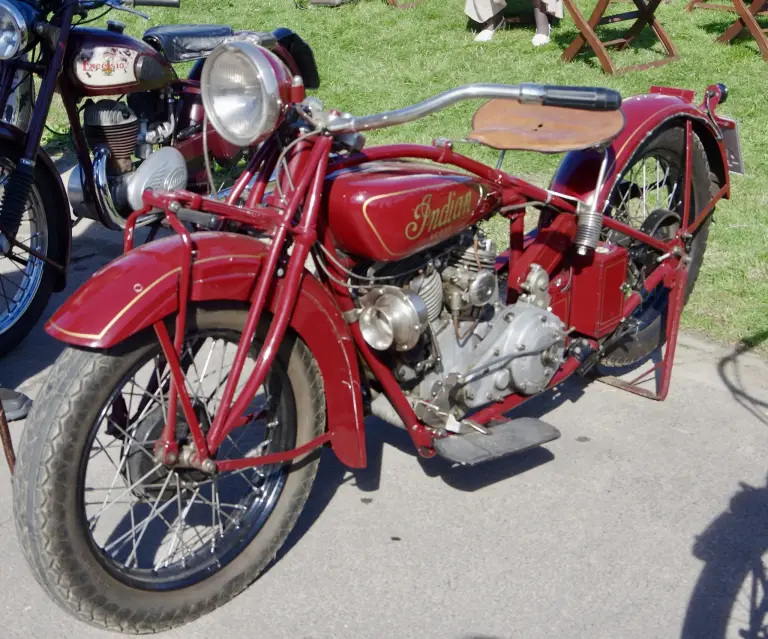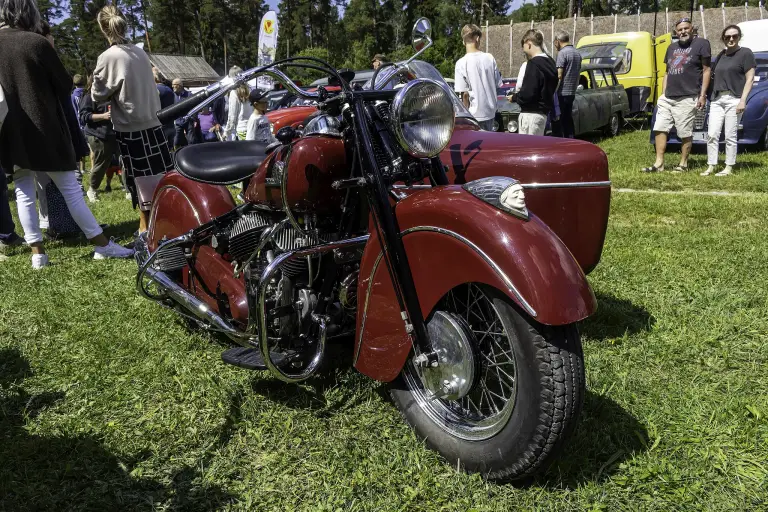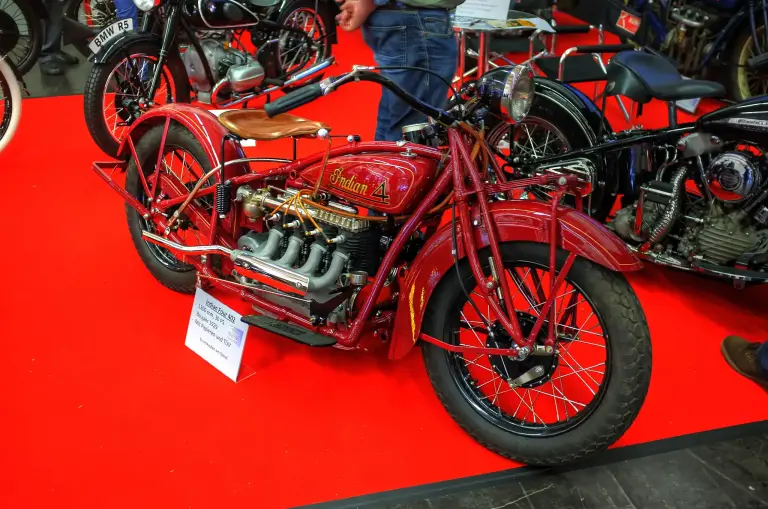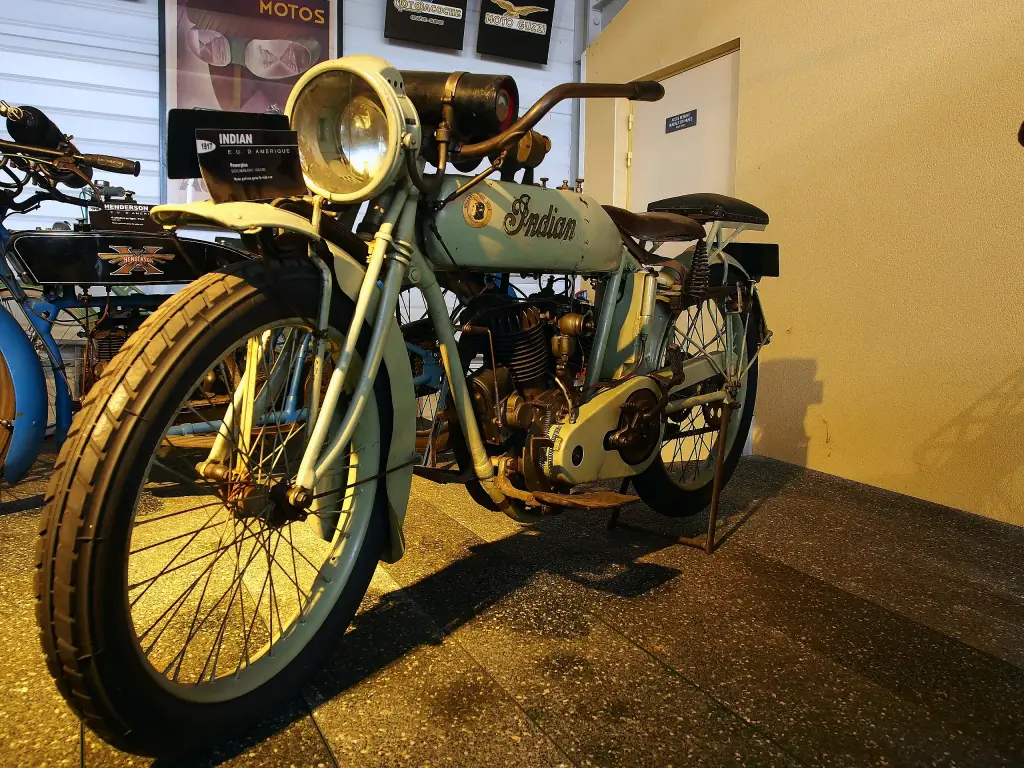
The Indian Powerplus was built from 1916 to 1924 by the Hendee Manufacturing Company. Designed by Charles Gustafson, its engine was Indian’s first flathead: a side-valve V-twin that replaced the inlet-over-exhaust engine of Oscar Hedstrom and gave the model its name.
Indian Powerplus at a glance
| Maker | Hendee Manufacturing Company, Springfield |
|---|---|
| Production | 1916–1924 |
| Designer | Charles Gustafson |
| Engine | side-valve (flathead) 61 cu in V-twin |
| Power | about 16 hp (12 kW) |
| Gearbox | three-speed, with clutch and kickstarter |
| Frame | rigid rear end, or optional Cradle Spring Frame |
| Revised engine | 1917, longer barrels and pistons |
| Larger engine | about 72 cu in (1,180 cc) from 1920 |
| Renamed | Standard in 1922, discontinued 1923 |
This page is based on English Wikipedia only, so the figures could not be cross-checked against a second source.
History of the Indian Powerplus
Gustafson’s flathead
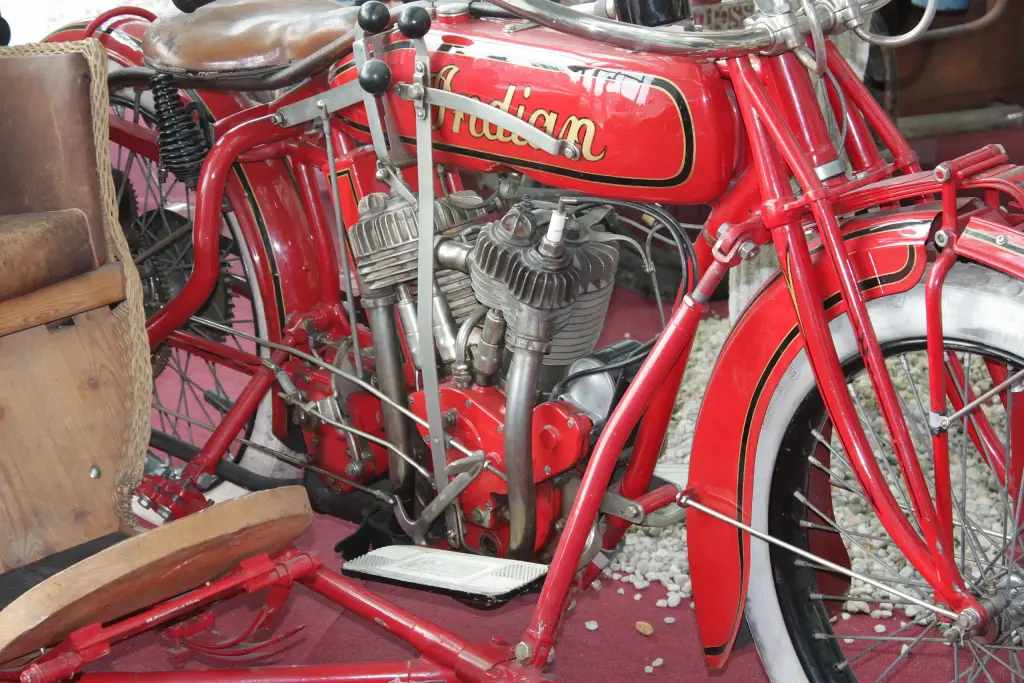
Charles Gustafson left Reading Standard in 1909 to join Indian as Oscar Hedstrom’s assistant. Reading Standard had been the first American maker to use a side-valve flathead engine in a production motorcycle, and when Hedstrom left Indian in 1913 Gustafson became chief engineer.
In late 1915 Indian introduced his replacement for Hedstrom’s 61 cubic inch V-twin. The new engine used side valves instead of the inlet-over-exhaust layout of the earlier design: it was quieter, cheaper to manufacture and needed less maintenance. It was called Powerplus because its output of about 16 horsepower was noticeably greater than that of the engine it replaced.
The engine went into the existing frames for Indian V-twins and used the existing drivetrain, tanks and handlebars. The transmission comprised a clutch, a kickstarter and a three-speed gearbox. The standard frame had a rigid rear wheel mounting, but the Powerplus could also be ordered with Indian’s Cradle Spring Frame, introduced in 1913, whose rear swingarm was linked to trailing leaf springs.
Two twist grips
The Powerplus had twist grips on both handlebars: the left one worked the throttle while the right advanced or retarded the spark. Three further controls sat on the right side of the fuel tank — a vertically operated gear shifter, an exhaust valve lifter and a hand clutch lever — and the clutch lever was linked to a pedal on the left of the machine.
Records and development
Between 24 and 28 August 1915 Erwin “Cannonball” Baker rode an early Powerplus from Vancouver to Tijuana in 3 days, 9 hours and 15 minutes, setting a new “Three Flags” record. In 1917 the engine was revised with barrels and pistons a quarter of an inch longer and the wrist pin moved below the piston centre to reduce piston slap; from that year the valve caps in the cylinder head were finned.
The Powerplus was also the mount for endurance exploits. In 1917 Walter Steinhart became the first motorcyclist to reach the summit of Snoqualmie Pass, several miles of the climb in heavy snow, and on 1 January 1917 he finished first of ten riders in a 180-mile race twice around Lake Washington in 3 hours 20 minutes.
The end
A larger engine of about 72 cubic inches became available in 1920. Production of that engine ended in 1922, the year the Chief — the Powerplus’s eventual successor — went on sale. The Powerplus was renamed Standard for 1922, reflecting that it was no longer the most powerful Indian, and it was dropped in 1923 along with the Cradle Spring Frame. Indian did not offer rear suspension on a production motorcycle again until 1940.
Design and features
- First Indian flathead: side valves made the engine quieter, cheaper and easier to live with.
- 16 horsepower: enough to earn the Powerplus name and to set long-distance records.
- Cradle Spring Frame: an early rear-suspension option, dropped with the model in 1923.
- Hand controls: throttle on the left grip, spark advance on the right, shifter on the tank.
Indian Powerplus versions
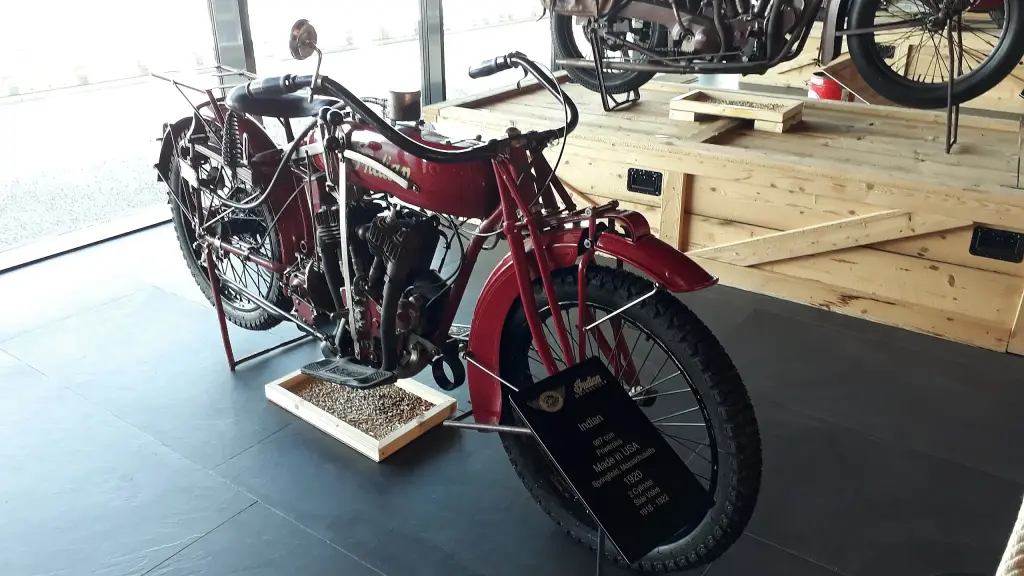
- Powerplus (1916–1921): the 61 cu in model in a rigid or Cradle Spring Frame.
- Powerplus 72 cu in (1920–1922): the larger engine offered alongside the original.
- Standard (1922–1923): the renamed Powerplus, sold below the new Chief.
- Military use: Powerplus machines served in the First World War.
The Powerplus was replaced by the Chief, and its flathead layout was carried on in the Scout. More Indian motorcycles are in the Indian collection.
Video: Indian Powerplus 1000cc
Video by LiV Twin on YouTube.
Sources
- Indian Powerplus, English Wikipedia: engine, controls, records, end of production