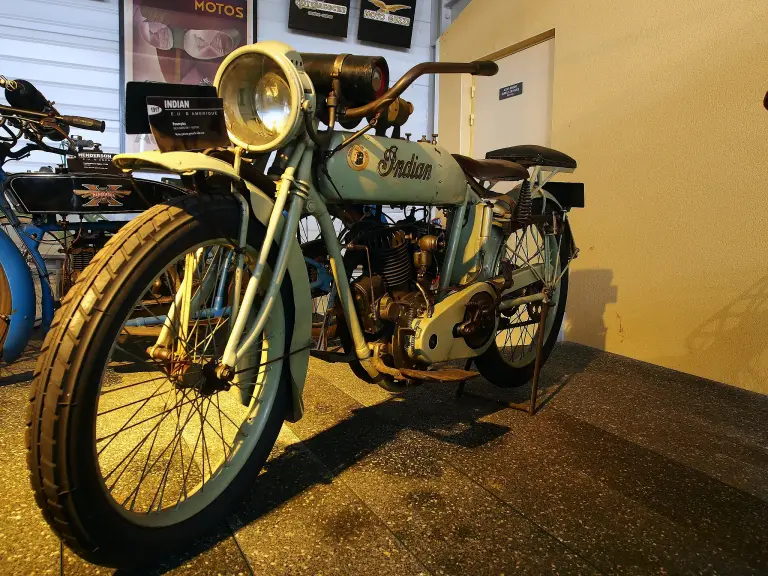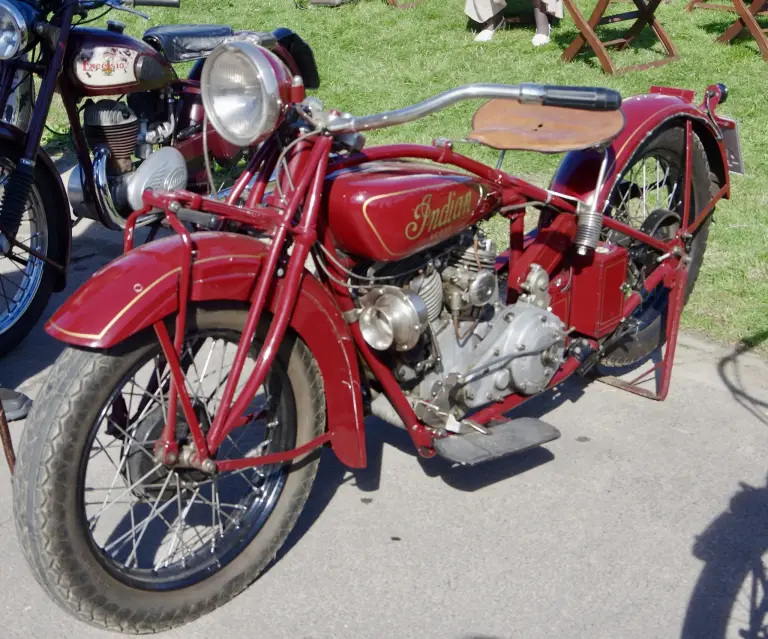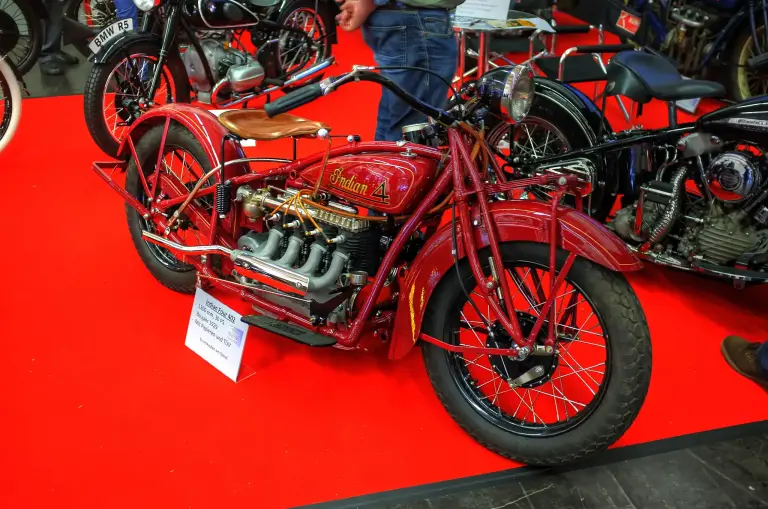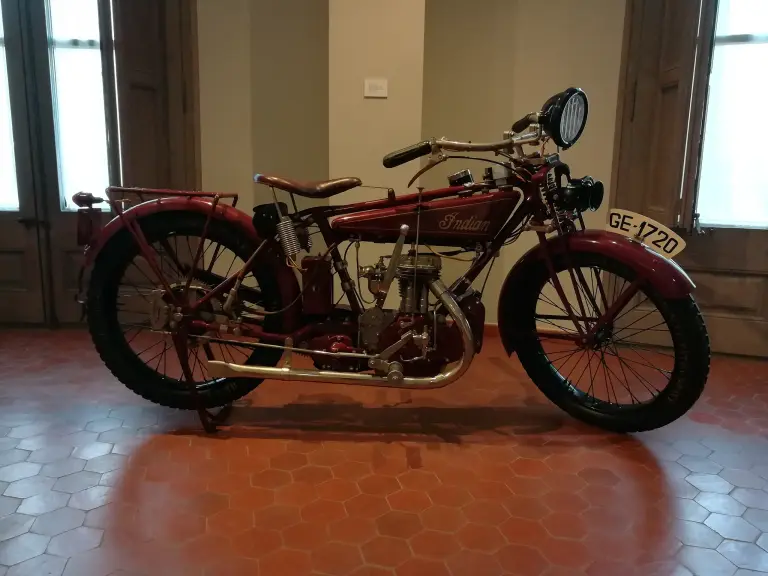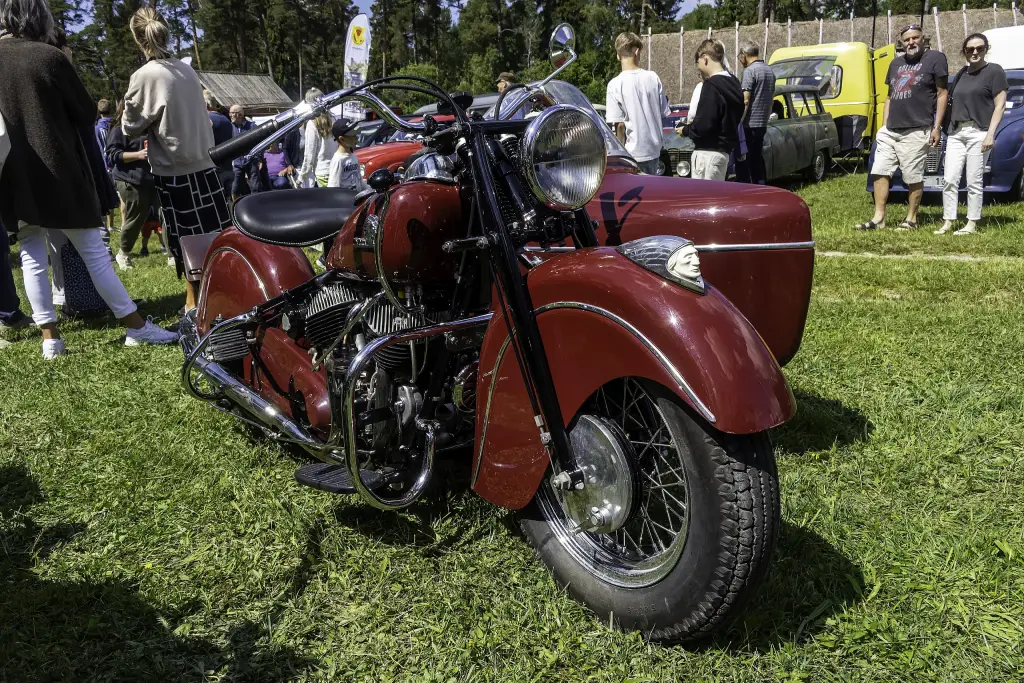
The Indian Chief was the Hendee Manufacturing Company’s big twin, produced from 1922 until the company ended motorcycle production in 1953, and revived under later owners from 1999. Larger and more powerful than the agile Scout, it became the model with which Indian is most often identified.
Indian Chief at a glance
| Maker | Hendee Manufacturing Company, later Indian Motocycle Company |
|---|---|
| Production | 1922–1953; revived 1999 to the present |
| Designer | Charles B. Franklin |
| Engine, 1922 | 61 cu in sidevalve V-twin, bore 79 mm, stroke 101 mm |
| Big Chief, 1923 | 74 cu in, bore 83 mm, stroke 113 mm |
| Primary drive | gear train, gearbox bolted to the engine casings |
| Rear suspension | none until plunger springs in 1940 |
| Military version | 340-B with sidecar |
| Post-war engine | 80 cu in (1,300 cc) from 1950 |
| Last Chief of the original company | 1953 |
| Revivals | Brockhouse 1959, Gilroy 1999–2003, Kings Mountain 2006, Polaris from 2011 |
This page is based on English Wikipedia only, so the figures could not be cross-checked against a second source.
History of the Indian Chief
A bigger Scout
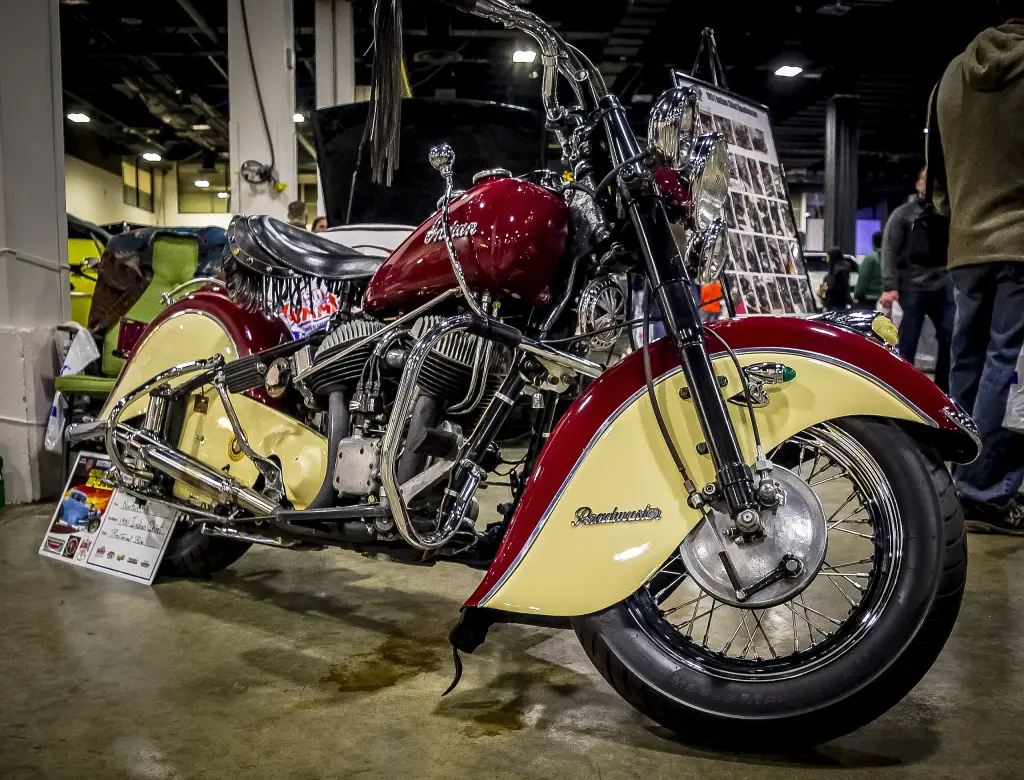
The Chief was introduced for 1922 to replace the Powerplus, which continued for a year under the name Standard. It was designed by Charles B. Franklin and shared several features with his earlier Scout: the gearbox was bolted to the engine casings and the primary drive was by gear train rather than chain. Its 61 cubic inch engine had the same bore and stroke as the Powerplus, but unlike that model the Chief was never offered with rear suspension.
The Big Chief
A larger version, the Big Chief, arrived for 1923 with the engine bored to 83 mm and stroked to 113 mm, giving 74 cubic inches. It had mainly been intended for sidecar work but proved popular with solo riders as well. The smaller-engined Chief was dropped in 1928, partly to free capacity for the Model 101 Scout.
Military and post-war years
The 340-B was a military motorcycle based on the Chief, with open fenders and usually a sidecar; about 3,000 went to the US military and 5,000 to France before that country surrendered in 1940. For 1940 the Chief frame gained plunger rear suspension, and every Indian model was restyled with large decorative fenders.
After the war the Chief was the only pre-war Indian still built. The leaf-sprung trailing-link fork gave way to girder forks like those of the military 841 and the Sport Scout. No Chiefs were made for 1949; the model returned for 1950 with telescopic forks and the engine stroked to 80 cubic inches, and production ended in 1953 when Indian ceased building motorcycles.
Later Chiefs
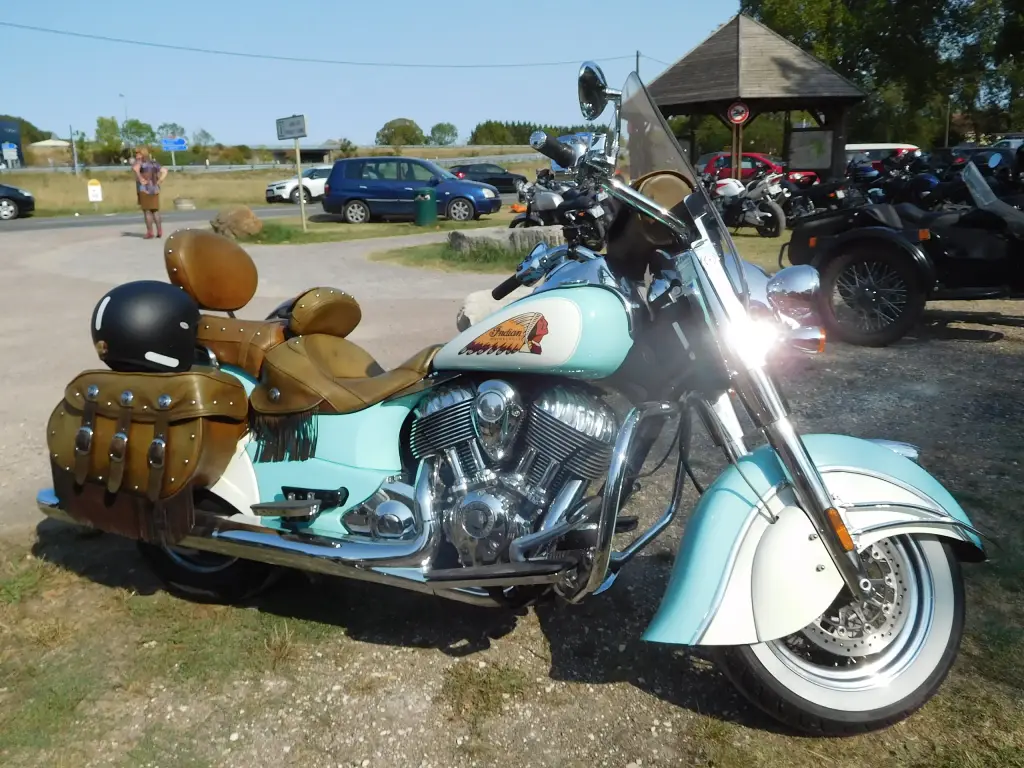
In 1959 Brockhouse Engineering, which owned the Indian trademarks, sold a rebadged Royal Enfield Meteor as an Indian Chief, with a Police Chief version for forces. The Indian Motorcycle Company of America built Chiefs in Gilroy, California, from 1999 to 2003, at first with engines assembled from S&S parts in the style of the Harley-Davidson Evolution and later with an in-house Powerplus engine. Production moved to Kings Mountain, North Carolina, in 2006 and then to Spirit Lake, Iowa, after Polaris bought the company. A completely new Chief appeared in 2014, sharing nothing with the Kings Mountain machine.
Design and features
- Big twin character: a larger, heavier alternative to the Scout, intended for touring and sidecar work.
- Franklin’s layout: gearbox bolted to the engine and a geared primary drive, as on the Scout.
- Late rear suspension: the Chief went without any until plunger springs were added for 1940.
- Survivor: the only pre-war Indian model put back into production after 1945.
Indian Chief versions
- Chief (1922–1928): 61 cu in engine, rigid rear end.
- Big Chief (1923–): 74 cu in engine, popular with sidecar users.
- 340-B: military Chief with open fenders and sidecar.
- 1950–1953 Chief: telescopic forks and an 80 cu in engine.
- Brockhouse Chief (1959): a rebadged Royal Enfield Meteor.
- Modern Chiefs: Gilroy 1999–2003, Kings Mountain 2006, Polaris from 2014.
The Chief was the stablemate of the smaller Scout, and its earliest engine came from the Powerplus. More Indian motorcycles are in the Indian collection.
Video: Indian Chief Vintage Motorcycle Review – BIKE ME!
Video by bikemetv on YouTube.
Sources
- Indian Chief (motorcycle), English Wikipedia: dates, engines, military version, later Chiefs