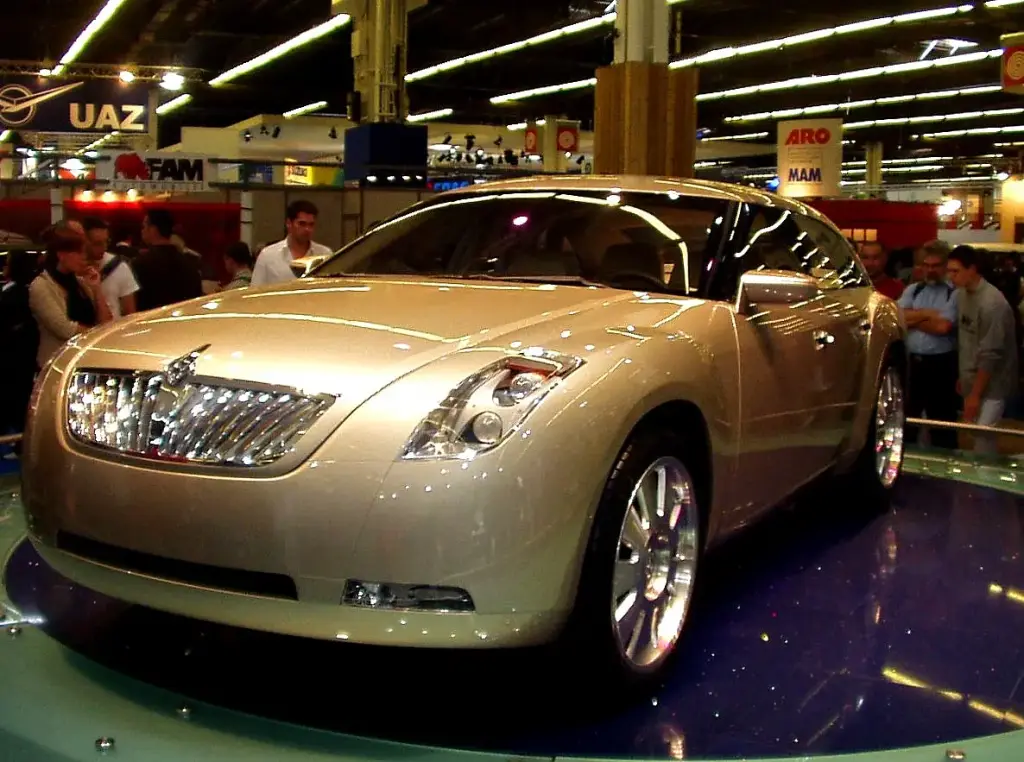
The Hyundai HCD-7 is one of the concept cars carrying the HCD prefix, which stands for Hyundai California Design. The HCD series was created at Hyundai’s California studio for the North American market, starting with the HCD-1 in 1992. The source used here tells the story of the studio and the series, but it has no separate section on the HCD-7 itself.
Hyundai HCD-7 at a glance
| Maker | Hyundai Motor Company |
|---|---|
| Studio | Hyundai California Design, Irvine, California |
| Studio opened | 1990, in Fountain Valley |
| Renamed | Hyundai Design and Technical Center, January 2003 |
| Series begins | HCD-1, January 1992 |
| First series car | targa-top sports car aimed at the Mazda Miata |
| Series cars that reached production | HCD-4 as the Santa Fe, HCD-14 as the Genesis |
| Naming policy | names added to numbers from 2006, numbers dropped after 2015 |
The English Wikipedia page on the Hyundai California Design concepts has no section on the HCD-7, so this page describes the series and the studio rather than inventing details of the car.
History of the Hyundai HCD-7
Hyundai opened its California Design Center in 1990, after moving its national headquarters from Garden Grove to Fountain Valley. The studio was renamed the Hyundai Design and Technical Center when it moved to Irvine in January 2003, and it is now the Hyundai California Design & Research Center. Its cars carry the HCD designation, and parallel series exist in Europe (HED, from the Rüsselsheim studio) and Korea (HND, from Hwaseong).
The first car of the series, the HCD-1, was a targa-top sports car aimed at the Mazda Miata. It was shown at the North American International Auto Show in January 1992 with a 2.0-litre twin-cam engine and a claimed 150 hp, and it was used to build publicity for a company that had entered the United States in 1986 with the inexpensive Excel. The HCD-2 of 1993 shared that drivetrain and had an unusual seating layout with a single rear jump seat, and the styling of the first two cars together influenced the Hyundai Tiburon. The HCD-3 of 1995 was an all-wheel-drive all-terrain sports coupé with a turbocharged 2.0-litre engine of 240 hp and a suspension that could be raised by three inches.
Later cars in the series moved closer to production. The HCD-4 of 1999 was the show car that became the Hyundai Santa Fe, sold from 2000; the HCD-5 of 2000 was a four-seat “multi-purpose sedan” with a 2.7-litre V6; and the HCD-6 of 2001 was a mid-engined roadster described by Hyundai as an “affordable exotic”. The HCD-14 Genesis eventually reached production as the second-generation Hyundai Genesis. In 2006 Hyundai began adding names to the alphanumeric designators, and after 2015 it dropped the numbers altogether – which is why later concepts carry names rather than HCD codes.
Design and features
- California studio: the HCD cars were styled in California for the North American market.
- Long series: from the 1992 HCD-1 to the HCD-14, with a parallel HED series in Europe.
- Production spin-offs: the HCD-4 became the Santa Fe and the HCD-14 the Genesis.
- Naming change: numbers gave way to names from 2006.
Hyundai HCD-7 versions
- HCD-1 (1992): targa-top sports car with a 2.0-litre engine.
- HCD-3 (1995): all-wheel-drive sports coupé with a raised suspension option.
- HCD-4 (1999): the concept that became the Santa Fe.
- HCD-6 (2001): mid-engined roadster.
- HCD-14 Genesis: the concept behind the second-generation Genesis.
The HCD series also produced the Hellion and other show cars; the production car that came from it is the Santa Fe. More Hyundai models are in the Hyundai collection.
Sources
- Hyundai California Design concepts, English Wikipedia: studio history, HCD-1 to HCD-6, naming policy