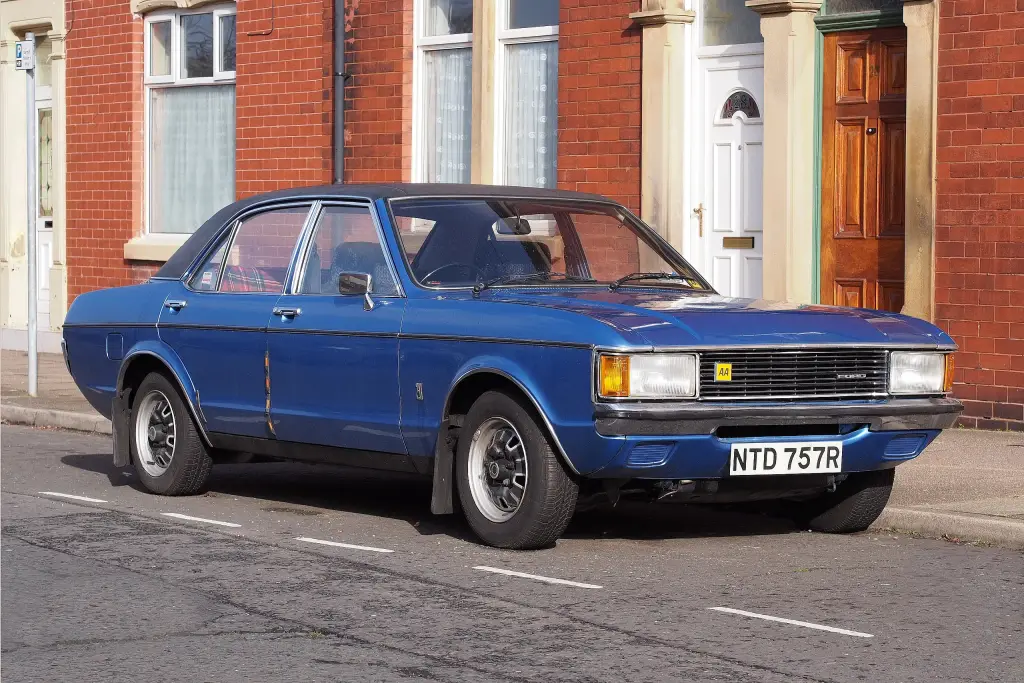
The Hyundai Granada is the Ford Granada as built in Korea. The European Ford Granada was the executive car Ford sold from 1972 to 1994, and it was Hyundai’s flagship in Korea from 1978 until the Grandeur took over. The source used here describes the Ford car, so this page covers the Granada as Ford designed and built it.
Hyundai Granada at a glance
| Model | Ford Granada, built in Korea by Hyundai |
|---|---|
| Maker of the car | Ford of Europe |
| Production | 1972–1994 |
| Mark I | March 1972 – 1977 |
| Mark II | August 1977 – April 1985 |
| Later UK car | Granada name on the Scorpio, 1985–1994 |
| Bodies | four-door saloon, five-door estate, two-door coupé, two-door saloon |
| British engines | 2.0 Essex V4, 2.5 and 3.0 Essex V6 |
| German engines | 1.7 Taunus V4, 2.0, 2.3 and 2.6 Cologne V6 |
| Suspension | double wishbones front, coil-spring independent rear |
| Main uses | taxi, fleet and police work |
Based on one source, the English Wikipedia article on the European Ford Granada, which does not describe Korean assembly; the page therefore covers the car as Ford built it.
History of the Hyundai Granada
The Granada was launched in March 1972, replacing both the British Ford Zephyr and the German P7 range, and it completed the integration of Ford’s British and German model lines. The lower models were at first called Ford Consul, possibly because the Granada Group conglomerate had tried to stop Ford registering the name; when the injunction failed, every car was a Granada from 1975.
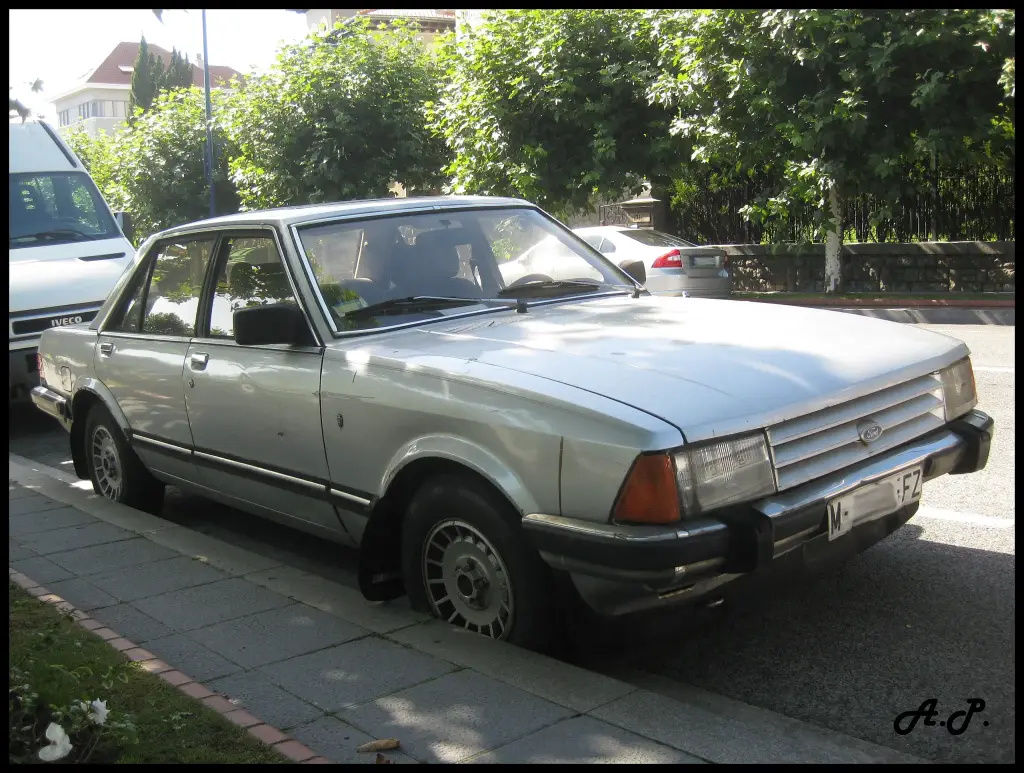
Mechanically the British cars followed Ford convention, with a 2.0-litre Essex V4 and 2.5 or 3.0-litre Essex V6 engines. German cars used a 1.7-litre Taunus V4, the 3.0 Essex V6, or more often the Cologne V6 in 2.0, 2.3 and 2.6-litre sizes; the V4 was short-lived and replaced in 1974 by the Pinto in-line engine. The Granada kept the coil-spring independent rear axle of the Zephyr and Zodiac but switched the front from MacPherson struts to double wishbones, and it used rear drum brakes where the older cars had discs. Bodies were a four-door saloon, a five-door estate called the Turnier and a two-door fastback coupé, the early coupés having a pronounced coke-bottle shape that was straightened in 1974. A two-door saloon joined in May 1973, though it was never sold in Britain.
The car quickly became popular for taxi, fleet and police work, and British coachbuilders converted it into limousines and hearses: traditional four-door limousines in long and short form, an unusual four-door coupé limousine of which only twelve were built, and hearses with two or four doors. In South Africa a Granada Perana V8 with a 4.9-litre Windsor engine of 255 PS was sold through Ford dealers, though most South African cars used the 3.0-litre six.
The Mark II of August 1977 was in effect a reskin of the 1972 car, with new panels in the style of Ford’s new design language under Uwe Bahnsen, and most of the Mark I body structure was kept. The engineering was very similar, the main change being Cologne V6 engines of 2.0, 2.3 and 2.8 litres in place of the Essex units, with air conditioning and, on the 2.8-litre cars, fuel injection. From 1985 to 1994 the Granada name was used in Britain and Ireland for a third-generation car sold elsewhere in Europe as the Ford Scorpio. Hyundai built the Granada in Korea, where it served as the company’s flagship before the Grandeur.
Design and features
- Ford design: the Granada was a Ford of Europe model, assembled by Hyundai in Korea.
- Wide body range: saloon, estate, two-door coupé and a two-door saloon.
- Fleet favourite: popular as a taxi, company car and police vehicle.
- Coachbuilt versions: British limousines and hearses on the Granada base.
Hyundai Granada versions
- Granada Mark I (1972–1977): the original car with Essex and Cologne V6 engines.
- Mark I coupé (1974): the straightened fastback coupé.
- Granada Mark II (1977–1985): reskinned car with Cologne engines.
- Granada Perana V8: South African version with a 4.9-litre V8.
- Granada (Scorpio) 1985–1994: the third generation in Britain and Ireland.
Hyundai built the Granada before it designed its own large car, the Grandeur, and it also assembled the Cortina. More Hyundai models are in the Hyundai collection.
Video: Anuncio Hyundai Granada Copa Confederaciones
Video by Hyundai Sport Automoción on YouTube.
Sources
- Ford Granada (Europe), English Wikipedia: generations, engines, bodies, coachbuilt versions, markets