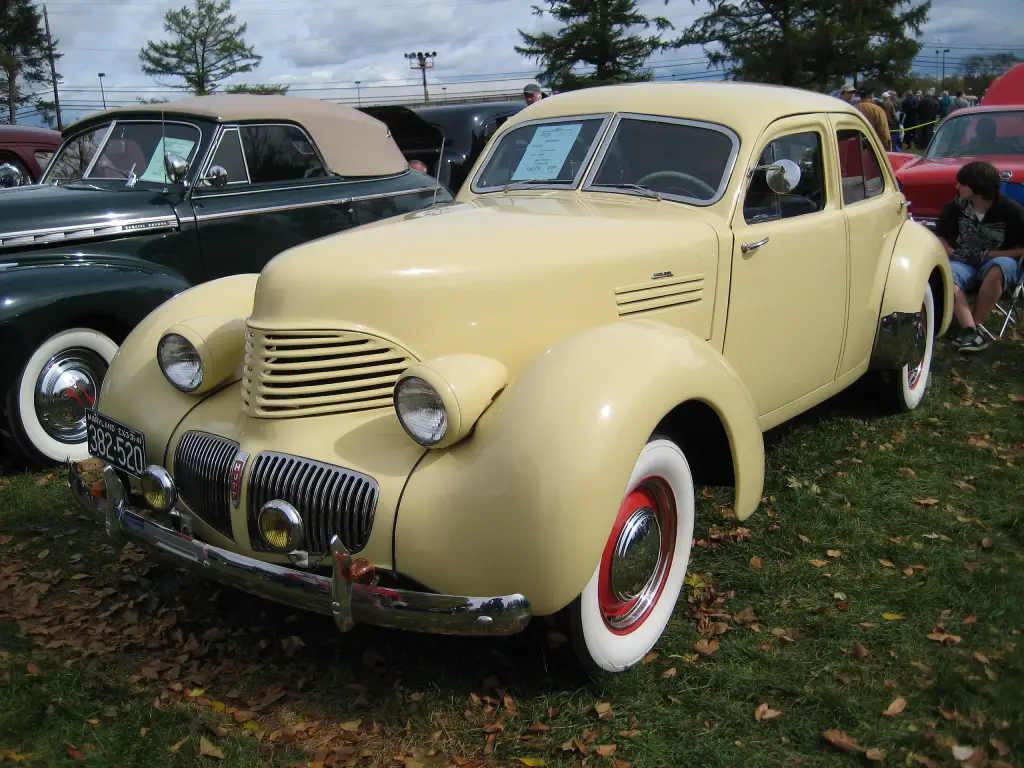
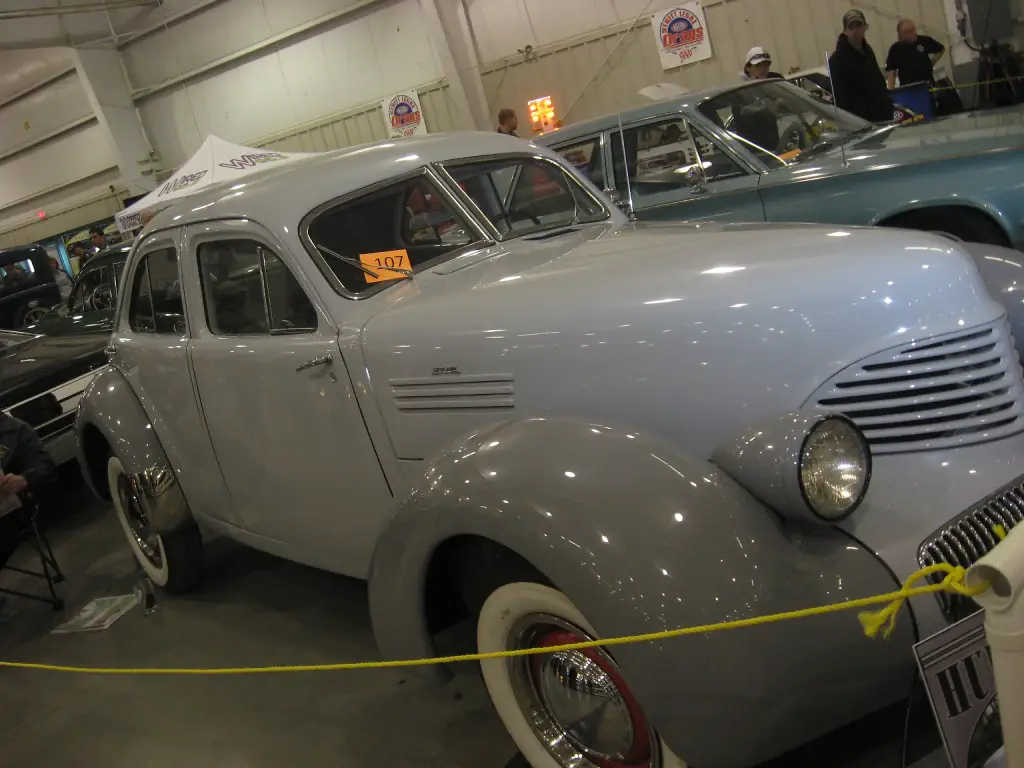
The Hupmobile Skylark was the last new model of the Hupp Motor Car Company and its final attempt to win back the market. Its body came from the Cord 810 and Cord 812, designed by Gordon Buehrig: Hupp bought the plans in 1938, hoping to offer the elegant Cord shape on a cheaper, more conventional car.
Hupmobile Skylark at a glance
| Maker | Hupp Motor Car Company, Detroit, Michigan |
|---|---|
| Body | Cord 810/812 body dies, bought in 1938 |
| Cord designer | Gordon Buehrig |
| Engine range of the period | six- and eight-cylinder models introduced in 1938 |
| Orders | several thousand from customers |
| Production problems | delays angered buyers; part of them cancelled |
| Built | 319 |
| Partner for production | Graham-Paige Motor Company |
| Make built | 1909–1939 |
| Followed the Aerodynamic | Hupmobile’s streamlined style of 1934 |
There is no separate Wikipedia article on the Skylark; the page is based on the brand article “Hupmobile” in English, German and Italian. The make is dated 1909–1939 in English and 1909–1941 in German and Italian.
History of the Hupmobile Skylark
By 1938 Hupmobile was a shadow of the company that had sold 65,000 cars ten years before. A new line of six- and eight-cylinder models that year was meant to bring customers back, but Hupp had lost too many dealers and sales stayed low.
A company running out of time
The trouble had built up through the decade. In 1935 Hupp was shaken by disputes between its shareholders and by an attempted hostile takeover. In 1936 the company sold part of its factories and land, and in 1937 production of the Hupmobile was stopped for a time. Building a new model from scratch was no longer possible; buying someone else’s design was the cheaper route.
The Cord body
In 1938 Hupp bought the plans of the Cord 810 and Cord 812 from the former Cord Automobile Company. The Cord was one of the most elegantly styled American cars of the 1930s, drawn by Gordon Buehrig. Hupmobile hoped to use that design on a cheaper, conventional car and called it the Skylark.
Orders, delays and the end
Customer reaction was immediate. Thousands of enthusiasts placed orders for the Skylark, and for a moment the company seemed to have a future again. Production, however, could not keep up, and the long delays turned buyers against the car; part of the orders were cancelled. Because Hupp no longer had the capacity it needed, the company reached an agreement with the ailing Graham-Paige Motor Company over the shared use of production facilities. In the end only 319 Skylarks were built, after which the Hupp Motor Car Company closed and the Hupmobile disappeared after thirty years.
Design and features
- Cord-derived body: the shape of the Cord 810/812, designed by Gordon Buehrig, bought with the plans in 1938.
- Conventional engineering: the advanced Cord chassis was not carried over; the Skylark was a cheaper car.
- Six and eight cylinders: the Skylark belonged to the new six- and eight-cylinder line of 1938.
- Shared production: an agreement with Graham-Paige for production capacity.
Hupmobile Skylark versions
- Skylark (1938–1939): the Cord-bodied model, 319 built.
- Six-cylinder line (1938): the cheaper Hupmobiles of the same period.
- Eight-cylinder line (1938): the larger cars on the same new range.
- Aerodynamic (1934): the streamlined Loewy body that came before.
The Skylark followed the Hupmobile Aerodynamic and was the last car of the make. The closed and open bodies of earlier years are covered in the articles on the Hupmobile coupe and the Hupmobile roadster. More cars are in the Hupmobile collection.
Sources
- Hupmobile, English Wikipedia: Cord plans, Skylark name, orders and delays
- Hupmobile, German Wikipedia: 1938 model line, Graham-Paige agreement
- Hupmobile, Italian Wikipedia: production total of 319, end of the company